Description
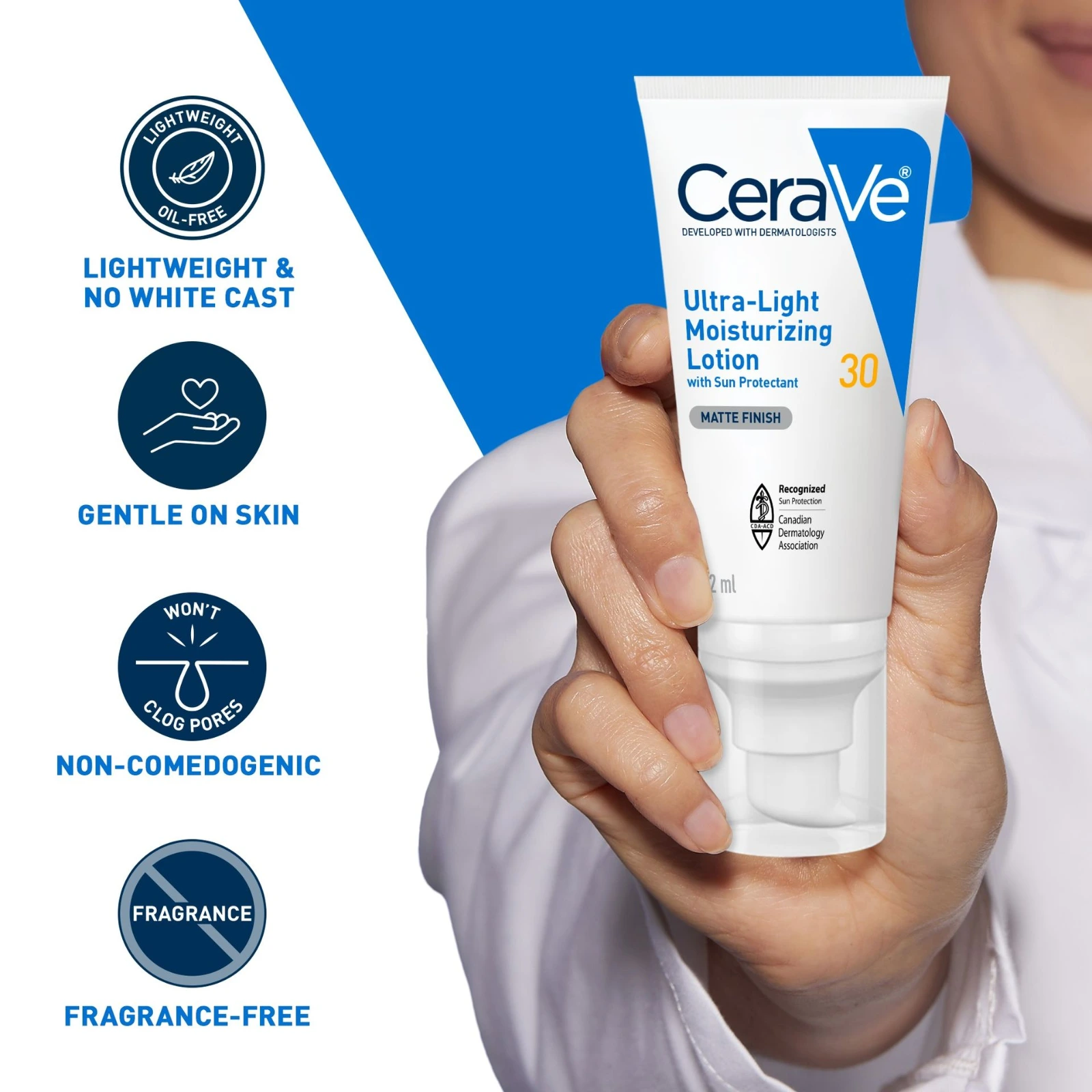
CeraVe Ultra-Light SPF 30 is the daily face sunscreen most people who hate sunscreen end up liking: a thin, matte, fragrance-free lotion that leaves no white cast on brown skin. It is currently out of stock — use the notify button on this page and we will email you the moment it lands. In the meantime, this page tells you exactly what is in it, including one regulatory fact about the formula that you will not find on any other listing in Bangladesh.
What CeraVe Ultra-Light SPF 30 actually is
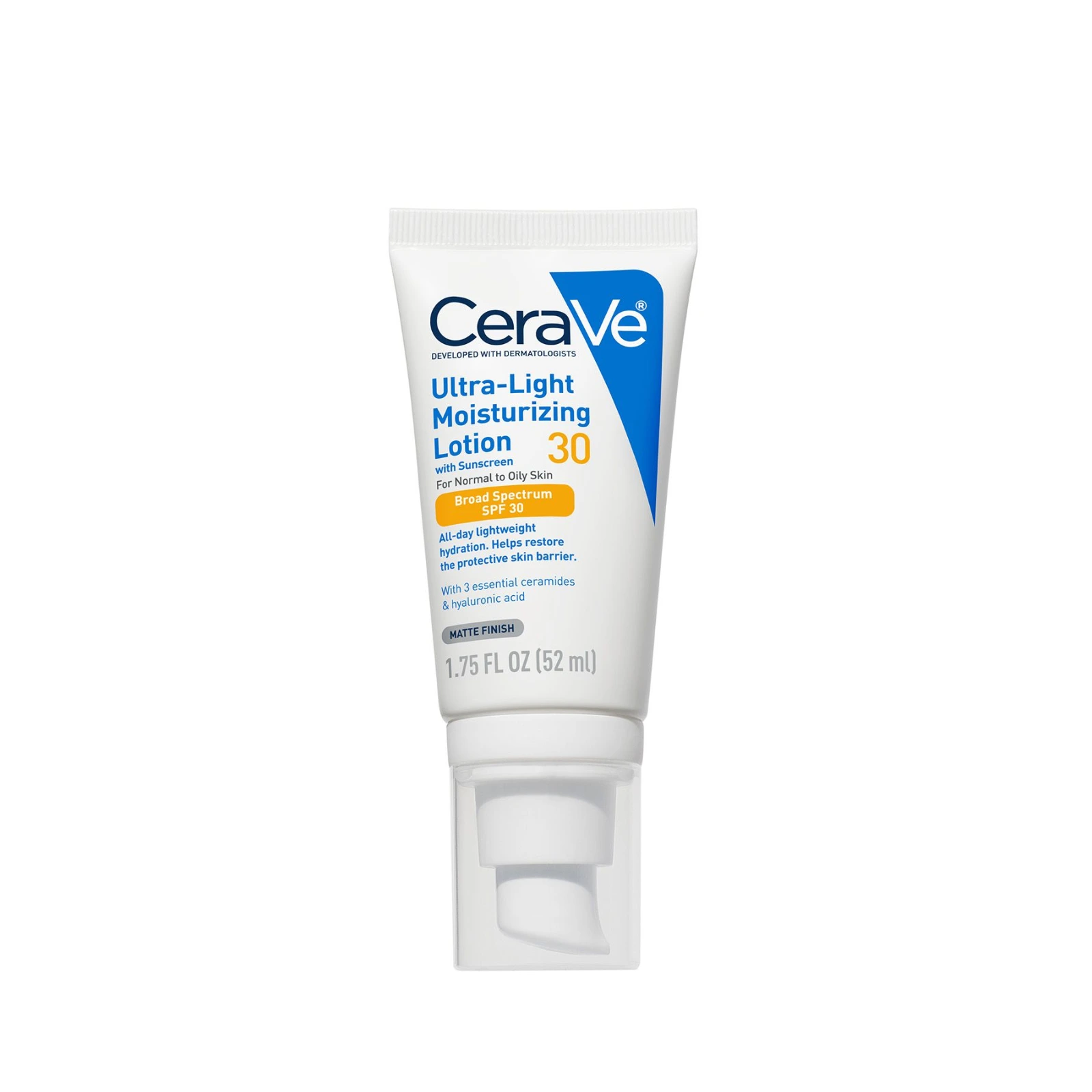
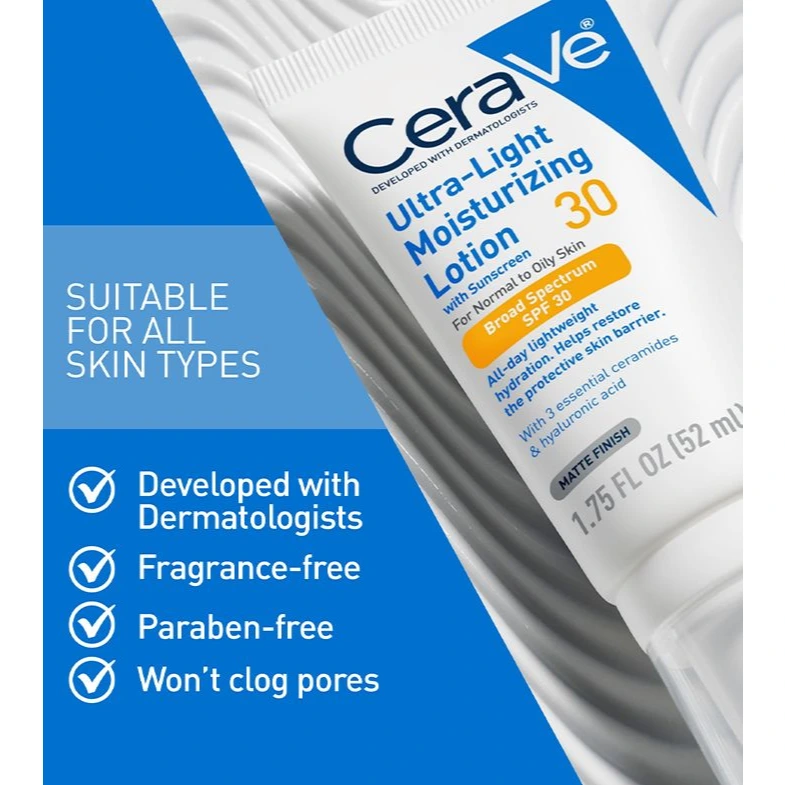
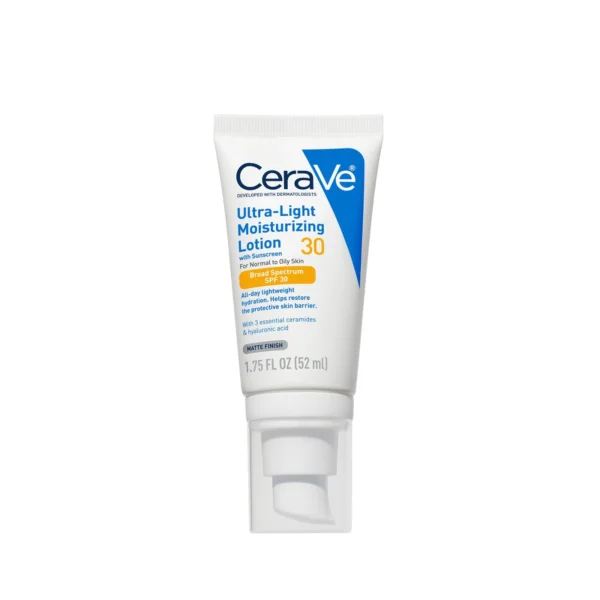
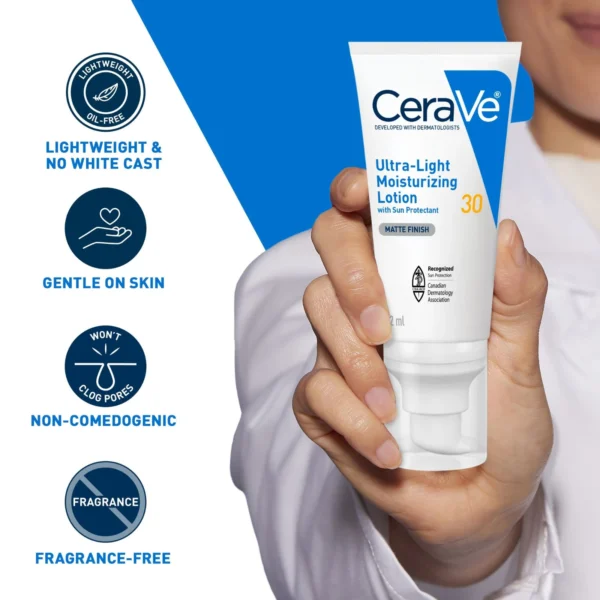
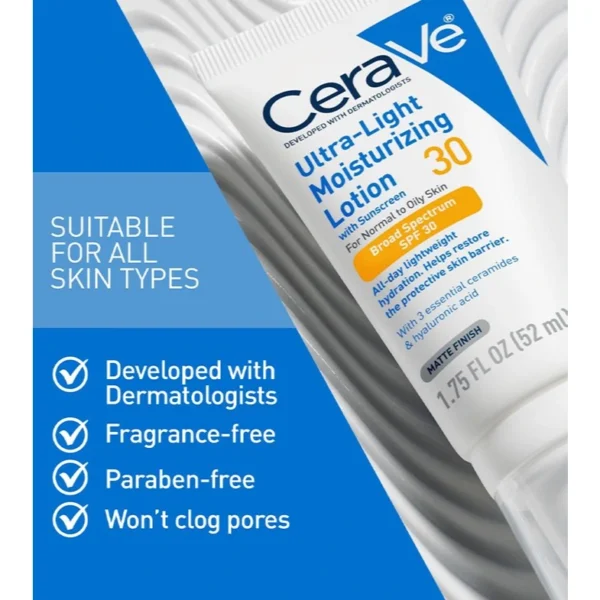
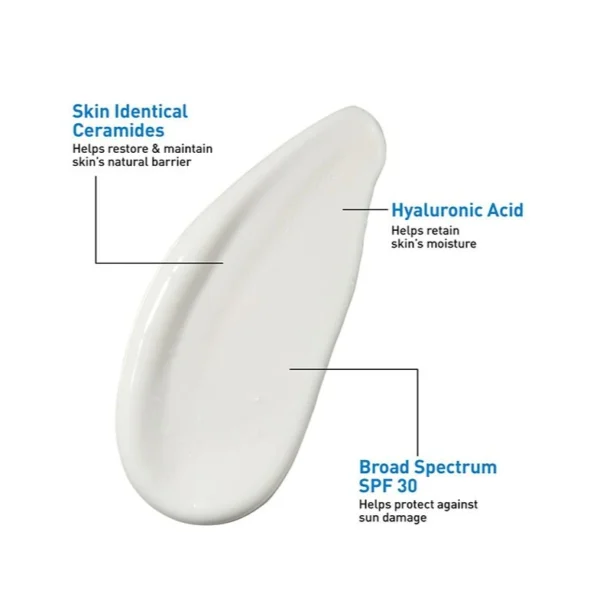
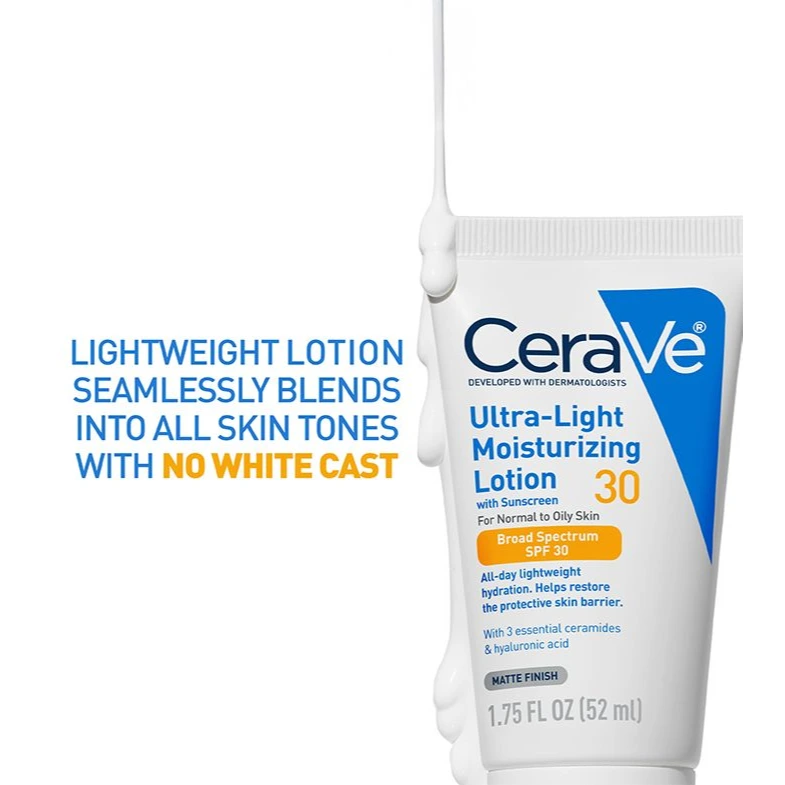
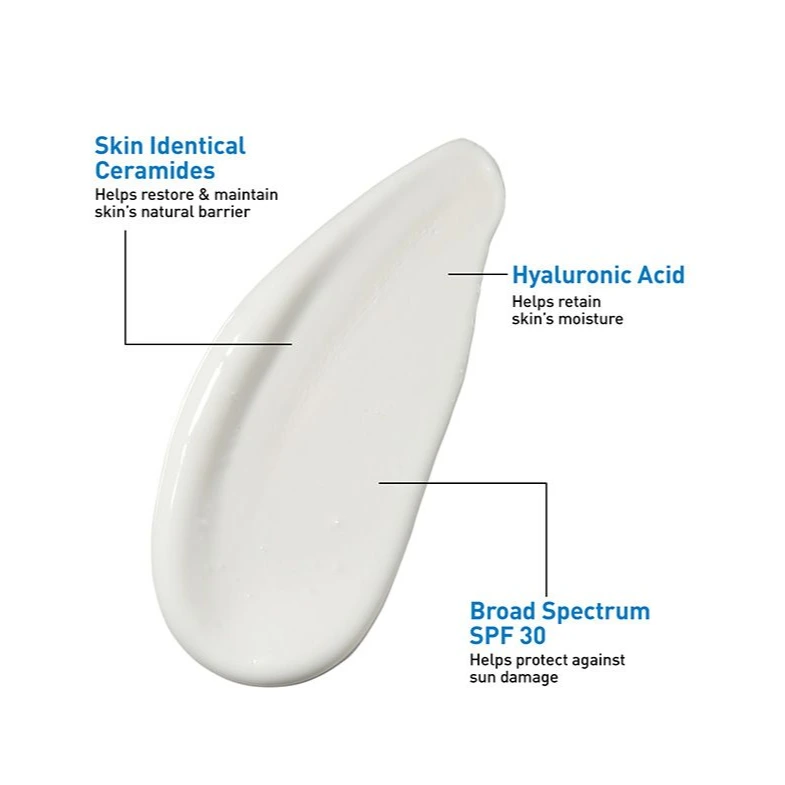
CeraVe Ultra-Light SPF 30 is a broad-spectrum facial sunscreen built on the usual CeraVe base: three skin-identical ceramides, hyaluronic acid, cholesterol and phytosphingosine. Oil-free, non-comedogenic, fragrance-free, and finished matte rather than dewy. CeraVe positions it as a moisturizer with sunscreen in it rather than a sunscreen with moisturiser in it, which is a fair description of how it feels.
The current pack is 1.75 fl oz (52 mL). You will see it listed as 50 ml in a lot of places, including by wholesalers — earlier production was 1.7 fl oz (50 mL) and the two run alongside each other. If the tube that reaches you says 52 mL, that is the newer pack, not a different product.
The reason CeraVe Ultra-Light SPF 30 has the following it does is the finish. Most chemical sunscreens at this price either shine, sting, or sit grey on deeper skin. This one does none of those three, and for a lot of customers that is the entire buying decision.
The filters, published in full
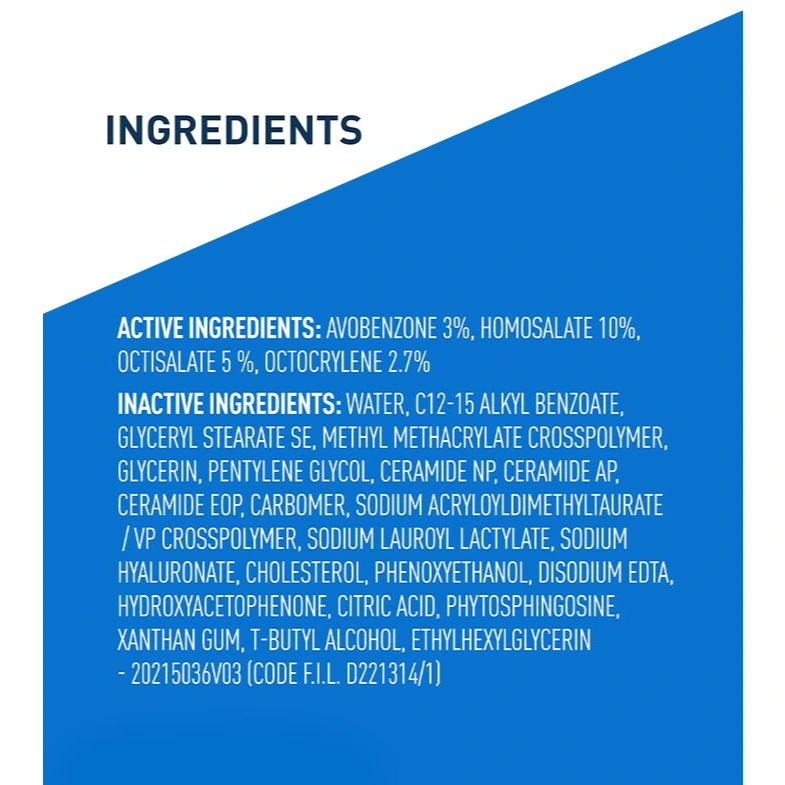
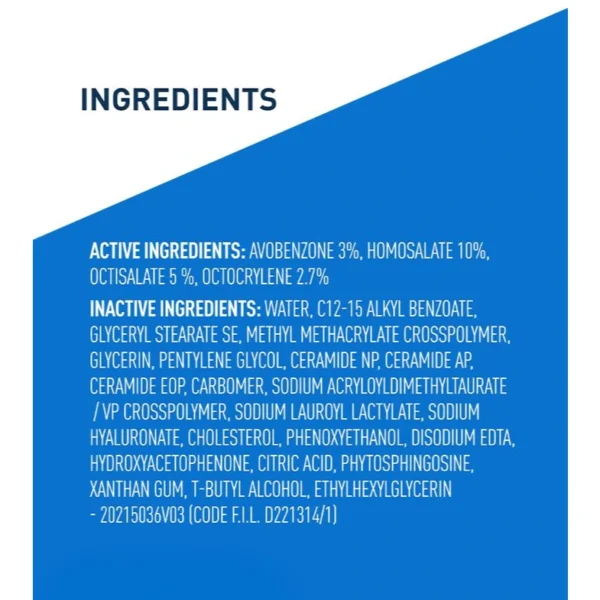
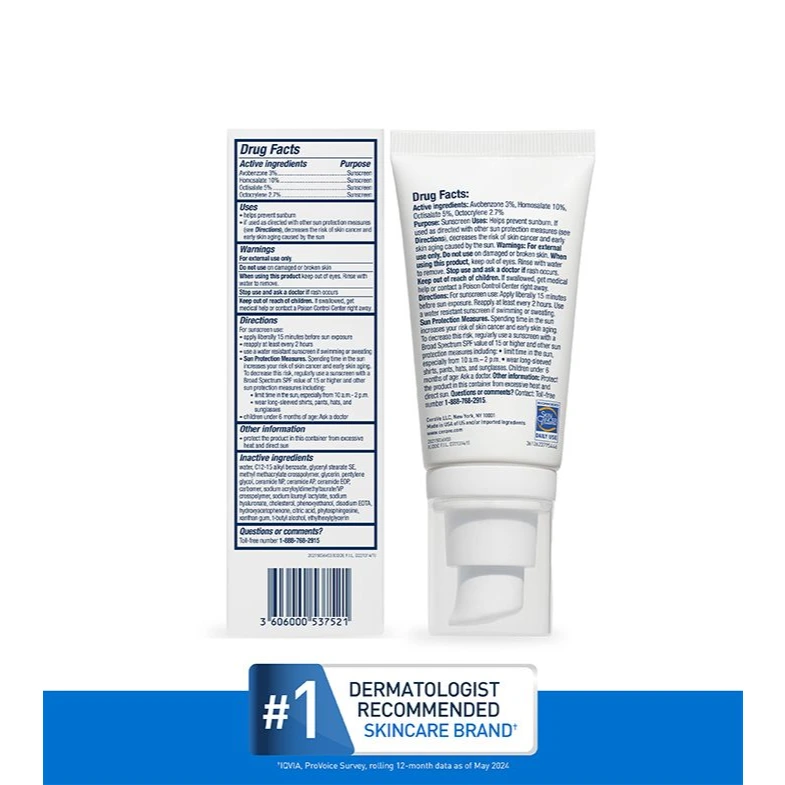
Because this is regulated as an over-the-counter drug in the United States, CeraVe has to print the actives with exact percentages. Very few sunscreens sold in Bangladesh give you this:
- Avobenzone 3% — the UVA filter doing the long-wave work
- Homosalate 10% — a UVB filter, also acting as a solvent for the others
- Octisalate 5% — UVB, and a stabiliser
- Octocrylene 2.7% — UVB, and the ingredient keeping the avobenzone from breaking down in sunlight
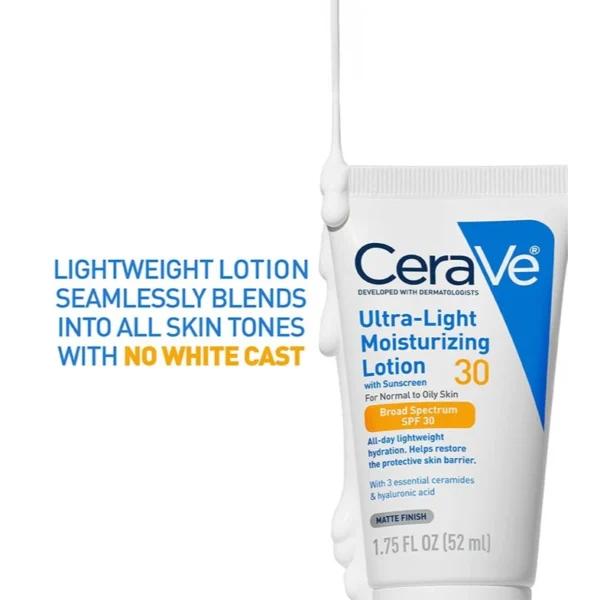
The filters in CeraVe Ultra-Light SPF 30 are all organic, or chemical, filters. There is no zinc oxide and no titanium dioxide, which is precisely why CeraVe Ultra-Light SPF 30 leaves no white cast — mineral filters are what cause that.
Inactive ingredients: Water, C12-15 Alkyl Benzoate, Glyceryl Stearate SE, Methyl Methacrylate Crosspolymer, Glycerin, Pentylene Glycol, Ceramide NP, Ceramide AP, Ceramide EOP, Carbomer, Sodium Acryloyldimethyltaurate/VP Crosspolymer, Sodium Lauroyl Lactylate, Sodium Hyaluronate, Cholesterol, Phenoxyethanol, Disodium EDTA, Hydroxyacetophenone, Citric Acid, Phytosphingosine, Xanthan Gum, T-Butyl Alcohol, Ethylhexylglycerin. No fragrance, no parabens, no alcohol denat.
The thing no other listing will tell you
Here is a fact about CeraVe Ultra-Light SPF 30 that we think you are entitled to have, and that we would rather publish than sit on.
This formula contains homosalate at 10%. The European Union capped homosalate at 7.34% in face products under Commission Regulation (EU) 2022/2195. Non-compliant products could not be placed on the EU market from 1 January 2025, and could not be made available on it from 1 July 2025.
So the American formula of CeraVe Ultra-Light SPF 30, exactly as sold, could not legally be sold as a face product in the European Union today.
Now the fair version of that, because the headline on its own is misleading:
- The EU cap came from a review of systemic exposure and potential endocrine activity, not from evidence that anyone was harmed at 10%. It is a precautionary margin-of-safety decision.
- The product remains fully FDA-compliant in the United States, where it is sold as an OTC monograph sunscreen.
- Great Britain did not adopt the restriction — the GB limit remains 10%. One regulator tightened; another looked at the same dossier and did not.
- Bangladesh has no equivalent restriction.
What you do with that is your call, and it should be. If you want a sunscreen with no homosalate at all, Korean and Japanese formulas use entirely different filter systems and we stock several. If you want the finish and the ceramides and you are comfortable with the American formulation, CeraVe Ultra-Light SPF 30 is a very good sunscreen. We are not going to make that decision for you by quietly leaving the fact out.
SPF 30 in Bangladesh — an honest look at the number
Dhaka UV index runs above 10 for much of the year. That is the World Health Organization “very high” band, and it makes the SPF number worth thinking about rather than glancing at.
SPF 30 filters roughly 96.7% of UVB. SPF 50 filters roughly 98%. That gap is smaller than people assume, and it matters far less than two other things:
- How much you apply. SPF is measured at 2 mg/cm², which is about a quarter of a teaspoon for a face — noticeably more than most people use. Apply half that and an SPF 30 behaves closer to an SPF 12. Under-application is the single biggest reason sunscreen fails.
- Whether you reapply. The label says reapply at least every two hours, and more often after sweating. In this climate you will sweat.
At the correct dose a 52 ml tube of CeraVe Ultra-Light SPF 30 gives you roughly forty face applications. If a tube is lasting you three months, you are not using enough.
One more gap worth naming: there is no PA rating on this product. The PA+ to PA++++ system is Japanese and Korean; the US uses Broad Spectrum as a pass or fail test instead. Broad Spectrum is a real standard, but it does not tell you how much UVA protection you are getting the way PA++++ does. If UVA protection is your priority — pigmentation, melasma, ageing — an Asian sunscreen with a stated PA rating gives you more information.
How to use CeraVe Ultra-Light SPF 30
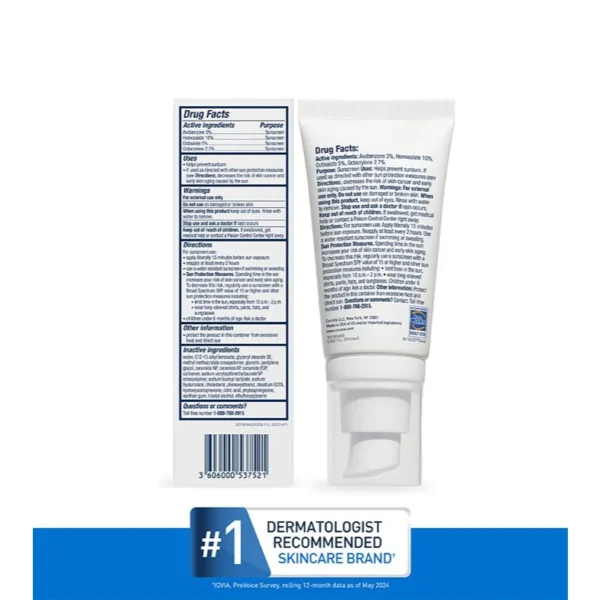
The Drug Facts panel on CeraVe Ultra-Light SPF 30 is short: apply liberally 15 minutes before sun exposure, and reapply at least every two hours. Beyond that, what actually works day to day:
- Last step in the morning. After cleanser, toner and serum, before makeup. Sunscreen goes on top of skincare, not under it.
- Two-finger rule. A line of product along your index and middle finger is roughly the right face dose. It will feel like a lot the first time.
- Give it fifteen minutes before you go out or put makeup over it.
- Reapply at lunchtime if you are outdoors at all. A cushion or powder SPF over makeup is the practical answer for most people.
- It is not water-resistant. CeraVe makes no water-resistance claim for this one, so treat swimming or heavy sweating as a reset.
The warning on the pack for children is the standard American one: under six months of age, ask a doctor. Below that age the advice everywhere is shade and clothing rather than sunscreen.
Who it suits
CeraVe Ultra-Light SPF 30 is a good fit if you have oily or combination skin and hate a dewy finish; you have a deeper skin tone and are tired of grey casts; you use retinoids or acids and need daily protection that will not sting; you want ceramides in your sunscreen rather than a separate step; or you have simply never found a sunscreen you would actually wear every day.
Look elsewhere if you want SPF 50 and a stated PA rating; you prefer mineral filters; you specifically avoid homosalate or octocrylene; you need water resistance for swimming or sport; or you have very dry skin, in which case a matte-finish lotion will feel tight and you would do better layering a sunscreen over a proper cream.
Why this page exists while the product is out of stock
We could have waited until CeraVe Ultra-Light SPF 30 was back on the shelf before writing any of this. We would rather you could read it now, decide whether it is the sunscreen you want, and be told the day it arrives instead of checking back.
Use the notify form on this page and we will tell you the day CeraVe Ultra-Light SPF 30 is back. It emails you once, when stock lands. We do not use it for marketing and you are not signing up to anything.
If you need a sunscreen before then, we would rather point you to something we can actually deliver than have you go a month unprotected. Message us and we will tell you honestly what is in stock and what suits your skin — including products that earn us less than this one does.
Questions we get asked
Does it leave a white cast?
No. There are no mineral filters in it. This is the main reason CeraVe Ultra-Light SPF 30 has the following it does among people with medium and deep skin tones.
Can I use it under makeup?
Yes, and the matte finish of CeraVe Ultra-Light SPF 30 makes it one of the easier sunscreens to do that with. Give it fifteen minutes to set first, or it will pill.
Is SPF 30 enough for Bangladesh?
CeraVe Ultra-Light SPF 30 is enough if you apply the right amount and reapply. It is not enough if you apply a thin layer once at 8am and forget. A properly applied SPF 30 beats a badly applied SPF 50 every time.
Is it safe with tretinoin or acids?
Yes — and it is close to mandatory. Fragrance-free, alcohol-free and non-comedogenic makes CeraVe Ultra-Light SPF 30 an easy partner for an actives routine.
Will it break me out?
CeraVe Ultra-Light SPF 30 is labelled non-comedogenic and oil-free, which is about as good a starting signal as sunscreen gives you. No sunscreen is universally non-breakout, but this is one of the safer bets for oily skin.
What is the difference between this and the AM Facial Moisturizing Lotion SPF 30?
The AM lotion is a moisturiser with niacinamide and a more emollient finish; CeraVe Ultra-Light SPF 30 is thinner and matte. Same SPF, different feel. Oily skin usually prefers the Ultra-Light.
How long does a tube last?
At the correct dose, around forty applications from a 52 ml tube — roughly six weeks of daily use on the face alone.
Does it expire?
Sunscreen filters degrade. There is a printed expiry on the carton and you should respect it, particularly with a chemical sunscreen kept in a hot room. Do not stockpile more than you will use.
Chemical, mineral, or the Asian filter systems
Sunscreen arguments online get heated, so here is the plain version of where CeraVe Ultra-Light SPF 30 sits. CeraVe Ultra-Light SPF 30 uses organic filters, sometimes called chemical filters. They absorb UV and convert it to heat. Mineral filters — zinc oxide and titanium dioxide — mostly scatter and absorb it at the surface. Neither category is inherently safer or better; they trade off differently.
Organic filters, as used in CeraVe Ultra-Light SPF 30, are cosmetically elegant. No cast, no chalk, easy under makeup. The trade-off is that some of them are absorbed systemically, which is exactly what prompted the EU review of homosalate, and a few people find them stinging around the eyes.
Mineral filters sit on the surface and are the standard recommendation for very reactive skin and for babies. The trade-off is the white cast, which on Bangladeshi skin tones is not a small thing.
Korean and Japanese sunscreens use a third set of filters — Tinosorb S and M, Uvinul A Plus, Iscotrizinol — that are approved in the EU and Asia but not by the FDA. They tend to offer stronger UVA coverage with the same cosmetic elegance, which is why so many people import them. The catch is that the US market, and therefore CeraVe, cannot use them.
So when you compare CeraVe Ultra-Light SPF 30 against a Korean SPF 50+ PA++++, you are not comparing two versions of the same thing. You are comparing two regulatory systems.
What CeraVe does not publish
The gaps, rather than guesses to fill them:
- No UVA-PF or PA rating. Broad Spectrum is a pass or fail, not a number.
- No critical wavelength figure is published, though the Broad Spectrum designation requires at least 370 nm.
- No period-after-opening symbol. Sunscreens carry a printed expiry date instead, and for CeraVe Ultra-Light SPF 30 that is the date to go by.
- No water-resistance claim at all, which is itself informative — brands claim it when they can.
- No country of manufacture on the brand page. The carton settles it and we would rather you read the carton than take our word.
None of these are failures. They are simply the limits of what the American labelling system asks a brand to disclose, and it is worth knowing where those limits sit before you compare CeraVe Ultra-Light SPF 30 with a product labelled under a different system.
Storage, authenticity and the heat problem
Chemical sunscreen filters are less stable than mineral ones, and heat is what degrades them. A tube of CeraVe Ultra-Light SPF 30 left on a car dashboard or a sunny windowsill in Dhaka is not the same product a month later, even though it looks identical. Keep it indoors, capped, and out of direct sun. Do not buy in bulk to save money on a sunscreen you will take a year to finish.
On authenticity: sunscreen is one of the most counterfeited categories in South Asia, precisely because you cannot tell by looking. Every tube of CeraVe Ultra-Light SPF 30 we sell is photographed as it arrives, including the Drug Facts panel and the batch code, so you can match what you receive against what we advertised. If anything about the tube you get does not match this page, tell us and we will replace it.
We would rather lose a sale to a cheaper listing than have you rely on a fake sunscreen in a UV index of eleven.
Where it fits in your routine
Cleanse, treat, moisturise, protect. CeraVe Ultra-Light SPF 30 is the last step and the one people skip.
It matters most if you are already exfoliating — the Anua BHA 2% Gentle Exfoliating Toner and the The Ordinary AHA 30% + BHA 2% Peeling Solution both increase sun sensitivity, and using either without daily sunscreen undoes the work and can make pigmentation worse. On dry skin, layer it over the CeraVe Moisturizing Cream; on irritated skin, over Cicaplast Baume B5+. Our full sunscreens range shows what is in stock right now.
You can verify the actives, the inactive list and the claims on the official CeraVe product page, and the homosalate limit in the published text of Commission Regulation (EU) 2022/2195. We would rather you checked.
Reviews
There are no reviews yet.