Description
CeraVe Moisturizing Cream is the 453 g tub dermatologists have been handing out for two decades, and it is the most-requested barrier cream we stock. This page tells you what is actually inside it, what the label claims, where those claims quietly change from one country to another, and — the part almost nobody writes down — how a cream built for dry North American winters behaves in Dhaka humidity. Read it before you buy, not after.
What CeraVe Moisturizing Cream actually is
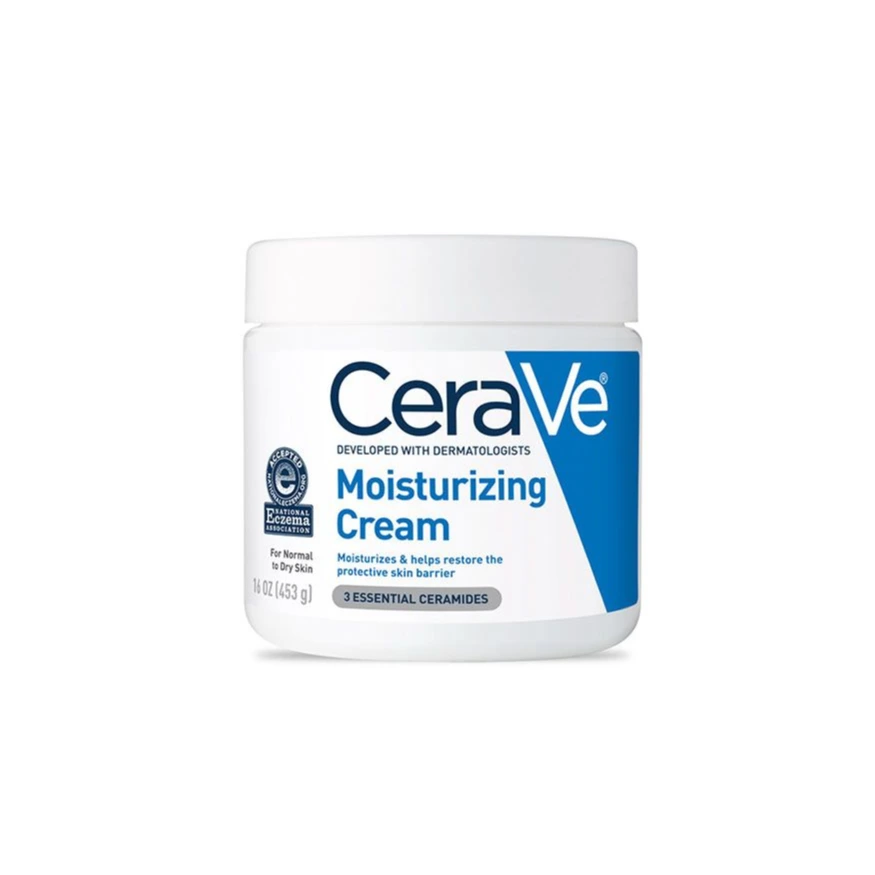
CeraVe Moisturizing Cream is a rich, fragrance-free, non-comedogenic cream for face and body, sold here in the 16 oz / 453 g tub. It is not a serum, not a treatment, not a lightweight gel. It is an occlusive-leaning barrier cream whose whole job is to put back what cleansing, acids, retinoids, air conditioning and hard water strip out.
The formula was built with dermatologists around three ceramides that occur naturally in human skin, and the US tub carries the Accepted seal of the National Eczema Association. CeraVe LLC is based in New York, NY 10001, and the back of the tub states “Made in USA of US and/or Imported Ingredients.” That sentence is printed on the pack and appears nowhere on CeraVe’s website — we read it off the tub so you would not have to guess.
One caveat now that we stock seven sizes: that country statement applies to the US-carton sizes. The 50ml tube is supplied in two versions, French and Indian, and our supplier labels them accordingly — you can see which you are buying in the Size dropdown above. The ingredient list is the same across all of them; the production site is not.
One thing worth saying plainly at the top: CeraVe Moisturizing Cream is a maintenance product, not a corrective one. It will not fade dark spots, clear acne or smooth texture. It repairs and holds the barrier so that the products which do those things can be tolerated. Judged as what it is, it is very good. Judged as a treatment, it will disappoint you.
The full ingredient list, read off the tub
CeraVe Moisturizing Cream has twenty-four ingredients. We checked this list three ways — CeraVe’s US site, CeraVe’s UK site, and the printed panel on the back of the tub itself — and all three match exactly. That consistency is worth more than it sounds; not every pharmacy brand manages it.
Aqua/Water/Eau, Glycerin, Cetearyl Alcohol, Caprylic/Capric Triglyceride, Cetyl Alcohol, Ceteareth-20, Petrolatum, Potassium Phosphate, Ceramide NP, Ceramide AP, Ceramide EOP, Carbomer, Dimethicone, Behentrimonium Methosulfate, Sodium Lauroyl Lactylate, Sodium Hyaluronate, Cholesterol, Phenoxyethanol, Disodium EDTA, Dipotassium Phosphate, Tocopherol, Phytosphingosine, Xanthan Gum, Ethylhexylglycerin.
Two things to notice immediately. There is no Parfum and no Fragrance anywhere in that list, so the fragrance-free claim on CeraVe Moisturizing Cream is not marketing — it is verifiable from the list itself. And Dimethicone sits thirteenth, so this is not a silicone-free product. CeraVe never claims it is; we mention it because customers who avoid silicones ask.
The three ceramides
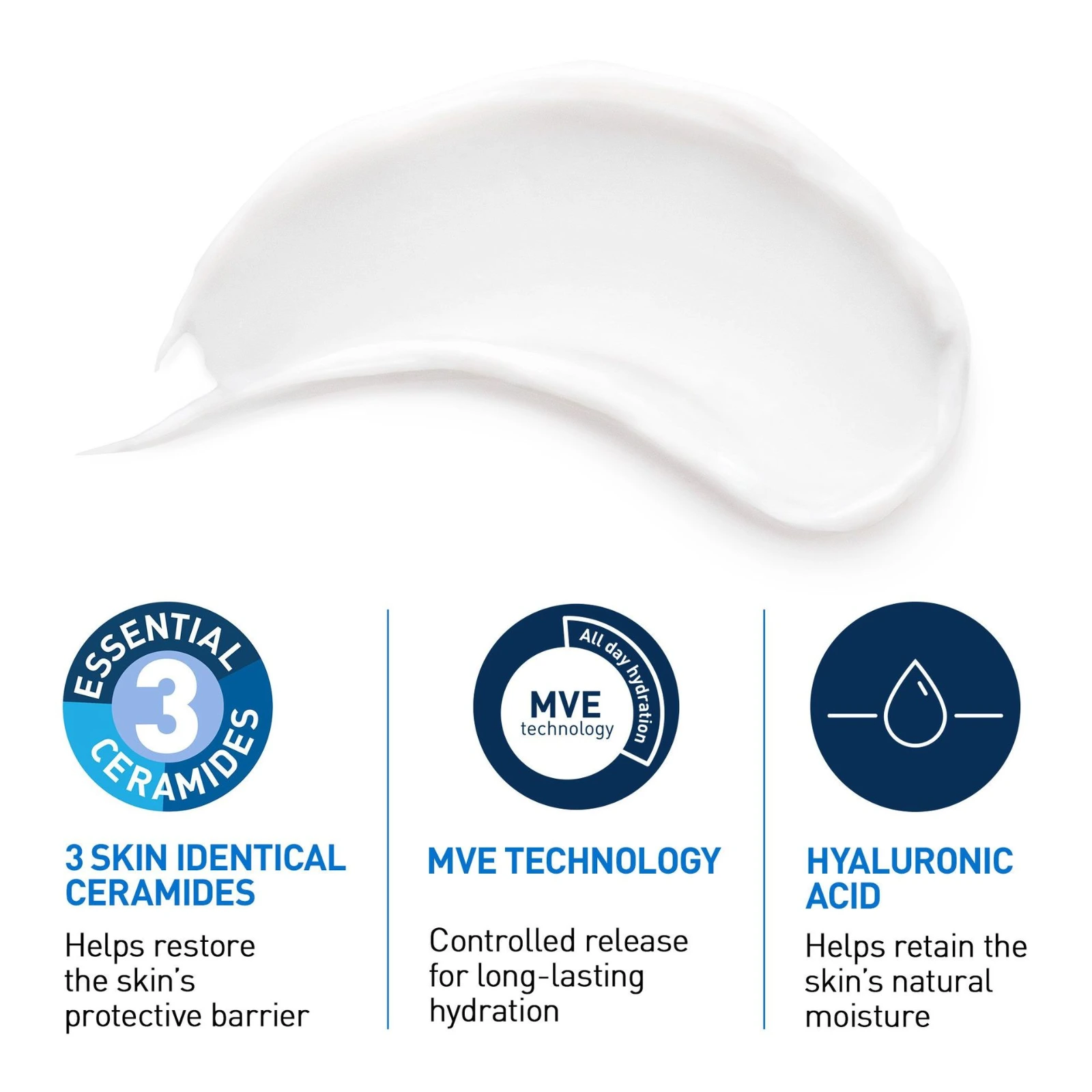
Ceramide NP, Ceramide AP and Ceramide EOP are the “3 essential ceramides” on the front of the CeraVe Moisturizing Cream pack. In older naming they are ceramide 3, ceramide 6-II and ceramide 1. Ceramides are the lipids that sit between your skin cells and stop water escaping; a compromised barrier is usually a barrier short of them. Putting the same three back in roughly the ratio skin uses them is the entire idea behind CeraVe Moisturizing Cream, and it is why the brand exists at all.
What CeraVe does not tell you is how much of each. No percentage is published in any market, on any pack, in any document we could find. The three sit ninth, tenth and eleventh of twenty-four, which places them below Petrolatum and above Carbomer — enough to be meaningful, not enough to quantify. Anyone quoting you a ceramide percentage for this product is making it up.
Hyaluronic acid, cholesterol and phytosphingosine
Sodium Hyaluronate is the salt form of hyaluronic acid and the humectant half of the formula — it holds water in the upper layers so the occlusives have something to seal in. Glycerin, sitting second in the list, does the same job in bulk and is doing far more of the heavy lifting than the hyaluronic acid is.
Cholesterol and Phytosphingosine matter more than their position suggests. Healthy skin barrier lipids are roughly ceramides, cholesterol and fatty acids together — ceramides alone do not rebuild a barrier. Including cholesterol and a sphingoid base alongside the three ceramides is what separates CeraVe Moisturizing Cream from cheaper creams that put one ceramide on the front of the box and nothing behind it.
What MVE Technology actually is
MVE stands for MultiVesicular Emulsion — layered vesicles that release their contents gradually rather than all at once, which is where the extended-hydration claim comes from. Here is the detail nobody prints: the back of the tub states that MVE is a registered trademark of DFB Technology, Ltd. It is licensed technology, not something L’Oréal or CeraVe invented. That does not make it worse — it makes the claim checkable, which is the point.
The honest part: how CeraVe Moisturizing Cream behaves in Bangladesh
This is the section you will not find on any other Bangladeshi listing, so read it carefully.
CeraVe Moisturizing Cream was formulated for North American and European skin in North American and European weather — dry indoor heating, cold air, low humidity. Petrolatum sits seventh in the list and the formula leans on cetearyl and cetyl alcohol for its thick, creamy body. That is exactly right for a Toronto January. It is a lot of cream for Dhaka in July.
What that means in practice:
- Dry and very dry skin: excellent all year, face and body. This is the intended user and it performs.
- Normal skin: excellent from November to February. In monsoon and summer, many people find it better used at night only, or on the body rather than the face.
- Oily or acne-prone skin: it is labelled non-comedogenic and that testing is real, but non-comedogenic is not the same as light. On oily Bangladeshi skin in 85% humidity, a petrolatum-forward cream frequently feels heavy and sits on the surface. It will not necessarily break you out; it may simply feel unpleasant.
- Anyone using acids or retinoids: this is where CeraVe Moisturizing Cream earns its price regardless of season. Barrier repair after exfoliation is its strongest use case.
If you have oily or combination skin and you want the same ceramide system in a lighter texture, the CeraVe Moisturizing Lotion is the same idea in a thinner base. Buying the 453 g tub of the wrong texture is an expensive mistake, and we would rather tell you now.
One formula, three different claims
Here is something odd that we found while checking sources, and we would rather publish it than quietly ignore it. The ingredient list for CeraVe Moisturizing Cream is identical in the United States, the United Kingdom and Canada. The claims attached to it are not.
- The US pack says “For Normal to Dry Skin” and CeraVe US advertises up to 24 hours of hydration.
- The UK pack says “For Dry to Very Dry Skin” — a different audience for the same cream — and also claims up to 24 hours.
- The Canadian marketing for the same formula claims 48 hours of hydration and a stronger barrier in one hour, plus suitability for babies from two months.
Same twenty-four ingredients, three different stories. We are not accusing anyone of anything — regulatory wording and local substantiation differ by market, and that is normal. But you should know that the number on a CeraVe Moisturizing Cream advert depends on which country printed it. Where the claims disagree, we quote the most conservative one.
The one clinical figure CeraVe does put a footnote against is 80% dryness relief, described as average results in a clinical study after four weeks of daily use on the leg. We repeat the footnote because the footnote is the honest part of the claim.
How to use CeraVe Moisturizing Cream
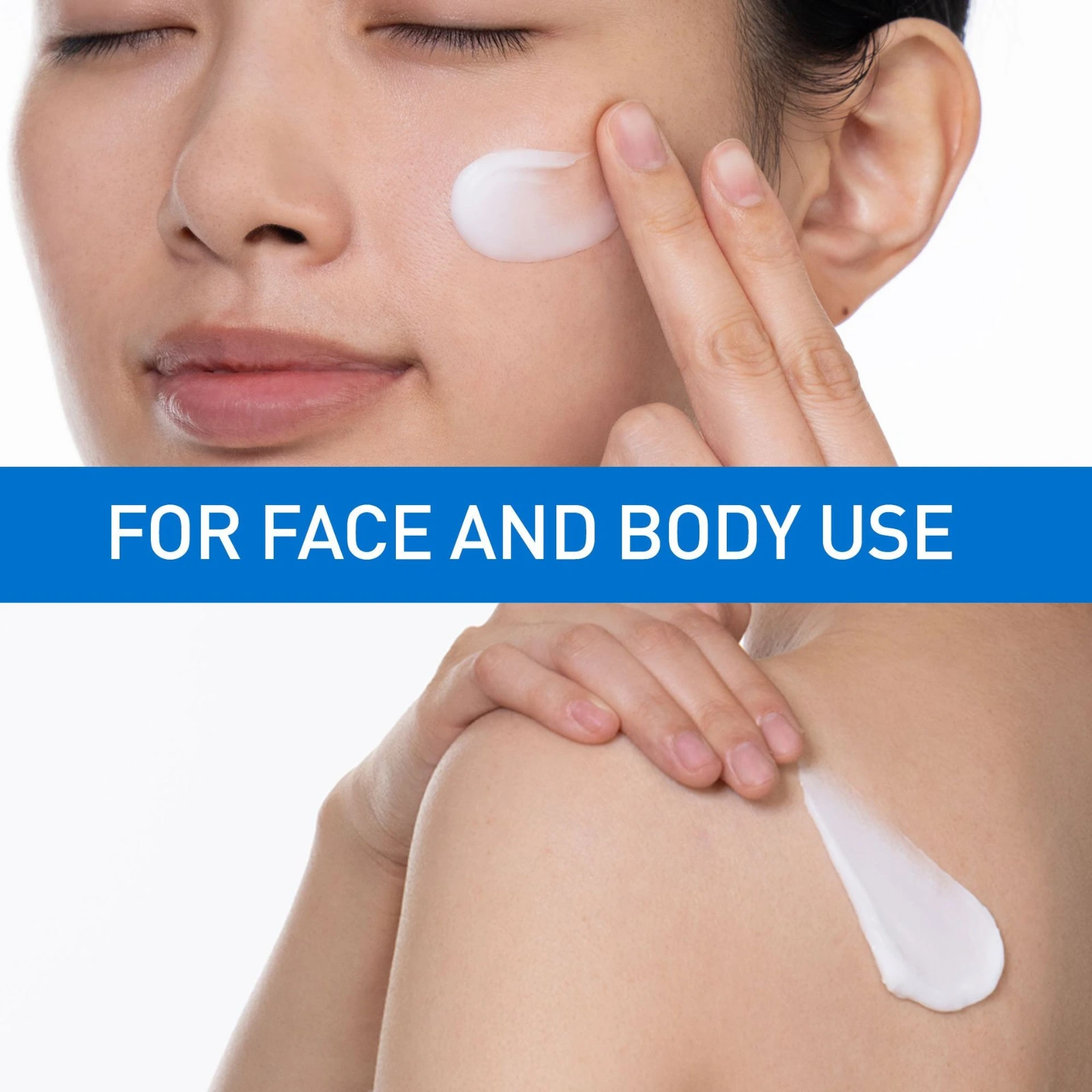
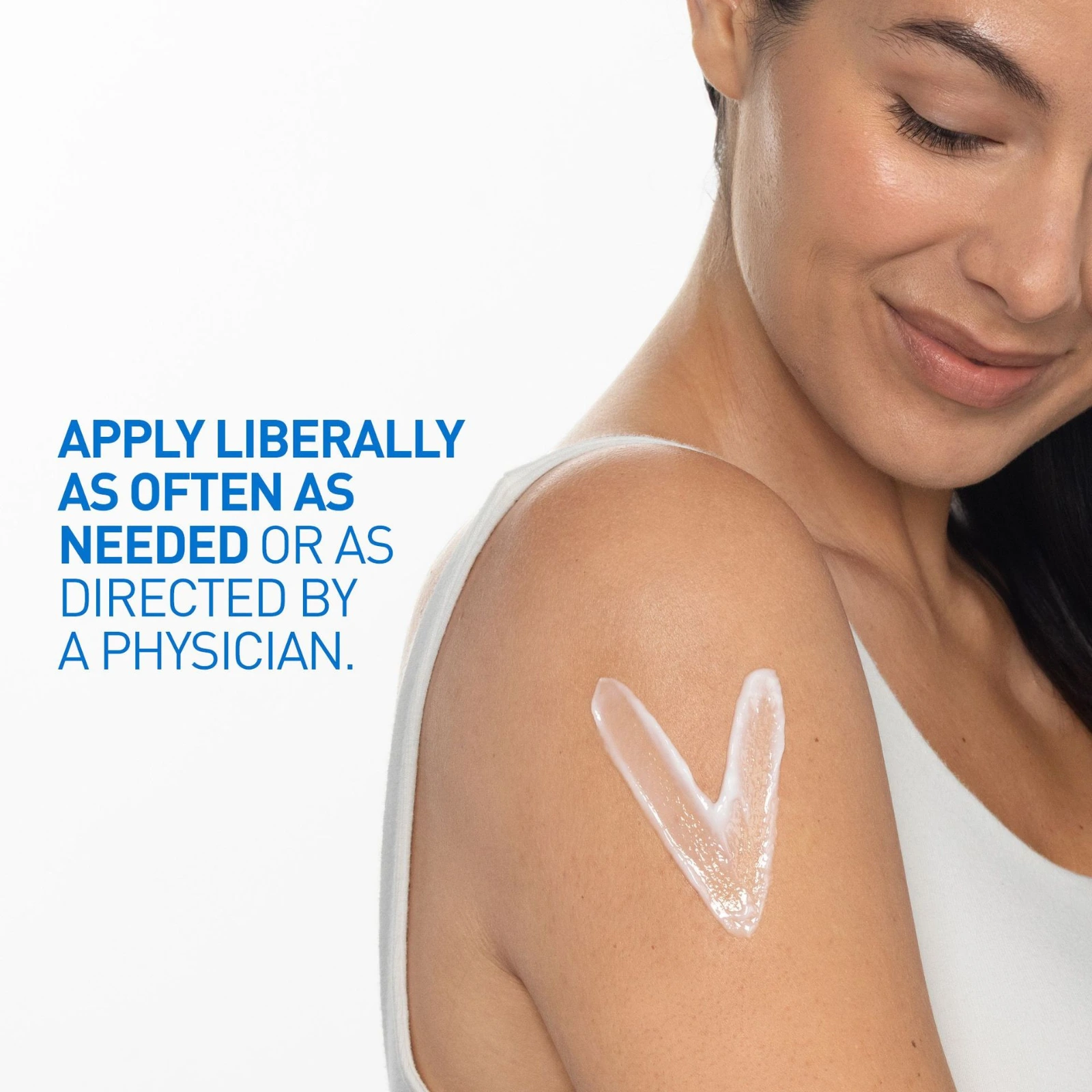
The direction printed on the CeraVe Moisturizing Cream tub is refreshingly short: “Apply liberally as often as needed or as directed by a physician. Avoid direct contact with eyes.” There is no once-daily rule and no complicated protocol.
In a Bangladeshi routine, three practical notes:
- Apply to slightly damp skin. Straight after cleansing or showering, while there is still water on the surface. Occlusives seal in what is already there; on bone-dry skin you get less out of the same amount.
- Use less than you think on the face. A pea-sized amount is plenty. Most complaints about heaviness are really complaints about quantity.
- Layer it last at night. After toner, after serum, after any acid or retinoid. CeraVe Moisturizing Cream is the final step, not a base layer.
For the body — elbows, knees, heels, shins — apply as generously as you like. That is where a 453 g tub actually makes sense.
Which size of CeraVe Moisturizing Cream should you buy?
We stock seven sizes of the same formula. The ingredient list is identical across all of them — what changes is the packaging, the hygiene, and the cost per gram. Pick by how you intend to use it, not by price alone.
| Size | Packaging | Best for |
|---|---|---|
| 50ml (India) | Tube | Trying it for the first time, or a handbag. The lowest-cost way to find out whether the texture suits you. |
| 50ml (France) | Tube | Same size, French production. Buy this one if you specifically want the European batch. |
| 56ml | Tube | Face only, one person, roughly two months. Hygienic — nothing goes into it but the cap. |
| 177ml | Tube | The sensible everyday face size. Enough to last, still a tube rather than an open pot. |
| 236ml | Tube | Face and hands, or two people sharing. Our pick if you want volume without the tub. |
| 340g | Tub | Face and body for one person. Better value per gram than the tubes. |
| 453g | Tub | Whole family, face and body, winter. The cheapest per gram by a clear margin. |
The short version: if it is going on your face only, buy a tube. If it is going on arms, legs and heels as well, buy a tub. The section below explains why that distinction matters more than most stores admit.
The tub problem nobody mentions
CeraVe Moisturizing Cream in the 453 g size ships as an open tub, not a pump. Every use means putting fingers into a container you will keep for months. Preservation is handled (Phenoxyethanol, Disodium EDTA, Ethylhexylglycerin), so this is not a safety scare — but it is a hygiene habit worth forming.
Use a clean, dry spatula or a small spoon, or at minimum wash and dry your hands before dipping. Keep the lid on. Do not store it in a steamy bathroom. If you want the same formula without the tub, the pump-bottle Moisturizing Lotion solves the problem entirely.
Who should buy it, and who should not
Buy CeraVe Moisturizing Cream if: your skin is dry, very dry, flaky or tight; you use exfoliating acids or retinoids and need barrier support; you want one fragrance-free cream for the whole family’s body; you have eczema-prone skin and want a product with the National Eczema Association seal; or your skin has been wrecked by a harsh cleanser and you need to reset.
Think twice if: your skin is oily and you want a facial moisturizer for summer; you dislike silicones; you specifically want anti-ageing, brightening or acne actives; or you want something that absorbs in seconds before makeup. None of those are failures of the product — they are simply not what it is for.
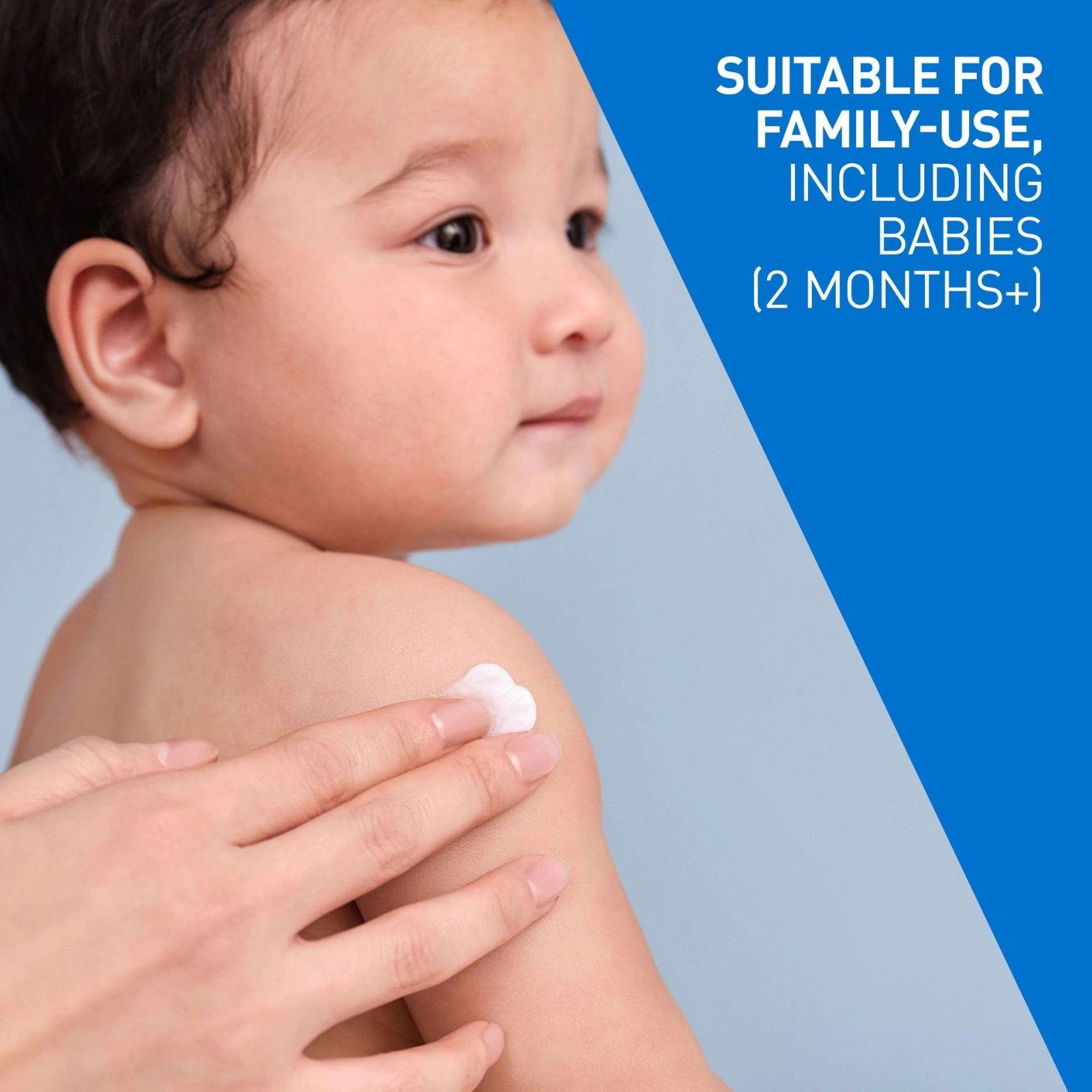
A note on the family claim above: babies’ skin is not small adult skin. The Canadian pack markets this for two months and up, the US pack does not make that claim at all, and we are not going to resolve that disagreement for you. Ask your paediatrician.
What CeraVe does not publish
We would rather list the gaps than fill them with guesses:
- No ceramide percentages — none, in any market.
- No hyaluronic acid percentage.
- No period-after-opening (PAO) figure is printed on the US tub. Treat it as roughly a year after opening and store it away from heat.
- No pH is published.
- Country statement is “Made in USA of US and/or Imported Ingredients” — deliberately non-specific about ingredient origin, which is standard US labelling language and not a red flag.
You can verify everything above against CeraVe’s own product page. We would rather you check us than trust us.
Questions we actually get asked
Is CeraVe Moisturizing Cream good for oily skin?
On the body, yes. On the face in Bangladeshi summer, often no. It is non-comedogenic, so it is unlikely to clog you, but petrolatum sits seventh in the list and the texture is deliberately thick. Oily and combination skin usually prefers the lighter Moisturizing Lotion for daytime and keeps the cream for winter nights.
Can I use it with retinol, tretinoin or acids?
Yes, and this is where CeraVe Moisturizing Cream is at its best. Apply your active first, wait for it to absorb, then seal with the cream. Barrier support is what makes strong actives tolerable over months rather than weeks. Just remember the sunscreen the next morning.
Is CeraVe Moisturizing Cream safe during pregnancy?
Nothing in the twenty-four ingredients is a recognised pregnancy concern — no retinoids, no salicylic acid, no essential oils, no fragrance. That said, we are a shop, not your doctor. If you are pregnant, run any product past your physician.
Face or body — which is it for?
Both. CeraVe markets it explicitly for face and body use, which is what makes a 453 g tub sensible rather than excessive. Most customers use it generously on the body and sparingly on the face.
How long does a 453 g tub last?
A 453 g tub of CeraVe Moisturizing Cream lasts, face only, well over six months for most people. Full body daily, expect two to three months. There is no printed period-after-opening symbol on the US tub, so treat it as roughly twelve months once opened and keep it cool.
Does it contain fragrance or essential oils?
No. There is no Parfum, no Fragrance and no essential oil anywhere in the list. This is one of the few “fragrance-free” claims on the market you can verify yourself in ten seconds by reading the panel.
What is the difference between the cream and the lotion?
CeraVe Moisturizing Cream and the Moisturizing Lotion share the same ceramide and hyaluronic acid system in two textures. The cream is rich and creamy; the lotion is lightweight and pumps. Same core idea, different feel — pick by climate and skin type, not by which sounds better.
Where CeraVe Moisturizing Cream fits in your routine
Cleanse, treat, moisturize, protect. CeraVe Moisturizing Cream is the third step, and it is the step that makes the second step survivable.
If you are already exfoliating with our CeraVe Renewing SA Cleanser or layering the Anua BHA 2% Gentle Exfoliating Toner, this is the cream that keeps that routine sustainable instead of stripping. If you use the The Ordinary AHA 30% + BHA 2% Peeling Solution, a barrier cream afterwards is not optional. Browse the rest of our moisturizers if you want to compare textures first.
One honest caveat we will keep repeating across the site: exfoliating acids increase sun sensitivity. Sunscreen every morning is part of this routine, not an optional extra.
Buying CeraVe Moisturizing Cream in Bangladesh
We import the 453 g CeraVe Moisturizing Cream tub and sell it at a price you can compare against the pack itself — the size, the ingredient panel and the country statement are all photographed above, so you can check the tub you receive matches the tub we advertised. Store it below 30°C, keep the lid closed, and keep it out of direct sun; heat is the main enemy of a big tub of cream in this climate.
If you are unsure whether the rich cream or the lighter lotion suits your skin, message us before ordering. Talking one customer out of the wrong 453 g tub is worth more to us than one sale of CeraVe Moisturizing Cream that ends up unused on a shelf.
Reviews
There are no reviews yet.