Description
Beauty of Joseon Glow Serum is a cushiony, fast-absorbing serum built around propolis extract, 2% niacinamide and a gentle BHA. It is one of the most talked-about Korean serums in Bangladesh right now, and the appeal is simple: it hydrates, calms and adds a soft glass-skin finish without the sticky film most glow products leave behind.
This page covers exactly what is inside the bottle, where each active actually sits in the legal ingredient order, who it suits, who should skip it, and how to fit it into a routine in Dhaka humidity. Nothing here is invented — every ingredient and instruction comes from Beauty of Joseon’s own published information.
Table of Contents
- What This Serum Is
- What Is Actually Inside
- The Propolis Question, Answered Honestly
- Niacinamide at 2%
- The BHA: Betaine Salicylate
- Who It Suits and Who Should Skip It
- How to Use Beauty of Joseon Glow Serum
- Where It Sits in Your Routine
- Texture, Finish and Layering
- What the Brand’s Testing Showed
- 30 ml or 60 ml
- Storage and Shelf Life
- The First Two Weeks: What to Expect
- How It Compares to Other Serums We Stock
- Reading the Percentages Properly
- Delivery Across Bangladesh
- Common Questions
- Full Ingredient List
What This Serum Is
Beauty of Joseon built its range around hanbang — traditional Korean herbal medicine — reworked into modern formulations. The Glow Serum is the brand’s answer to a specific problem: most products that promise glow do it with silicones, shimmer or heavy occlusives, all of which feel unpleasant in humid weather and can congest oilier skin.
This one takes a different route. Propolis extract does the soothing and the softening. Niacinamide handles sebum balance and tone. A mild BHA keeps pores clear so light reflects off skin evenly instead of scattering across rough texture. The result reads as glow but behaves like a lightweight hydrating serum.
It is a leave-on serum in a 30 ml glass dropper bottle, and it is not an exfoliating treatment, a vitamin C serum, or a retinoid. It is designed to be used daily, morning and night, alongside the rest of your routine rather than in place of it.

What Is Actually Inside
Our house rule at Lume & Layer is that you should be able to see where an active really sits before you spend money on it. Ingredient lists are ordered by concentration down to 1%, so position tells you a great deal that marketing copy does not.
Here is how the headline actives place in the official list:
| Ingredient | Position in INCI | What it is doing |
|---|---|---|
| Water | 1st | Solvent base |
| Dipropylene Glycol | 2nd | Humectant, texture |
| Glycerin | 3rd | Core hydrator |
| Butylene Glycol | 4th | Humectant, solvent |
| Propolis Extract | 5th | Soothing, softening |
| Niacinamide | 6th | Sebum balance, tone |
| Betaine Salicylate | 8th | Gentle BHA exfoliant |
The first four slots are water and humectants. That is entirely normal for a hydrating serum and it is why the product feels light rather than tacky. Sodium hyaluronate, centella asiatica extract, tea tree extract and turmeric root extract all appear further down, below the 1% line where order stops being meaningful.
The Propolis Question, Answered Honestly
Beauty of Joseon markets this serum with a 60% propolis extract figure, and that number is doing a lot of work in reviews and social posts. It deserves a straight explanation rather than a repeat.
In the published ingredient list, propolis extract appears fifth — after water, dipropylene glycol, glycerin and butylene glycol. If propolis extract genuinely made up 60% of the finished formula by weight, it would be listed first. So the two statements sit awkwardly together.
The most likely explanation, and the one common across the K-beauty industry, is that the 60% figure describes the propolis-containing solution used as the hydrating base, of which the propolis solids are a fraction. That is a legitimate way to build a formula and it is not unique to this brand. It is simply not the same claim as “this bottle is 60% propolis.”
What we can tell you with confidence: propolis extract is present at a meaningful level, high enough to sit above niacinamide in the order. What we will not tell you is that six-tenths of the bottle is bee resin, because the ingredient list does not support it. If propolis is the reason you are buying, that context matters.
One practical consequence: if you have a known bee-product or honey allergy, this serum is not for you. Propolis is a bee-derived material and reactions, while uncommon, are real.
Niacinamide at 2%
The brand states niacinamide at 2%. That is a deliberately moderate dose and it is worth understanding why, especially if you have seen 10% niacinamide serums selling for less.
Niacinamide works across a range. Around 2–5% it supports barrier function, helps regulate sebum and gradually evens tone. Above that, benefits do not scale in a straight line, and a meaningful number of people experience flushing, stinging or irritation at 10% — particularly on skin already using acids or retinoids.
At 2%, this serum is doing steady, low-drama work. It is a poor choice if you want an aggressive brightening treatment. It is a good choice if you want something you can genuinely use twice a day, every day, without your barrier complaining. If dark spots are your primary concern, a dedicated higher-strength serum is a better tool, and this can sit alongside it.
The BHA: Betaine Salicylate
The exfoliating element here is betaine salicylate, not salicylic acid. The distinction matters.
Betaine salicylate is a gentler derivative, widely used in Korean formulations because it delivers comparable pore-clearing at a milder sting. Conventionally it is treated as roughly four times gentler than salicylic acid at equal percentage, which is why it appears in daily-use products rather than weekly treatments.
In practical terms: this is not a chemical peel. You should not expect visible resurfacing. What you should expect is that pores stay clearer over weeks of consistent use, which is a large part of why skin looks smoother and more reflective.
Because there is an exfoliating acid in the formula, be deliberate about layering. Stacking this with a strong AHA, a separate BHA treatment and a retinoid on the same night is how people end up with a compromised barrier and blame the wrong product.
Who It Suits and Who Should Skip It
A good match if you have
- Combination or oily skin that still feels dehydrated by evening
- Visible pores and uneven surface texture
- Dullness rather than distinct dark spots
- Skin that reacts badly to high-percentage actives
- A preference for lightweight layers in humid weather
Look elsewhere if you have
- A known bee, honey or propolis allergy — this is a genuine contraindication
- Very dry or mature skin wanting rich occlusive nourishment; this hydrates but does not seal
- Established melasma or stubborn pigmentation needing a targeted treatment
- Active, inflamed cystic acne under medical care — check with your dermatologist first
How to Use Beauty of Joseon Glow Serum
Beauty of Joseon’s own directions are short and worth following precisely:
- Dispense 2–3 drops into your palm.
- Apply gently to face and neck, focusing where you want extra hydration or brightness.
- Tap lightly with your fingertips until fully absorbed.
Two things we would add from practical use. First, apply to slightly damp skin — straight after toner, before it fully dries — because humectant-led formulas draw in whatever moisture is available. Second, resist the urge to use more. Extra drops do not multiply results; they slow absorption and can pill under sunscreen.
If your skin is new to BHA, start once daily at night for the first week and watch how it responds before moving to twice daily.
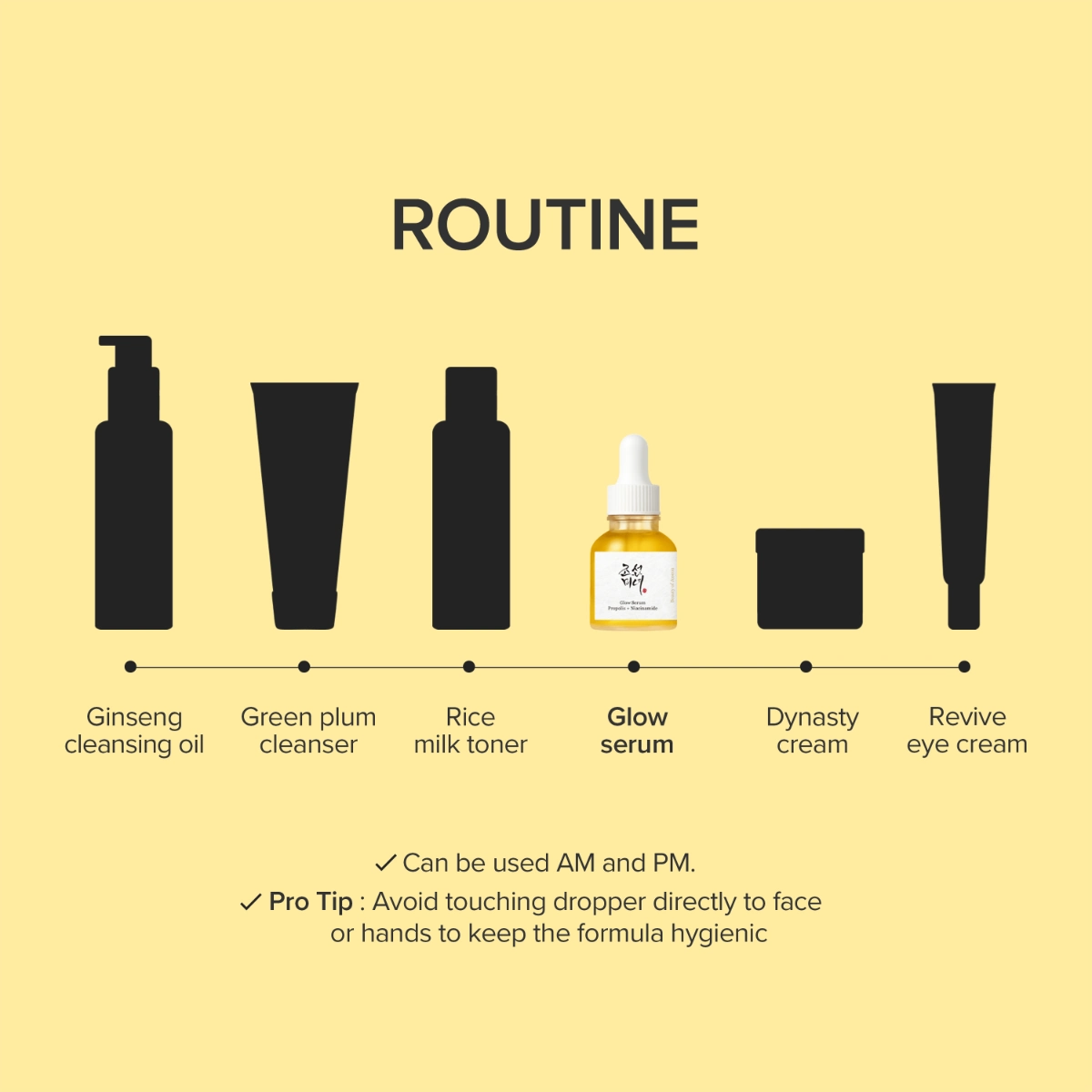
Where It Sits in Your Routine
Serums go on after cleansing and toning, and before anything heavier.
| Step | Morning | Evening |
|---|---|---|
| 1 | Cleanser | Oil cleanser, then foaming cleanser |
| 2 | Toner | Toner |
| 3 | Glow Serum | Glow Serum |
| 4 | Moisturiser | Moisturiser or sleeping mask |
| 5 | Sunscreen — non-negotiable | — |
Sunscreen is not optional advice here. Any product containing an exfoliating acid increases how much attention your skin needs from UV protection, and in Bangladesh that means daily SPF regardless of season or cloud cover.
You can browse the rest of our Beauty of Joseon range if you want to build a matched routine, or explore other skin care options.
Texture, Finish and Layering
The texture is the thing people notice first. It is described by the brand as cushiony, and that is accurate — thicker than a watery essence, considerably lighter than a cream. It spreads without dragging and sinks in within about a minute.
The finish is soft and slightly luminous rather than wet or greasy. It sits well under sunscreen and under makeup, which is not true of every glow product.
Layering notes worth knowing:
- Works comfortably over hydrating toners and under most moisturisers
- Give it a minute to absorb before sunscreen to avoid pilling
- Do not layer directly with strong acids or retinoids in the same application
- Fine to alternate with a retinoid on opposite nights once your skin is used to both
What the Brand’s Testing Showed
Beauty of Joseon publishes results from a three-week consumer study: a 23.31% improvement in skin glossiness and a 51.42% improvement in sebum measurements.
Useful context before you weigh those numbers. These are brand-run studies, not independent peer-reviewed trials, and the participant count and methodology are not published alongside the headline figures. That does not make them false — it means they should be read as directional rather than as clinical proof.
What they do tell you is the intent of the formula: it is aimed at surface glow and oil control, not at pigmentation or wrinkles. That matches the ingredient list, which is the more reliable signal.
30 ml or 60 ml
Beauty of Joseon makes this serum in two sizes. We stock the 30 ml, which is the standard size and the sensible starting point for a product containing an exfoliating acid — you will know within a few weeks whether your skin agrees with it.
At 2–3 drops twice daily, a 30 ml bottle typically lasts around two to three months depending on how generous you are.
Storage and Shelf Life
Keep the bottle closed, out of direct sunlight, and away from the heat of a bathroom shelf. Korean serums in glass droppers handle Bangladesh’s climate well but heat and light shorten the life of botanical extracts.
Check the period-after-opening symbol printed on the carton and the base of the bottle — the small open-jar icon with a number such as 12M — and go by what is on your unit rather than a figure quoted online. If the colour or smell shifts noticeably, stop using it.
The First Two Weeks: What to Expect
Managing expectations honestly is more useful than promising transformation, so here is a realistic timeline based on how the formula is built.
| Timeframe | What is realistic |
|---|---|
| Days 1-3 | Immediate surface hydration and a softer feel. This is the humectants, not the actives. |
| Week 1 | Skin feels calmer and less tight by evening. Oiliness may start easing slightly. |
| Weeks 2-4 | Texture begins smoothing as the BHA keeps pores clearer. Glow becomes more consistent rather than patchy. |
| Weeks 6-12 | Tone evens gradually from the niacinamide. This is slow, cumulative work. |
If you see stinging, redness or peeling in the first few days, reduce to every other night. That is usually a sign of too many actives at once rather than a problem with this serum specifically.
A note on purging: a mild BHA can bring existing congestion to the surface faster in the first fortnight. If breakouts appear in your usual congestion areas and settle within three weeks, that is expected. New breakouts in places you never break out are not purging, and you should stop.
How It Compares to Other Serums We Stock
Choosing between popular Korean serums is genuinely confusing because the marketing language overlaps so heavily. Here is the honest separation of jobs.
| Serum | Main job | Best for |
|---|---|---|
| Beauty of Joseon Glow Serum | Hydration, sebum balance, surface glow | Combination skin wanting light daily glow |
| COSRX Advanced Snail 96 Mucin Power Essence | Repair and deep hydration | Dry, stressed or healing skin |
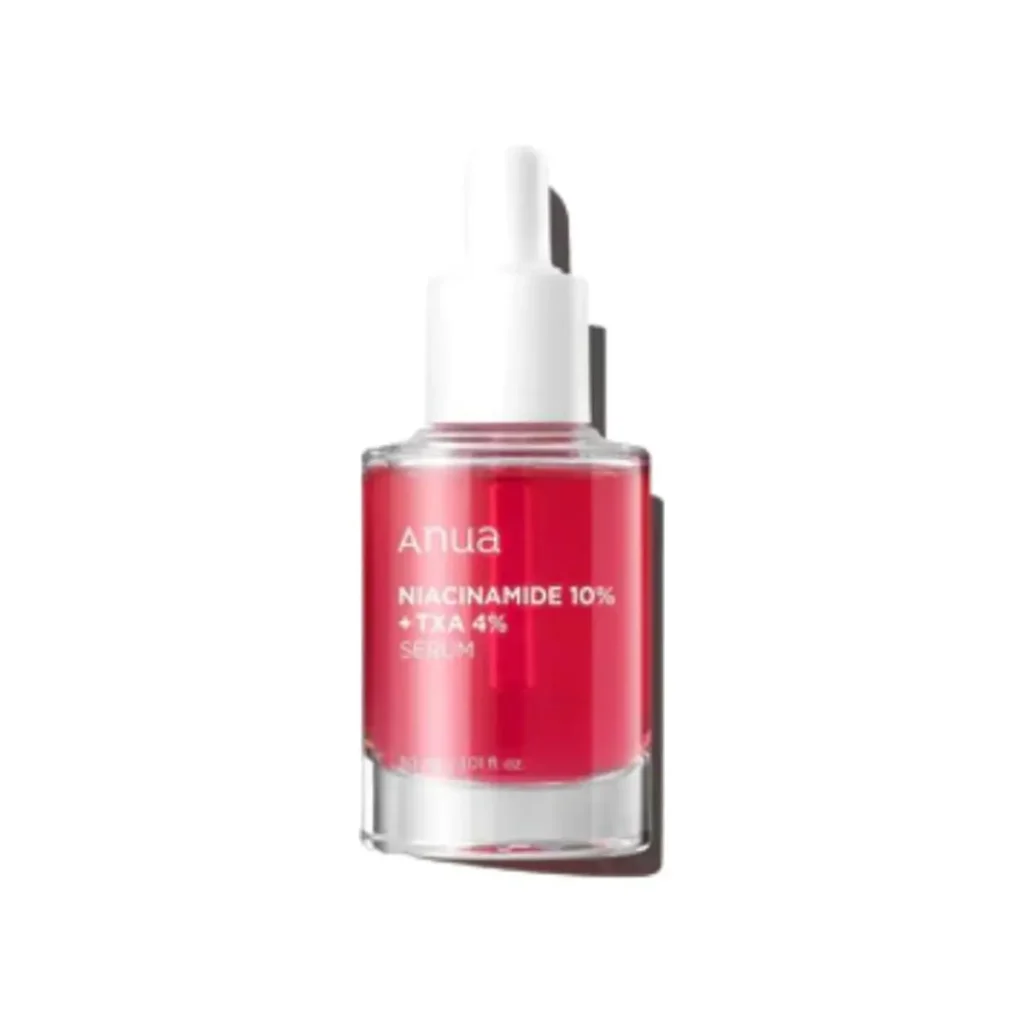
| ANUA Niacinamide 10% + TXA 4% | Targeted dark spot correction | Visible pigmentation and post-acne marks |
They are not competitors so much as different steps. If pigmentation is your main concern, the ANUA Niacinamide 10% + TXA 4% serum does that job far better at 10% niacinamide, and this Glow Serum can still sit in the routine for hydration and texture.
Reading the Percentages Properly
Percentage claims on skincare are among the easiest things to misread, and the Korean market uses them heavily.
Three rules that will serve you well across every product you buy:
- An extract percentage is not an active percentage. “60% propolis extract” describes how much of a diluted extract solution went in, not how much propolis solids the bottle contains.
- Ingredient order beats headline numbers. Everything above 1% is listed in descending order of weight. If a hero ingredient sits below the preservatives, it is present in a token amount.
- Higher is not automatically better. A 2% niacinamide you use twice daily for a year outperforms a 10% that irritates you into abandoning it after a fortnight.
We publish ingredient positions on every product page for exactly this reason. It occasionally undercuts a product we sell, and we would rather that than have you buy something on a misunderstanding.

Delivery Across Bangladesh
We deliver nationwide with cash on delivery available. Delivery is ৳120 inside Dhaka, ৳120 in Munshiganj and ৳150 outside Dhaka.
Please open and check your parcel in front of the delivery person, and record an unboxing video. Once the courier has left we cannot resolve a damaged, missing or wrong item claim, so that thirty seconds genuinely protects you.
Common Questions
Can I use this with vitamin C?
Yes, though not in the same layer. Vitamin C in the morning and this serum at night is a comfortable arrangement, or leave a few minutes between them if you use both in one routine.
Is it safe during pregnancy?
It contains a salicylate derivative. Guidance on salicylates in pregnancy varies, so ask your doctor rather than relying on a shop page.
Will it clog pores?
The formula is water and humectant led with no heavy oils near the top of the list, so congestion is unlikely for most people. Everyone’s skin differs — patch test if you are prone to breakouts.
Does it treat acne?
No. The BHA helps keep pores clearer, which can reduce the frequency of congestion-type breakouts, but this is not an acne treatment and should not replace one.
Is this the authentic product?
Yes. We source carefully selected products through trusted suppliers and established distribution channels, and packaging, labelling and condition are reviewed before dispatch.
Full Ingredient List
As published by Beauty of Joseon:
Water, Dipropylene Glycol, Glycerin, Butylene Glycol, Propolis Extract, Niacinamide, 1,2-Hexanediol, Betaine Salicylate, Sodium Polyacryloyldimethyl Taurate, Tromethamine, Polyglyceryl-10 Laurate, Xanthan Gum, Carbomer, Ethylhexylglycerin, Melia Azadirachta Flower Extract, Ocimum Sanctum Leaf Extract, Melia Azadirachta Leaf Extract, Sodium Hyaluronate, Curcuma Longa (Turmeric) Root Extract, Dextrin, Theobroma Cacao (Cocoa) Extract, Corallina Officinalis Extract, Melaleuca Alternifolia (Tea Tree) Extract, Centella Asiatica Extract, Methylpropanediol, Lotus Corniculatus Seed Extract, Pentylene Glycol, Octanediol, Calophyllum Inophyllum Seed Oil, Tocopherol
Formulations are updated from time to time. The list on your carton is the authoritative one — always read it if you have allergies or sensitivities. Full product information is published on the official Beauty of Joseon product page.
Reviews
There are no reviews yet.