Description
Cetaphil Moisturizing Cream is the 453 g tub that sits next to CeraVe on every dermatologist’s shelf, and choosing between the two is the question we get asked most. This page gives you the full ingredient list, the two different versions Galderma publishes, why some tubs say 450 g and others 453 g, and a straight comparison against the CeraVe cream we also sell — so you can pick on facts rather than on which box you have seen more often.
What Cetaphil Moisturizing Cream actually is
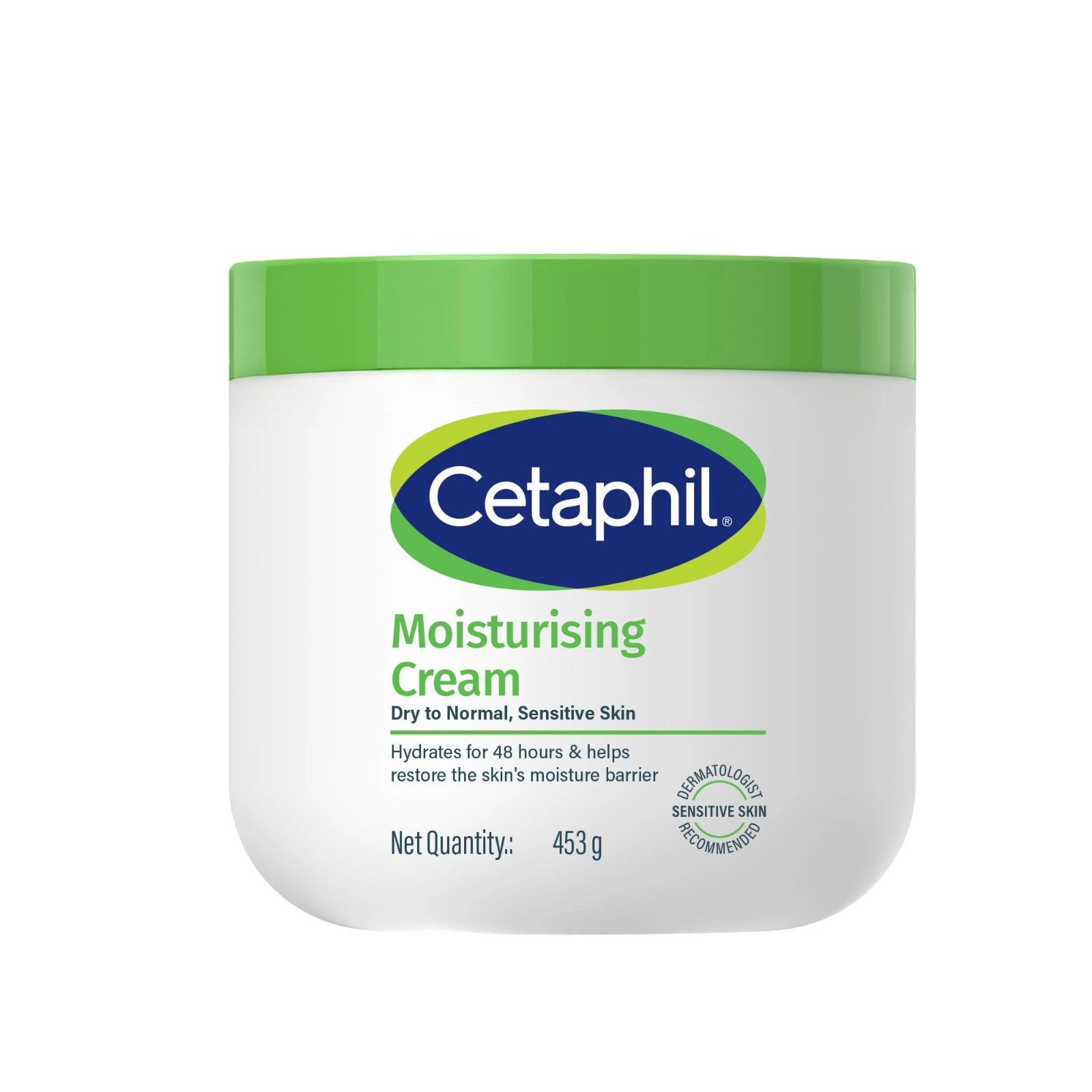
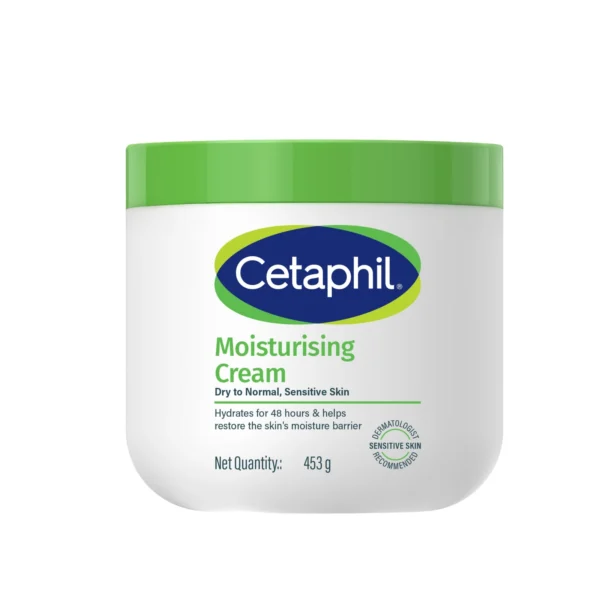
Cetaphil Moisturizing Cream is a rich, fragrance-free cream for dry to very dry, sensitive skin, sold in a 453 g tub for face and body. The formula runs on glycerin, petrolatum, niacinamide and panthenol, with sunflower and sweet almond oils for emollience and dimethicone for slip.
Notice what is not in Cetaphil Moisturizing Cream: ceramides. That is the single biggest difference between Cetaphil Moisturizing Cream and the CeraVe cream, and it is a real difference in approach rather than a shortcoming. Cetaphil hydrates and soothes; CeraVe replaces barrier lipids. Both work; they work differently.
Galderma sells it in 1 oz, 3 oz, 8.8 oz, 16 oz and 20 oz. The 16 oz — 453 g — is the size that makes sense if you are using it on the body as well as the face, which most people who buy it do.
Why some tubs say 450 g and others 453 g
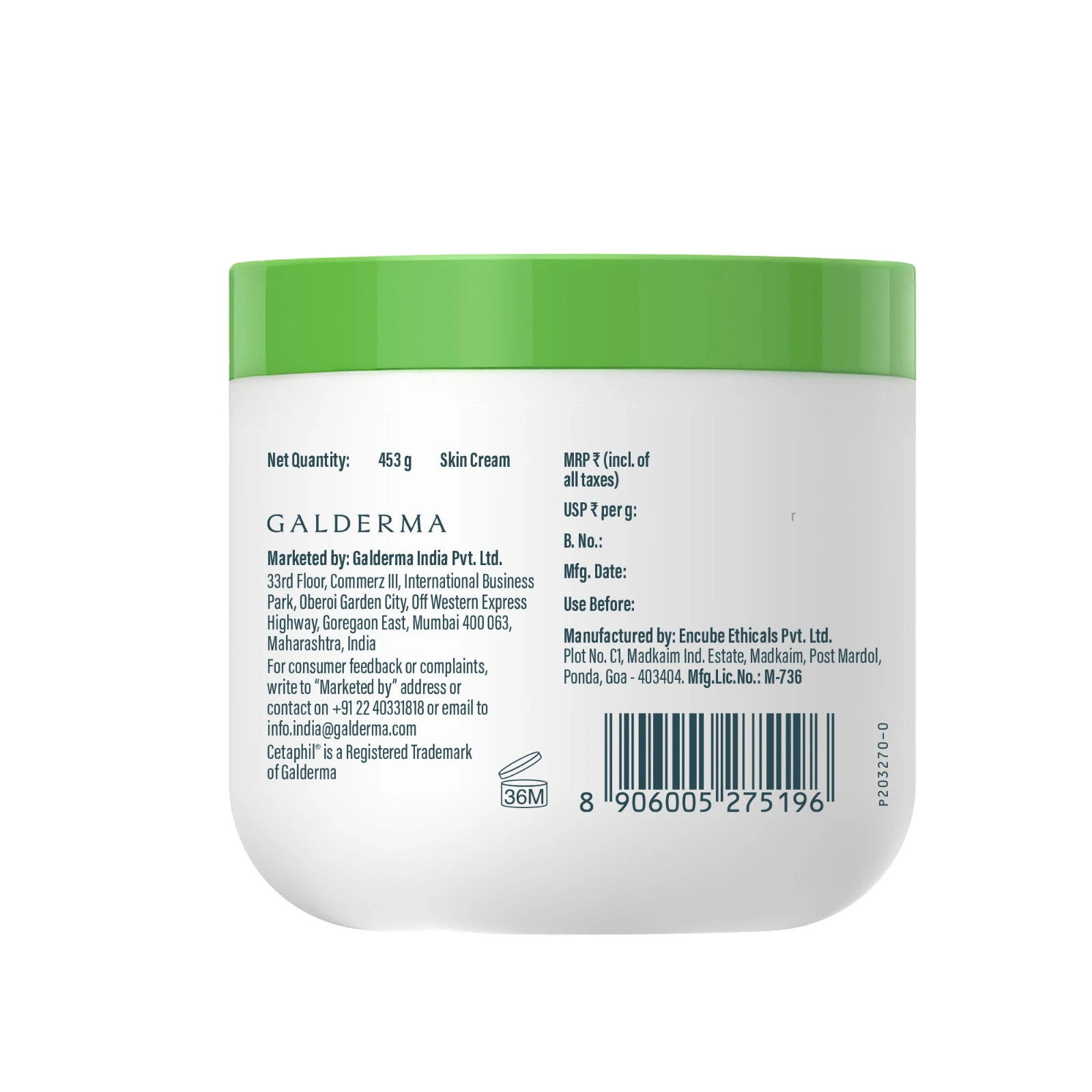
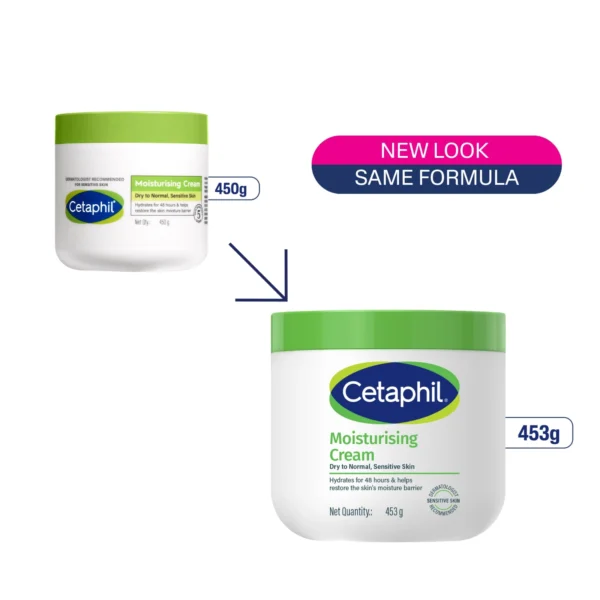
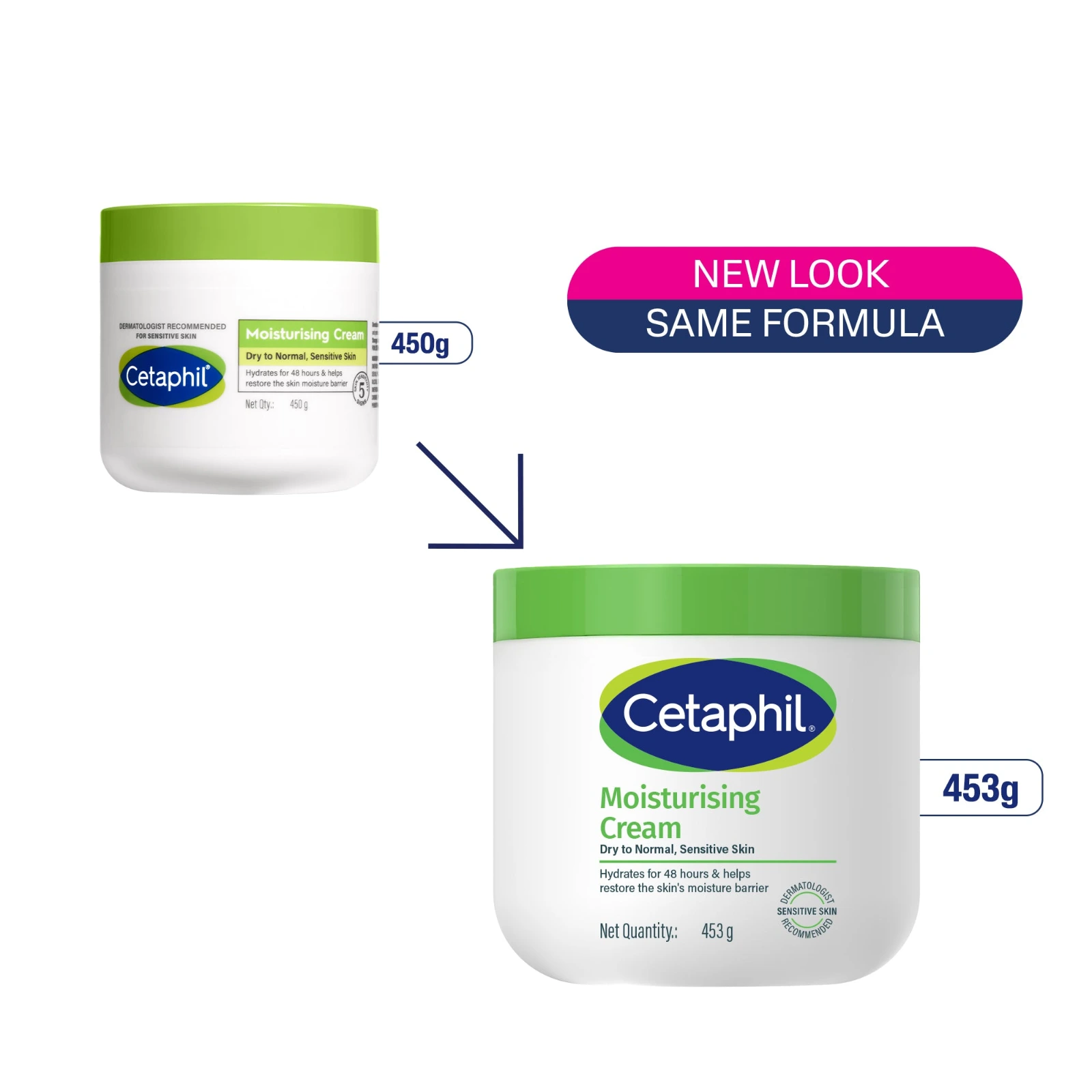
This causes more confusion than it should. Cetaphil Moisturizing Cream is sold under two printed weights, so here is the answer: it is the same product. Cetaphil relabelled the tub, and the brand’s own material says so in as many words — “new look, same formula”. The older pack was printed 450 g; the current one is 453 g, matching the 16 oz US measure.
If you receive a tub marked either way, you have the right product. We photograph the pack we ship so you can check.
The full ingredient list — and the second one
The Cetaphil Moisturizing Cream list published for the United States, twenty-three ingredients:
Water, Glycerin, Petrolatum, Dicaprylyl Ether, Dimethicone, Glyceryl Stearate, Cetyl Alcohol, Helianthus Annuus (Sunflower) Seed Oil, PEG-30 Stearate, Panthenol, Niacinamide, Prunus Amygdalus Dulcis (Sweet Almond) Oil, Tocopheryl Acetate, Pantolactone, Dimethiconol, Acrylates/C10-30 Alkyl Acrylate Crosspolymer, Carbomer, Propylene Glycol, Disodium EDTA, Benzyl Alcohol, Phenoxyethanol, Sodium Hydroxide, Citric Acid.
Now the list printed on the tub sold across Asia, twenty-five ingredients. It is the same as above with two additions: Tocopherol (alongside the tocopheryl acetate) and BHT, a synthetic antioxidant.
We flagged exactly this pattern on our Cetaphil Gentle Exfoliating SA Cleanser page, where Galderma also publishes two conflicting official ingredient lists for one product. It is not a scandal — regional formulations legitimately differ, often for shelf-life or regulatory reasons — but Galderma nowhere explains which markets get which, and a customer comparing two lists online has no way to know why they differ. So we print both.
Practically: if you avoid BHT, ask us which pack we have in stock before you order.
Two things worth knowing before you buy
Cetaphil Moisturizing Cream contains sweet almond oil. Prunus amygdalus dulcis, twelfth in the list. Almond is a tree nut. On a product specifically marketed for sensitive skin and widely used on children, that is worth saying out loud — if there is a nut allergy in your household, this is not the cream to buy blind.
It also contains benzyl alcohol. Twentieth in the list, used here as a preservative. Benzyl alcohol is also one of the twenty-six fragrance allergens the EU requires to be declared when it is used as a fragrance component. It is not doing that job here, and the fragrance-free claim on Cetaphil Moisturizing Cream is legitimate — but if you have ever reacted to a “fragrance-free” product and could not work out why, benzyl alcohol is the ingredient to look at.
Niacinamide, panthenol and glycerin
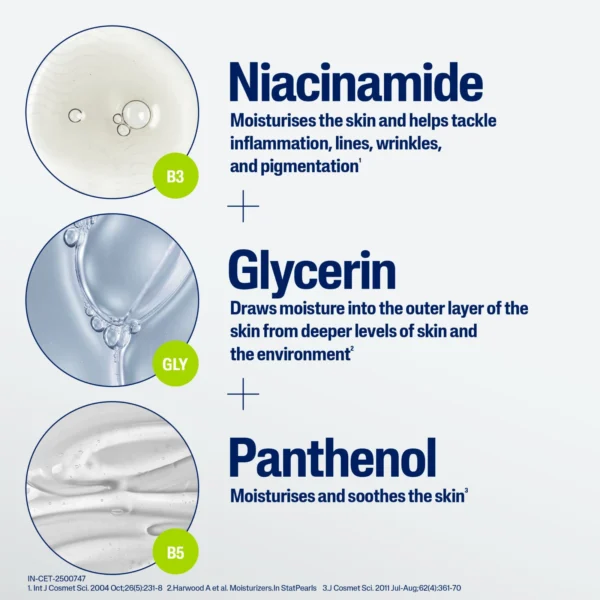
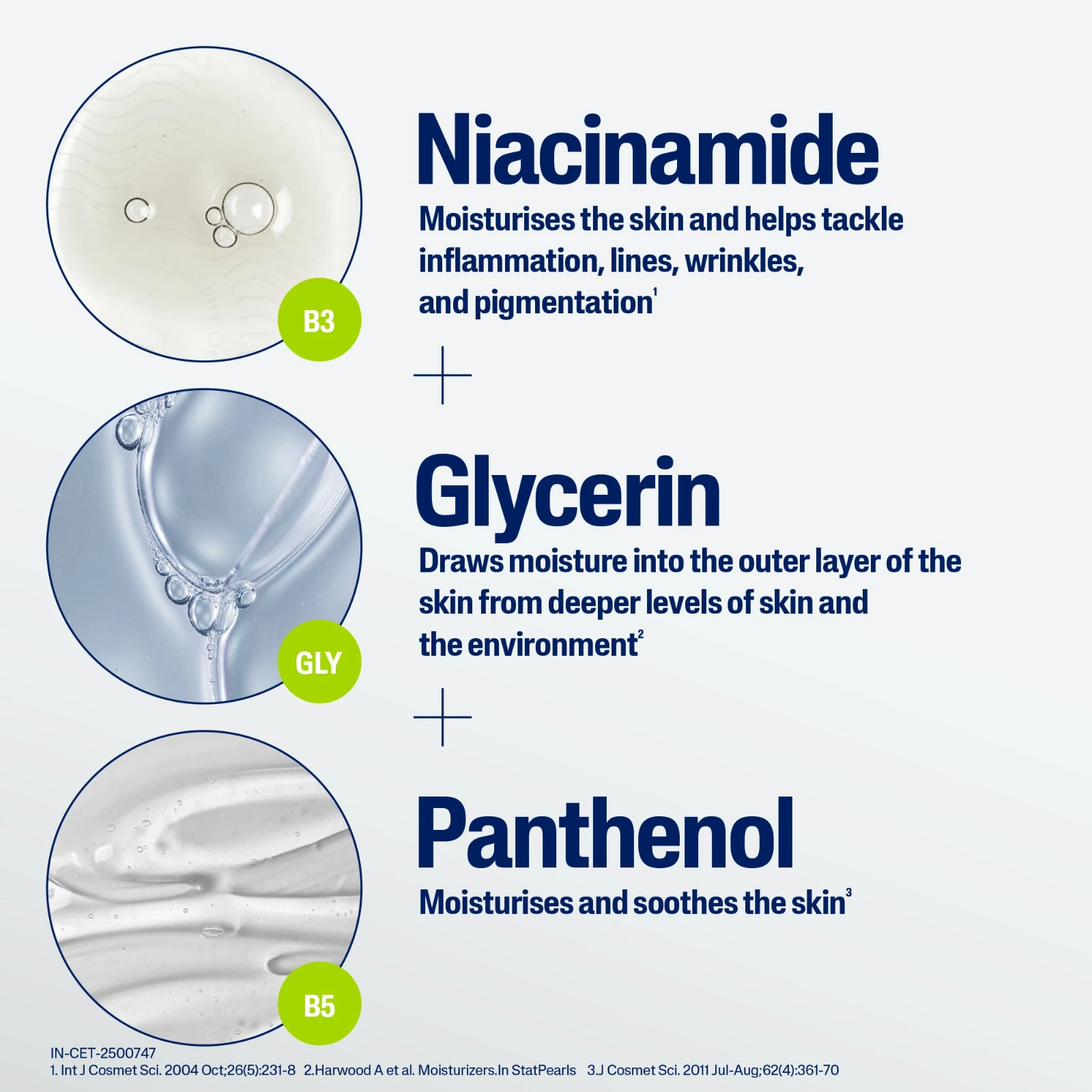
These are the three actives Cetaphil Moisturizing Cream leads with, and all three are well evidenced. Niacinamide supports the barrier and calms redness. Panthenol soothes and holds water. Glycerin, sitting second, is the humectant doing the bulk of the work.
No percentages are published for any of them — not on the tub, not on Cetaphil’s site, not in any Galderma document we could find. Niacinamide sits eleventh of twenty-three, which places it well below the 4–5% used in dedicated niacinamide serums. Treat it as supportive, not as a treatment dose.
The claims, weighed
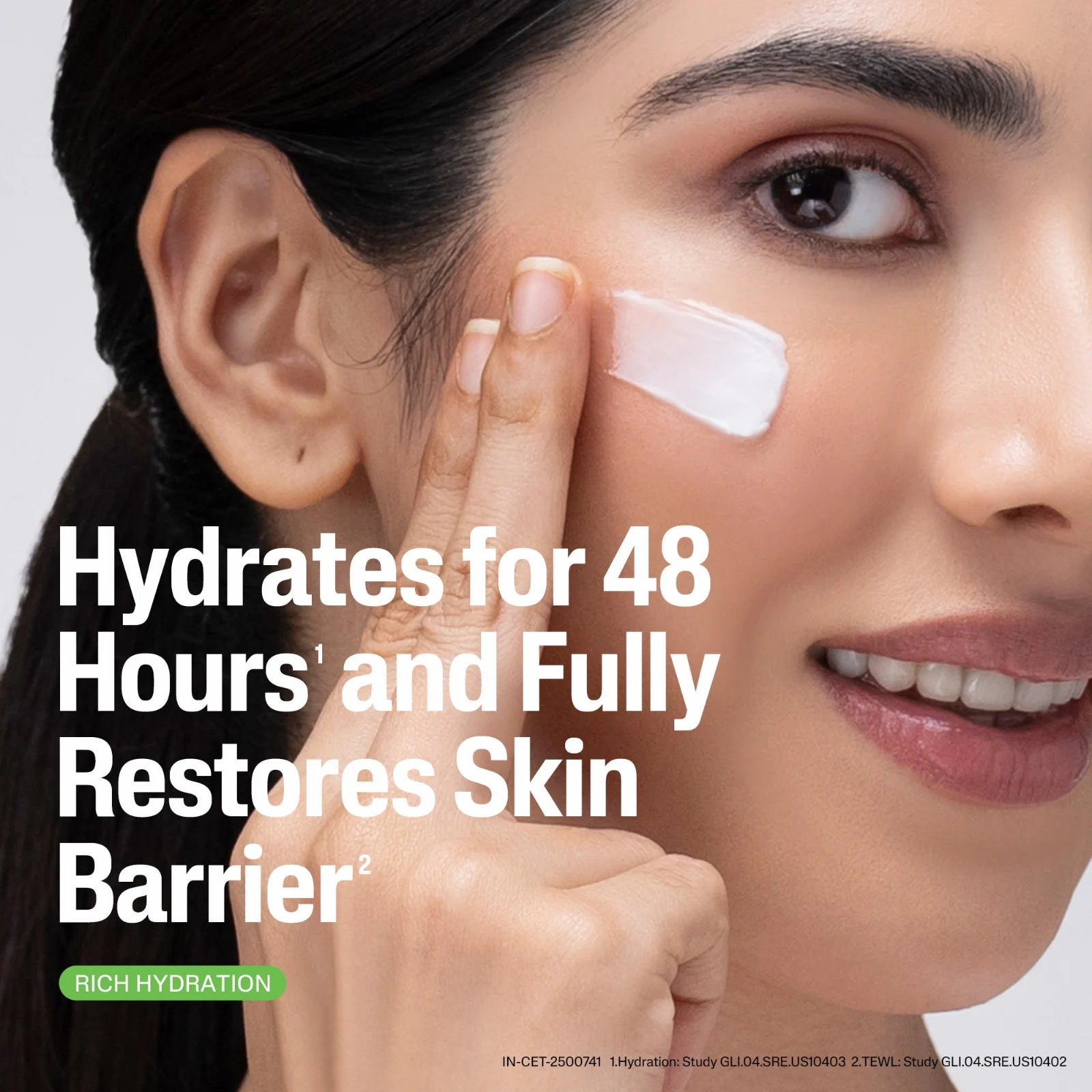
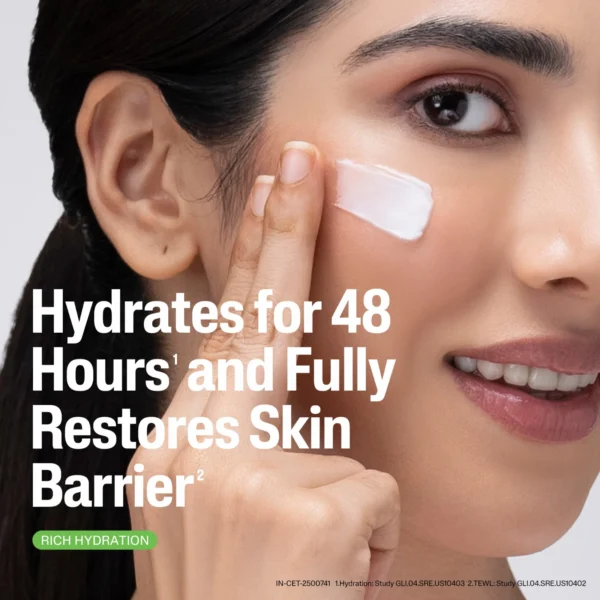
- “Clinically proven to hydrate for 48 hours.” An instrumental measurement, and the strongest claim here. Cetaphil does not publish the study alongside it.
- “Significant barrier improvement in 3 days, complete restoration in 1 week.” Also instrumental, also unpublished in detail.
- “97% of users reported that skin seems more hydrated over time.” Note the wording — reported and seems. This is a consumer-perception figure, not a measurement.
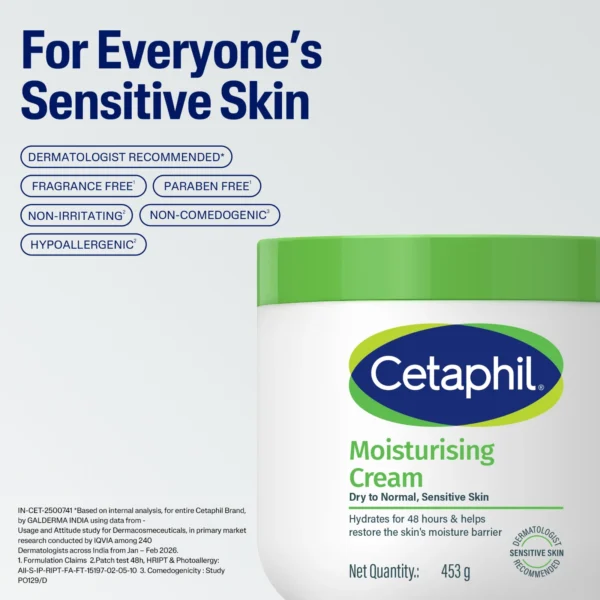
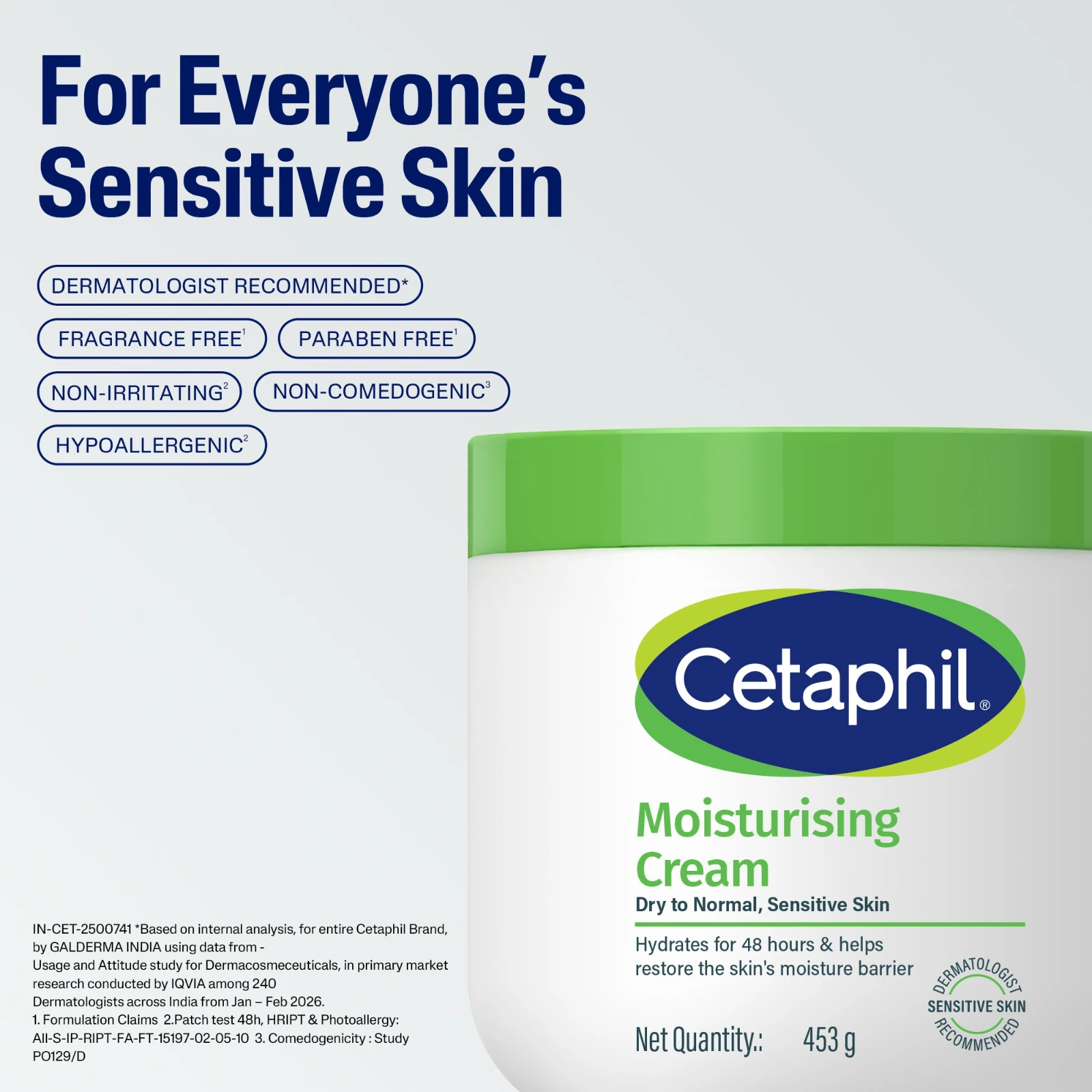
- “Hypoallergenic.” This term has no legally-binding definition in most markets. It signals the brand’s intent, not a regulated standard.
- “Fragrance free”, “paraben free”, “won’t clog pores”, “dermatologist tested”. The first two are verifiable from the ingredient list above. The last two are testing claims made on the finished product.
- Accepted by the National Eczema Association. A real seal with real criteria — and the claim on this page we would weight most heavily.
Cetaphil Moisturizing Cream versus CeraVe Moisturizing Cream
We sell Cetaphil Moisturizing Cream and the CeraVe cream both, at almost the same price, in almost the same size tub. So here is the honest comparison rather than a sales pitch.
- CeraVe gives you three ceramides plus cholesterol and phytosphingosine — the barrier-lipid approach. If your skin is damaged, flaky, or wrecked by acids and retinoids, that is the more targeted repair.
- Cetaphil Moisturizing Cream gives you niacinamide and panthenol — the soothe-and-hydrate approach — with a slightly richer, more emollient feel from the sunflower and almond oils.
- Texture: Cetaphil is the thicker, more classic cold-cream feel. CeraVe is slightly lighter and absorbs a touch faster.
- Both are fragrance-free, both are NEA Accepted, both are petrolatum-forward, and both are rich creams designed for dry climates.
Our practical read: for a barrier broken by actives, CeraVe. For general dryness, sensitivity and redness — and for body use — Cetaphil Moisturizing Cream. If you have no strong preference, buy whichever is in stock; the difference between them is far smaller than the difference between using one and using neither.
How it behaves in Bangladesh
Petrolatum sits third in Cetaphil Moisturizing Cream. That makes Cetaphil Moisturizing Cream a genuinely occlusive product, formulated for dry Northern-hemisphere winters, and it is the same caveat we give on the CeraVe tub.
- Dry and very dry skin: excellent year-round, face and body. This is the intended user.
- Normal skin: good from November to February. In monsoon and summer, most people prefer it at night or on the body only.
- Oily or acne-prone skin: “won’t clog pores” is a tested claim and we do not dispute it, but non-comedogenic is not the same as light. On oily skin in 85% humidity a petrolatum-forward cream sits heavily. Try it on the body first.
- Body use is where a 453 g tub earns its price — heels, elbows, shins, hands. That works here in any season.
How to use it
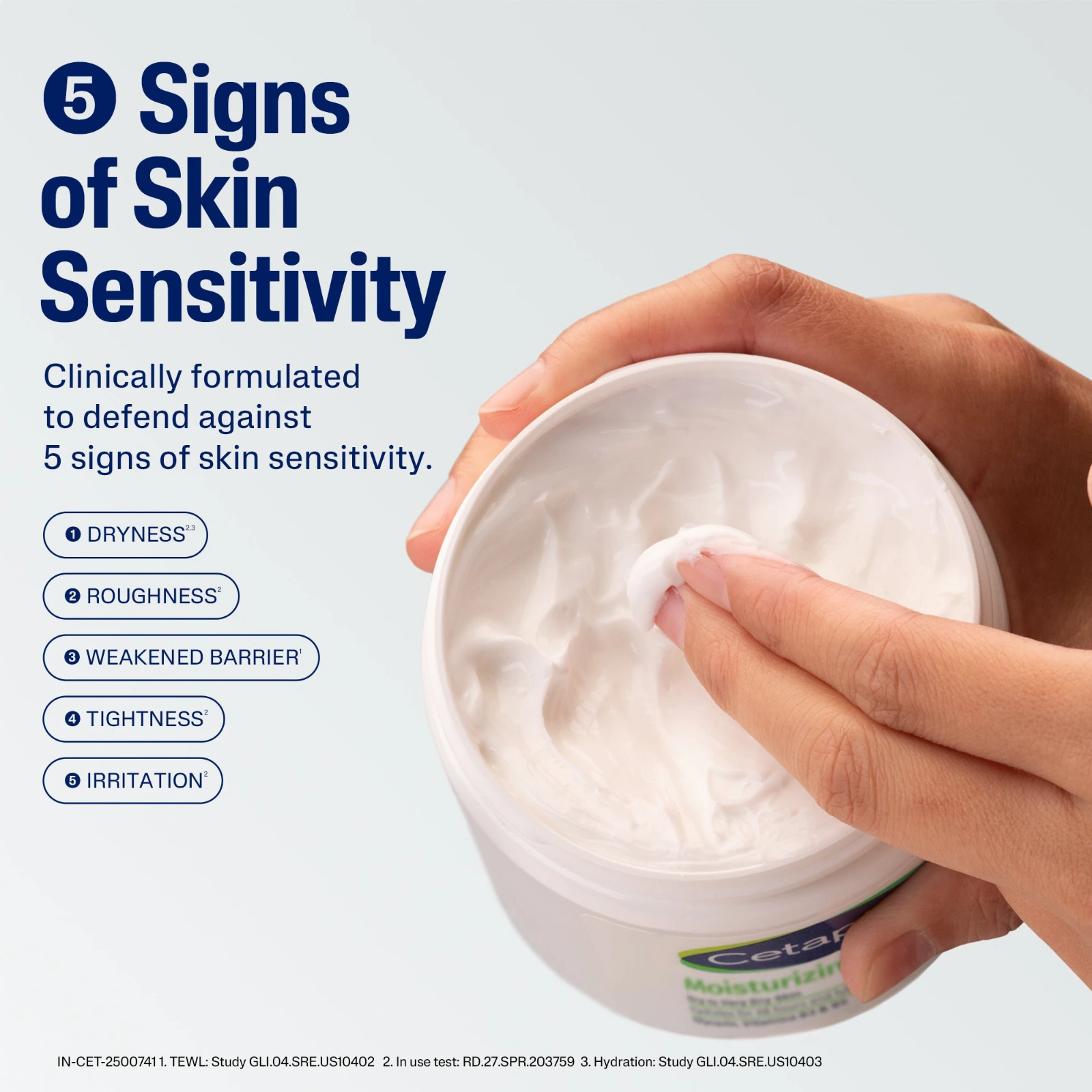
The direction on Cetaphil Moisturizing Cream is simple: massage into the skin until fully absorbed, ideally straight after a shower or bath while the skin is still slightly damp.
- Damp skin, always. An occlusive works by sealing in water that is already there.
- Less than you think on the face. A pea-sized amount. Most complaints about heaviness are complaints about quantity.
- Generously on the body. That is what the tub is for.
- Last step at night, after any serum or treatment.
The tub hygiene point
A 453 g tub of Cetaphil Moisturizing Cream means putting fingers into a container you will keep for months. The preservative system handles it — phenoxyethanol, benzyl alcohol, disodium EDTA — so this is not a safety scare, but it is a habit worth forming. Use a clean spatula or a small spoon, or wash and dry your hands first. Keep the lid on and store it out of a steamy bathroom.
Who should buy it, and who should not
Buy Cetaphil Moisturizing Cream if: your skin is dry to very dry; you want one fragrance-free cream for the whole family’s body; you have eczema-prone skin and want a product with the National Eczema Association seal; redness and sensitivity are your main complaints; or you want a rich cream without ceramide pricing.
Look elsewhere if: there is a tree-nut allergy in the household; you want ceramides specifically; your skin is oily and you want a summer face cream; you avoid silicones or BHT; or you want a treatment product, because this treats nothing — it hydrates and protects.
What Galderma does not publish
- No percentages for niacinamide, panthenol or glycerin.
- No explanation of why the US and Asian ingredient lists differ.
- No published studies behind the 48-hour or 3-day claims, only the claims themselves.
- No pH.
- No period-after-opening on the brand page — go by the printed date on the tub.
- No country of manufacture online. The tub carries it, and it differs by market.
You can check the ingredient list and the claims on Cetaphil’s own product page. We would rather you verified us than trusted us.
Questions we get asked
Cetaphil or CeraVe?
CeraVe for a damaged barrier, Cetaphil Moisturizing Cream for general dryness and sensitivity. See the comparison above. Neither is a mistake.
Can I use it on my face?
Yes — many people use it on the face, sparingly, at night. In Bangladeshi summer, oily and combination skin usually prefers something lighter for daytime.
Is it safe for babies?
Cetaphil markets the range for sensitive skin including children, and it carries the NEA seal. Given the sweet almond oil, ask your paediatrician before using it on an infant, especially where there is any family history of nut allergy.
Is it safe in pregnancy?
Nothing in Cetaphil Moisturizing Cream is a recognised pregnancy concern. Confirm with your doctor rather than a shop.
How long does 453 g last?
Face only, a tub lasts comfortably six months. Full body daily, two to three months. That is the honest arithmetic on the big tub.
Does it help eczema?
Cetaphil Moisturizing Cream is Accepted by the National Eczema Association, which means it meets their criteria for products suitable for eczema-prone skin. It is not a treatment for eczema — that needs a prescription — but it is a sensible daily moisturiser alongside one.
Why is it cheaper abroad?
Freight, duty and a small retailer margin on an imported product, priced accordingly. We would rather say that than pretend.
A note on “hypoallergenic”
The word appears on this tub and on most of the Cetaphil range, and it is worth knowing what it does and does not mean.
In the United States, the EU and most other markets, “hypoallergenic” has no legally binding definition and no required test. A brand may use it if it believes the product is less likely than average to cause an allergic reaction. There is no standard threshold to meet and no regulator checking.
That does not make it dishonest. Galderma is a dermatology company and the formula genuinely is built to minimise reactions — no fragrance, no parabens, a short and conservative list. But “hypoallergenic” is a statement of intent, not a certification, and it is not a promise that you personally will not react.
It is also worth noting that Cetaphil UK dropped “hypoallergenic” from some of its labelling while the US, Australian and Canadian markets kept it — the same regional inconsistency we found on the SA Cleanser. Where a claim survives in one market and disappears in another, that tells you something about how solid it is.
Why a cream this plain has lasted fifty years
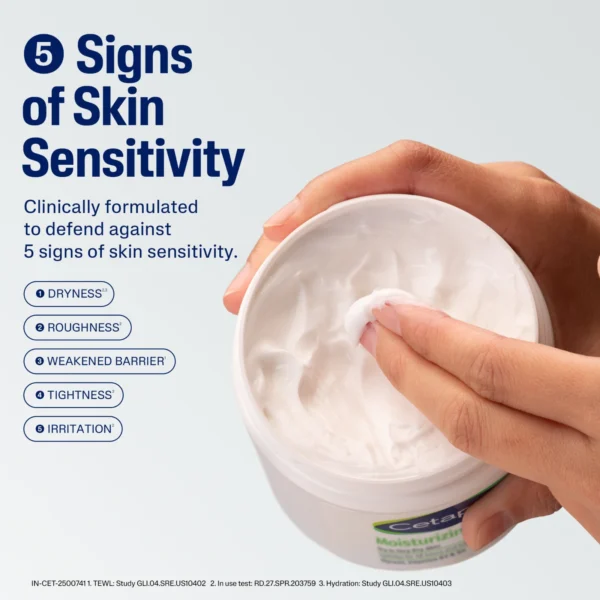
Cetaphil Moisturizing Cream is not an exciting product. There is no acid, no retinoid, no peptide, no percentage on the front of the tub. That is precisely why dermatologists keep recommending it.
Most skin problems that walk into a clinic are not solved by adding another active. They are solved by removing irritants and putting the barrier back together — and a fragrance-free, well-preserved, petrolatum-and-glycerin cream does that better than almost anything with a marketing story attached. Cetaphil Moisturizing Cream has changed very little in decades because there was very little to fix.
It also means the honest expectation is modest. Cetaphil Moisturizing Cream will make dry skin comfortable, reduce roughness and redness, and stop a barrier from getting worse. It will not fade pigmentation, clear acne, smooth texture or do anything about wrinkles beyond the temporary plumping that hydration gives any skin. If a shop tells you otherwise, check the ingredient list above and count how many actives you can find.
Authenticity, batch codes and storage
Cetaphil is among the most counterfeited skincare brands in South Asia — a large plain white tub is an easy thing to copy. Four checks on any tub of Cetaphil Moisturizing Cream, wherever you buy it:
- The seal. A genuine tub has an intact foil seal under the lid. No seal, no sale.
- The texture. Thick, white, slightly glossy, spreading to a non-greasy finish. Runny, yellowish or grainy cream is not this product.
- The smell. Essentially nothing. Cetaphil Moisturizing Cream is fragrance-free, so any perfume means something is wrong.
- The batch code and printed expiry on the tub, matching the carton.
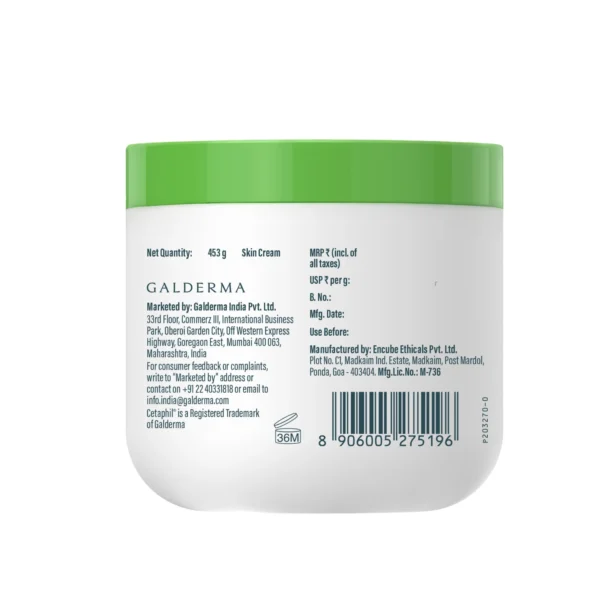
We photograph the tub we sell — front, back and the ingredient panel — so you can hold what arrives against this page. If it does not match, tell us and we will replace it.
On storage: Cetaphil Moisturizing Cream is a stable, well-preserved emulsion, but heat still separates any cream eventually. Keep it capped, below 30°C, and away from the geyser and direct sun.
Where it fits in your routine
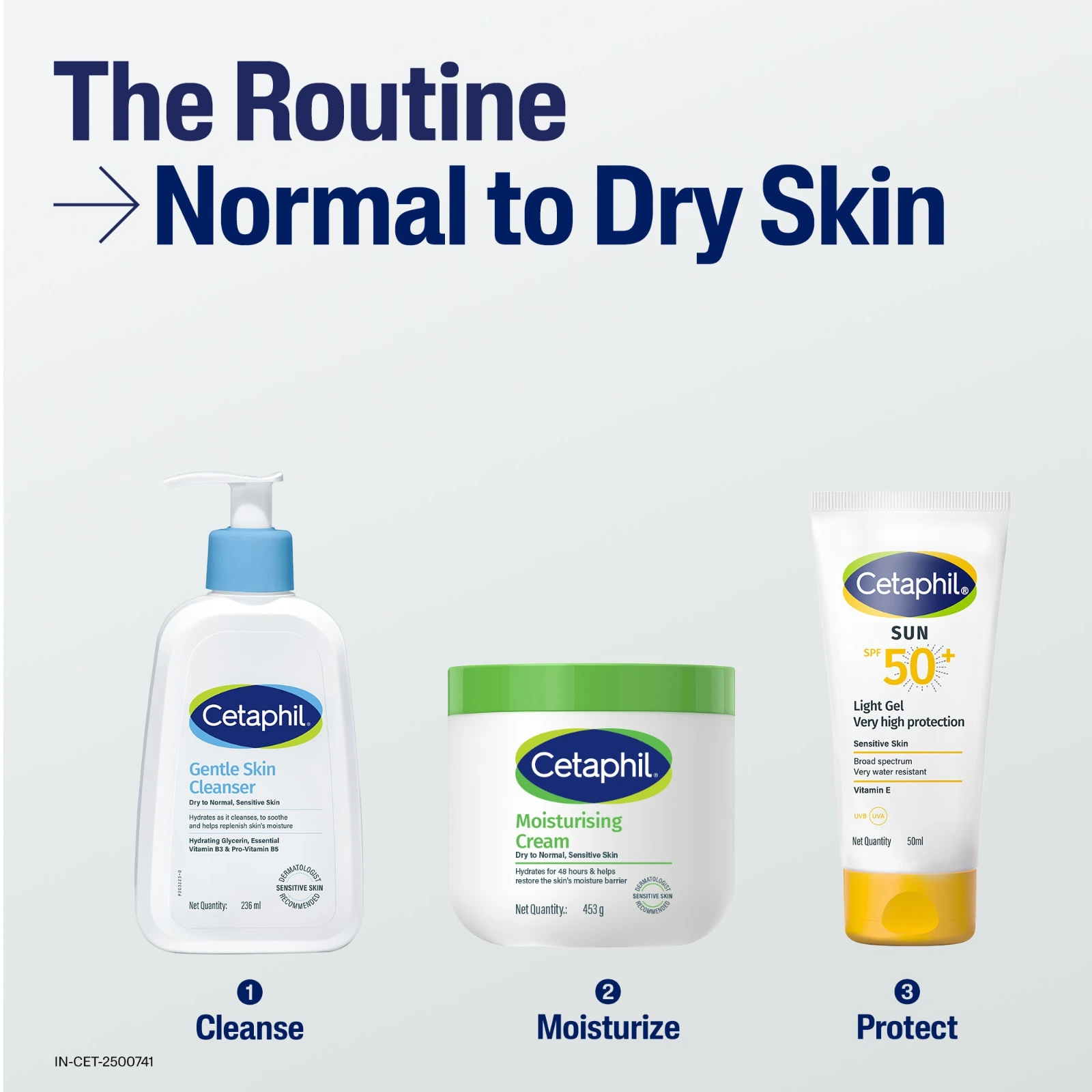
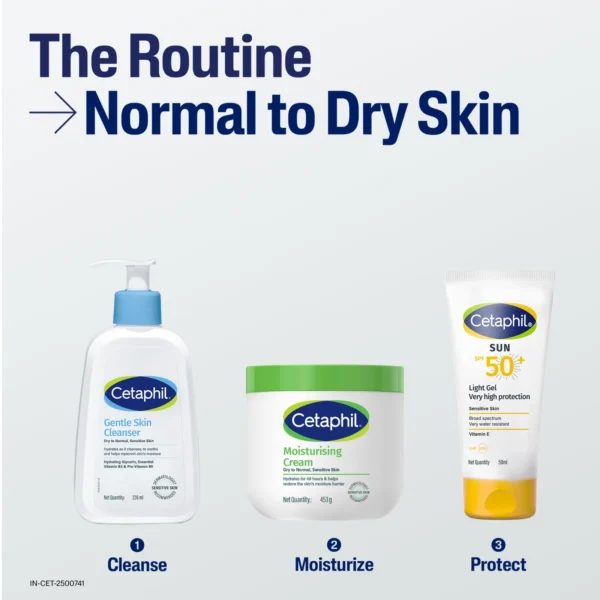
Cleanse, treat, moisturise, protect. Cetaphil Moisturizing Cream is the third step, and on very dry skin it is the step that makes the others tolerable.
Pair it with the CeraVe Foaming Facial Cleanser or remove the day with Bioderma Sensibio H2O; add CeraVe Hyaluronic Acid Serum underneath if your skin is dehydrated as well as dry; keep Cicaplast Baume B5+ for the patches that need more; and finish every morning with sunscreen. Compare the alternatives in our moisturizers range.
Buying Cetaphil Moisturizing Cream in Bangladesh
We import the 453 g tub and photograph the pack we sell, ingredient panel included, so you can match what arrives against this page. The tub photographed here is the Asian-market pack — the one whose list carries the extra tocopherol and BHT. If you specifically want the US pack, or specifically want to avoid BHT, tell us before you order and we will confirm what is in stock rather than guess.
Store it below 30°C with the lid closed and out of direct sun. Heat is what ruins a large tub of cream in this climate.
Reviews
There are no reviews yet.