

Description
Mary and May Eye Cream pairs tranexamic acid with glutathione at a stated 1,000ppm each, aimed squarely at dark circles and uneven tone around the eyes. It is a small tube of a lightweight cream, and it is refreshingly honest about its own strength — which is rarer than it should be.
Below is the complete official ingredient list, an honest look at what 1,000ppm actually means, and a realistic account of what an eye cream can and cannot do about dark circles.
Table of Contents
- What This Eye Cream Is
- What 1,000ppm Actually Means
- Tranexamic Acid
- Glutathione
- The Niacinamide Higher Up the List
- Honest Talk About Dark Circles
- The EWG Green Grade Claim
- Who It Suits
- How to Use Mary and May Eye Cream
- Texture and Feel
- What to Expect Over Time
- Why the Eye Area Needs Different Rules
- What Eye Creams Can and Cannot Do
- Building the Rest of the Routine
- Storage and Shelf Life
- Delivery Across Bangladesh
- Common Questions
- Full Ingredient List
What This Eye Cream Is
Mary and May build minimal Korean formulas with short, readable ingredient lists and clearly stated concentrations. This is their brightening eye product.
The target is specific: dark circles and dullness in the eye contour, plus general uneven tone. It is not a firming or anti-wrinkle cream, and the brand does not pretend otherwise.
It comes in a 12 g tube — small, which is normal for eye products, since the correct dose is genuinely tiny.

What 1,000ppm Actually Means
Korean brands often quote concentrations in parts per million, which sounds impressive and confuses almost everyone. The conversion is simple:
| ppm | Percentage |
|---|---|
| 10,000 ppm | 1% |
| 1,000 ppm | 0.1% |
| 100 ppm | 0.01% |
So 1,000ppm tranexamic acid is 0.1%, and the same for glutathione.
Does the ingredient list agree? Yes. Tranexamic acid sits around twenty-fourth and glutathione around twenty-sixth, both well below the 1% threshold. A 0.1% figure is exactly what that placement implies.
We want to be clear about what that means in both directions. The claim is accurate and specific, which we respect — many brands would have found a way to make 0.1% sound like more. But 0.1% is a modest dose. Studies on topical tranexamic acid for pigmentation typically use 2% to 5%.
This is a gentle daily brightening product for a delicate area, not a high-strength pigmentation treatment. Priced accordingly, that is a fair deal — just buy it knowing which one it is.
Tranexamic Acid
Tranexamic acid is one of the more interesting pigmentation ingredients. Originally a medicine used to reduce bleeding, it was noticed to lighten melasma in patients taking it, and topical versions followed.
It works differently from most brighteners — rather than inhibiting tyrosinase directly, it interferes with the signalling between skin cells and melanocytes that triggers pigment production. That makes it particularly useful for pigmentation with an inflammatory or vascular component.
The eye area is a sensible place for a low dose. Skin here is markedly thinner than on the rest of the face, so a concentration you would consider weak elsewhere is more reasonable in context.
Glutathione
Glutathione is an antioxidant produced naturally in the body, and it is heavily marketed for skin brightening across South and Southeast Asia.
An honest position: the evidence for topical glutathione is considerably weaker than the marketing suggests. It is a large, unstable molecule, and how much penetrates skin from a cream is genuinely uncertain. Most of the research showing brightening involves oral or intravenous administration, which is a different matter entirely — and carries its own risks.
As an antioxidant in a formula, it is perfectly reasonable. As the reason to buy the product, we would not lean on it.
The Niacinamide Higher Up the List
Worth noticing: niacinamide sits sixth in this ingredient list — far above both headline actives.
Niacinamide is a genuinely well-supported brightening ingredient with solid evidence for evening tone and reducing the look of pigmentation. At sixth position it is present at a meaningfully higher concentration than the 0.1% actives.
So there is a fair argument that niacinamide is doing more of the visible work here than the two ingredients on the front of the box. That is not a criticism of the product — it is a good formula — but it is the sort of thing we think you should know.
Honest Talk About Dark Circles
This matters more than anything else on the page, because dark circles are the single most over-promised problem in skincare.
There are four common causes, and only one of them responds to a cream:
| Cause | What it looks like | Will this help? |
|---|---|---|
| Pigmentation | Brown, even tone, unchanged when you stretch the skin | Yes, gradually |
| Vascular | Blue or purple, worse when tired | Minimally |
| Structural (hollowing) | Shadow that shifts with the light | No — this is anatomy |
| Thin skin | Visible vessels through translucent skin | Slightly, over a long time |
A quick self-test: look in a mirror in good light and gently stretch the skin under your eye. If the darkness stays, it is pigment and a brightening cream is worth trying. If it fades or shifts, it is vascular or structural, and no cream will fix it.
We would rather you know that before spending money than after.

The EWG Green Grade Claim
Mary and May state the product is formulated only with EWG green grade ingredients, is dermatologically tested, and is free from 16 ingredients including parabens, artificial fragrance and colours, alcohol, mineral oil and surfactants.
One inconsistency worth flagging, because we check these things: the ingredient list includes Fragrance. That sits awkwardly with “free from artificial fragrance” — it may mean a natural fragrance compound rather than a synthetic one, but the brand does not specify.
If you are sensitive to fragrance in any form, or avoiding it around the eyes specifically, treat this as a fragranced product and patch test.
On EWG ratings generally: they are a useful screening tool, not a scientific safety standard. A green grade means an ingredient has low flagged concern in their database. It does not mean an ingredient is effective, and a poor grade does not mean unsafe.
Who It Suits
A good match if
- Your dark circles are pigmented rather than vascular or structural
- You want a gentle daily product rather than a strong treatment
- You have general dullness or unevenness around the eyes
- You prefer short, readable ingredient lists
Look elsewhere if
- Your dark circles are hollowing or visible blood vessels
- You want serious pigmentation treatment — you need higher percentages
- You avoid fragrance around the eyes
- Fine lines and firmness are your main concern; this is not that product
How to Use Mary and May Eye Cream
- Take a small amount — genuinely small, roughly a grain of rice for both eyes.
- Dot gently along the orbital bone, not right up against the lash line.
- Tap in with your ring finger, which applies the least pressure.
- Use morning and night, after serum and before moisturiser.
Product migrates upward as it warms, so applying too close to the lash line is how people end up with irritated eyes. Stay on the bone.
In the morning, sunscreen matters here as much as anywhere. Pigmentation treatment without UV protection is a slow-motion waste of money.
Texture and Feel
A light, easily spread cream that absorbs without heaviness or greasy shine. It sits comfortably under concealer, which is not true of every eye cream.
The formula contains beeswax and several emollients, so there is a small amount of richness, but it is not an occlusive balm. The tube format is more hygienic than a jar for an area this sensitive.
What to Expect Over Time
- Week one — hydration and a smoother surface. No tone change yet; that would not be possible.
- Weeks four to six — the earliest point at which pigment change becomes plausible, and only if pigment is your actual cause.
- Three months — a fair point to judge it. Melanin turnover is slow.
- If nothing has changed by then — your dark circles are probably not pigmentary, and a stronger cream will not change that.
Why the Eye Area Needs Different Rules
The skin around your eyes is roughly 0.5 mm thick against about 2 mm elsewhere on the face. It has fewer oil glands and far less structural support, and it moves constantly — an average person blinks something like 15,000 times a day.
Three consequences follow, and they explain most eye-cream advice:
- Actives concentrate differently. A percentage that is mild on your cheek can sting badly here. This is why 0.1% is a defensible dose rather than a cop-out.
- Dehydration shows first. Fine lines around the eyes are often dryness rather than permanent creasing. Hydration alone can visibly soften them.
- Product migrates. Anything you apply warms and travels upward toward the lash line. Apply on the orbital bone and let it move, rather than starting close to the eye.
What Eye Creams Can and Cannot Do
Setting this out plainly, because the category oversells more than any other.
| Concern | Realistic outcome |
|---|---|
| Pigmented dark circles | Gradual lightening over months with brightening actives |
| Dryness and fine lines from dehydration | Visible improvement within weeks |
| Puffiness from fluid | Temporary relief; sleep and salt intake matter more |
| Vascular dark circles | Minimal. This is blood showing through thin skin |
| Hollowing and shadows | None. This is bone and fat structure |
| Deep set wrinkles | Softening at best; not removal |
An eye cream is a maintenance product. It keeps a delicate area hydrated and protected, and it can gradually shift pigment. Anything promising more than that is selling you something.
Building the Rest of the Routine
If dark circles genuinely bother you, the cream is the smallest lever. These matter more:
- Sunscreen, daily, including under the eyes. UV drives pigmentation. Skipping it while using a brightening cream cancels the cream out.
- Sleep. Poor sleep worsens both vascular darkness and puffiness, and no topical fixes that.
- Rubbing. Chronic eye rubbing from allergies or habit causes post-inflammatory pigmentation. If you rub, treat the allergy.
- Patience. Melanin turnover takes months, not weeks.
Applied consistently alongside those four, a gentle brightening eye cream is a reasonable part of the plan. On its own, it is not.

Storage and Shelf Life
Store at room temperature away from direct sunlight. Glutathione and vitamin C derivatives are both prone to oxidation, so keep the cap closed and do not leave it somewhere hot.
Check the period-after-opening symbol on the carton and go by your unit. If the colour darkens noticeably, the antioxidants have oxidised and it is time to replace it.
Delivery Across Bangladesh
We deliver nationwide with cash on delivery available. Delivery is ৳120 inside Dhaka, ৳120 in Munshiganj and ৳150 outside Dhaka.
Please open and check your parcel in front of the delivery person and record an unboxing video. Once the courier has left we cannot resolve a damaged, missing or wrong item claim.
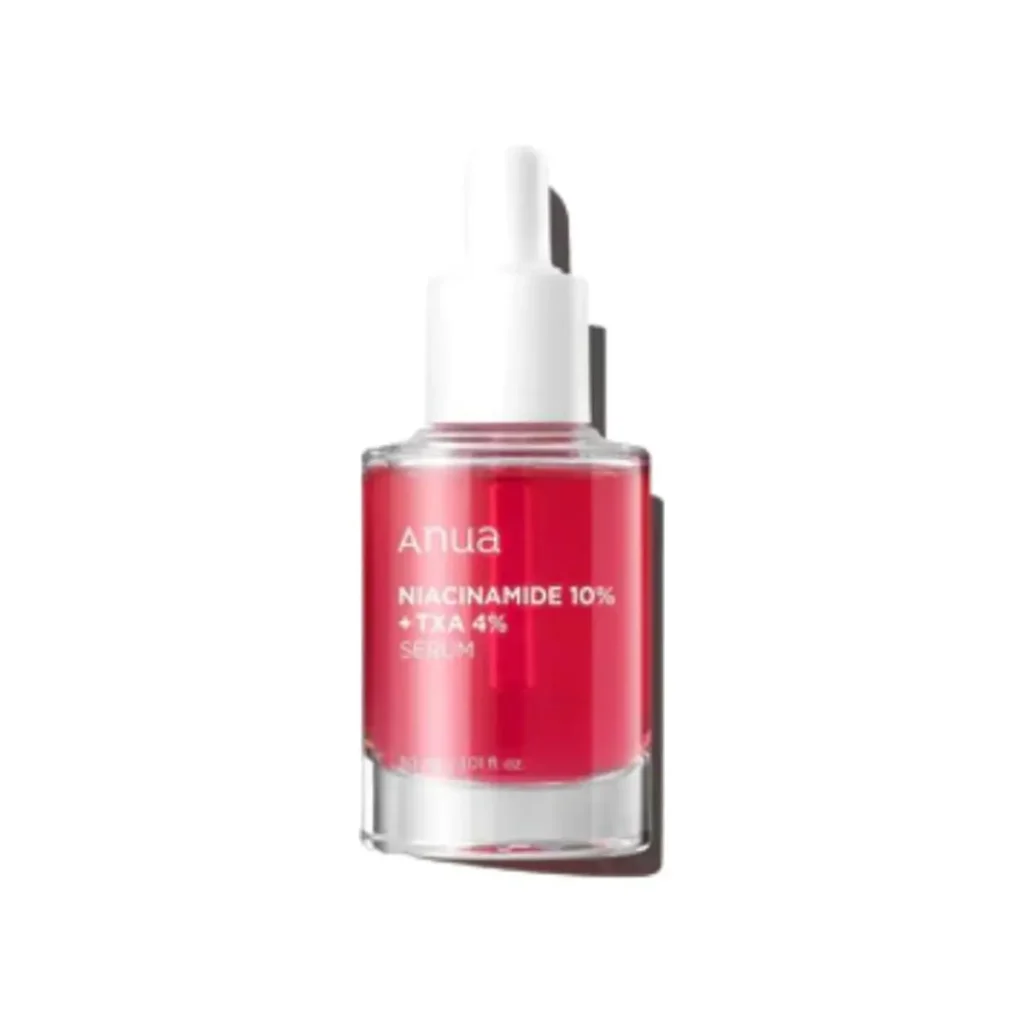
Browse all skin care we stock. For broader pigmentation work, the ANUA Niacinamide 10% + TXA 4% serum uses the same actives at far higher strength for the face.
Common Questions
Will it remove my dark circles?
Only if they are pigmentary, and then gradually and partially. Read the dark circles section above before buying — it will save you disappointment.
Can I use it on my whole face?
You could, but it is a small tube formulated for a small area. A face serum is better value for that job.
Does it contain fragrance?
Yes. Fragrance appears in the ingredient list, despite the brand’s “free from artificial fragrance” claim. Patch test if you are sensitive.
Is 0.1% tranexamic acid enough?
It is a gentle dose. Effective research concentrations for pigmentation are usually higher. For the thin eye area, gentle is a defensible choice.
Can I use it with retinol?
Yes, though introduce them separately. Retinol around the eyes needs care — start twice weekly.
Full Ingredient List
As published by Mary and May:
Water, Ethylhexyl Palmitate, Glycereth-26, Glycerin, Cetearyl Alcohol, Niacinamide, Hydrogenated Poly(C6-14 Olefin), Beeswax, Caprylic/Capric Triglyceride, Polyglyceryl-2 Stearate, Dipropylene Glycol, Isododecane, Glyceryl Stearate, Hydroxyethyl Acrylate/Sodium Acryloyldimethyl Taurate Copolymer, Stearyl Alcohol, Glycol Stearate SE, Sodium Polyacrylate, Hydroxyacetophenone, Stearic Acid, Dimethiconol, Dimethicone/Vinyl Dimethicone Crosspolymer, Hydrogenated Polydecene, Hydrogenated Lecithin, Tranexamic Acid, Betaine, Glutathione, Panthenol, Fragrance, Hippophae Rhamnoides Fruit Oil, Butylene Glycol, Adenosine, Sorbitan Isostearate, Caprylyl Glycol, Trideceth-6, 1,2-Hexanediol, Disodium EDTA
Formulations are updated from time to time. The list on your carton is the authoritative one — always read it if you have allergies or sensitivities. Full product information is published on the official Mary and May product page.
Reviews
There are no reviews yet.