Description
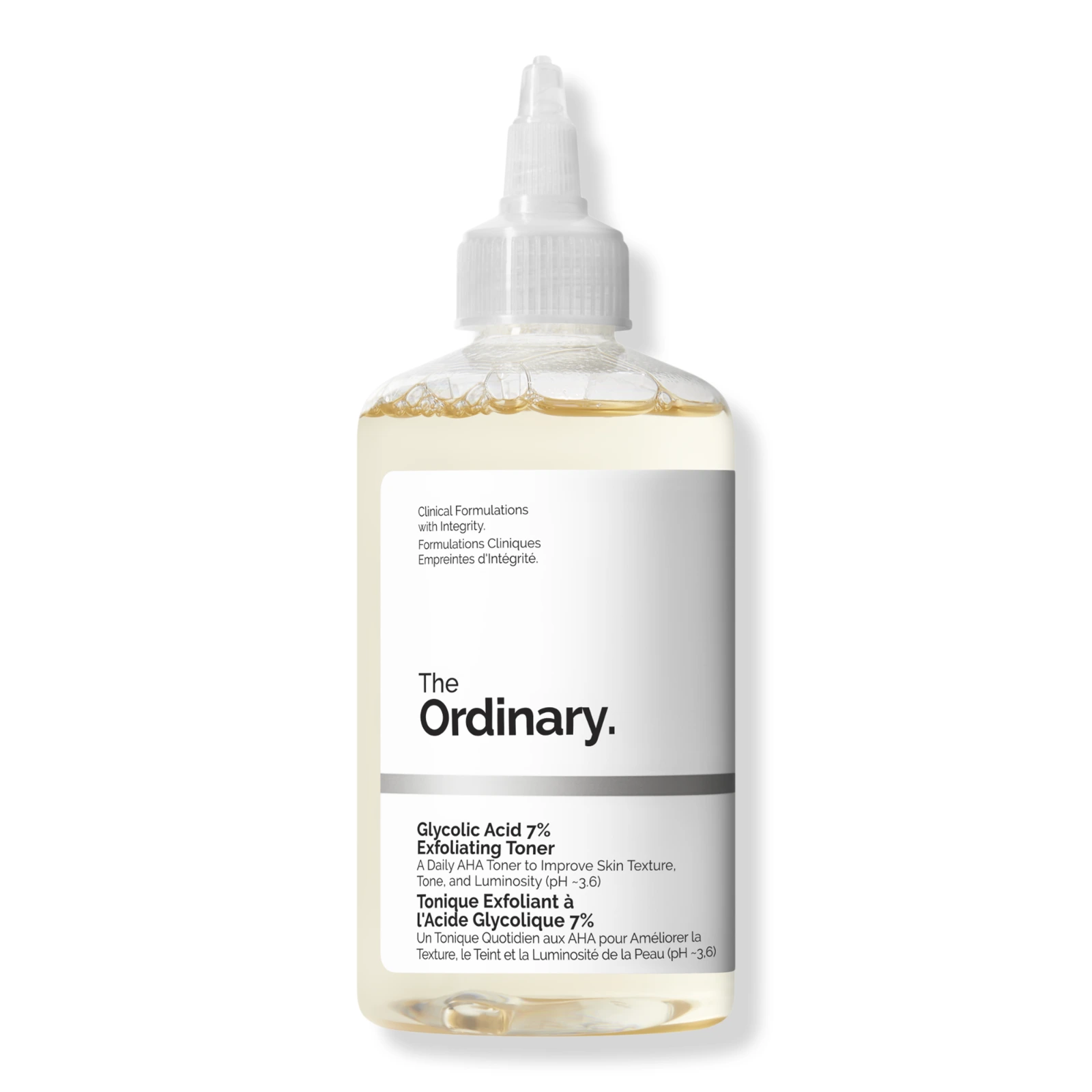
The Ordinary Glycolic Acid 7% is the 240 ml bottle that made acid toners mainstream, and it is also the product people get most confused about — because it has two names. If you have seen it called both a “Toning Solution” and an “Exfoliating Toner”, you have not seen two products. This page explains that, publishes the pH, and prints one contradiction that sits on The Ordinary’s own product page.
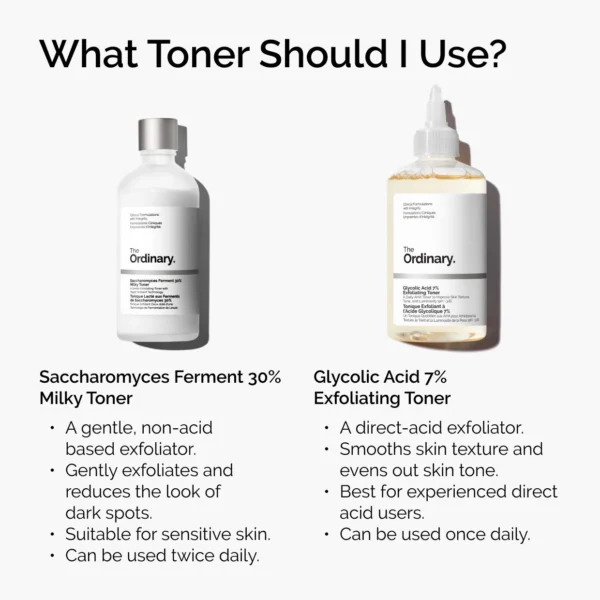
Toning Solution or Exfoliating Toner? Same bottle
The Ordinary originally sold this as Glycolic Acid 7% Toning Solution. It is now sold as Glycolic Acid 7% Exfoliating Toner. The formula is identical — the same forty-two ingredients, in the same order. It was a rename, not a reformulation.
Wholesalers and marketplaces across Bangladesh still list both names, sometimes at different prices, which is why customers think they are choosing between two things. You are not. Whichever label reaches you, it is the same liquid.
What genuinely does differ is size: The Ordinary sells 100 ml and 240 ml. We stock the 240 ml, which is far better value per millilitre and is the size worth buying if you intend to use it properly.
What The Ordinary Glycolic Acid 7% actually is
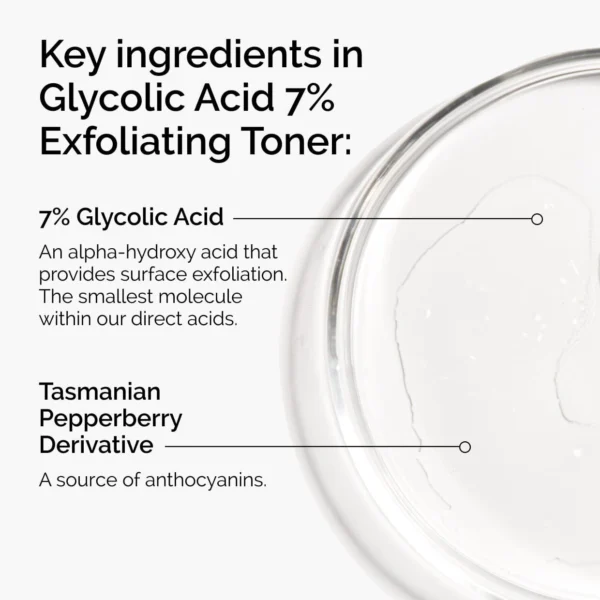
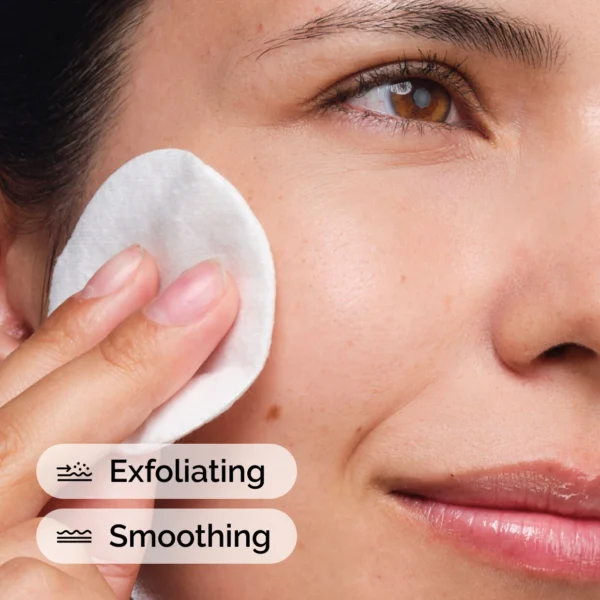
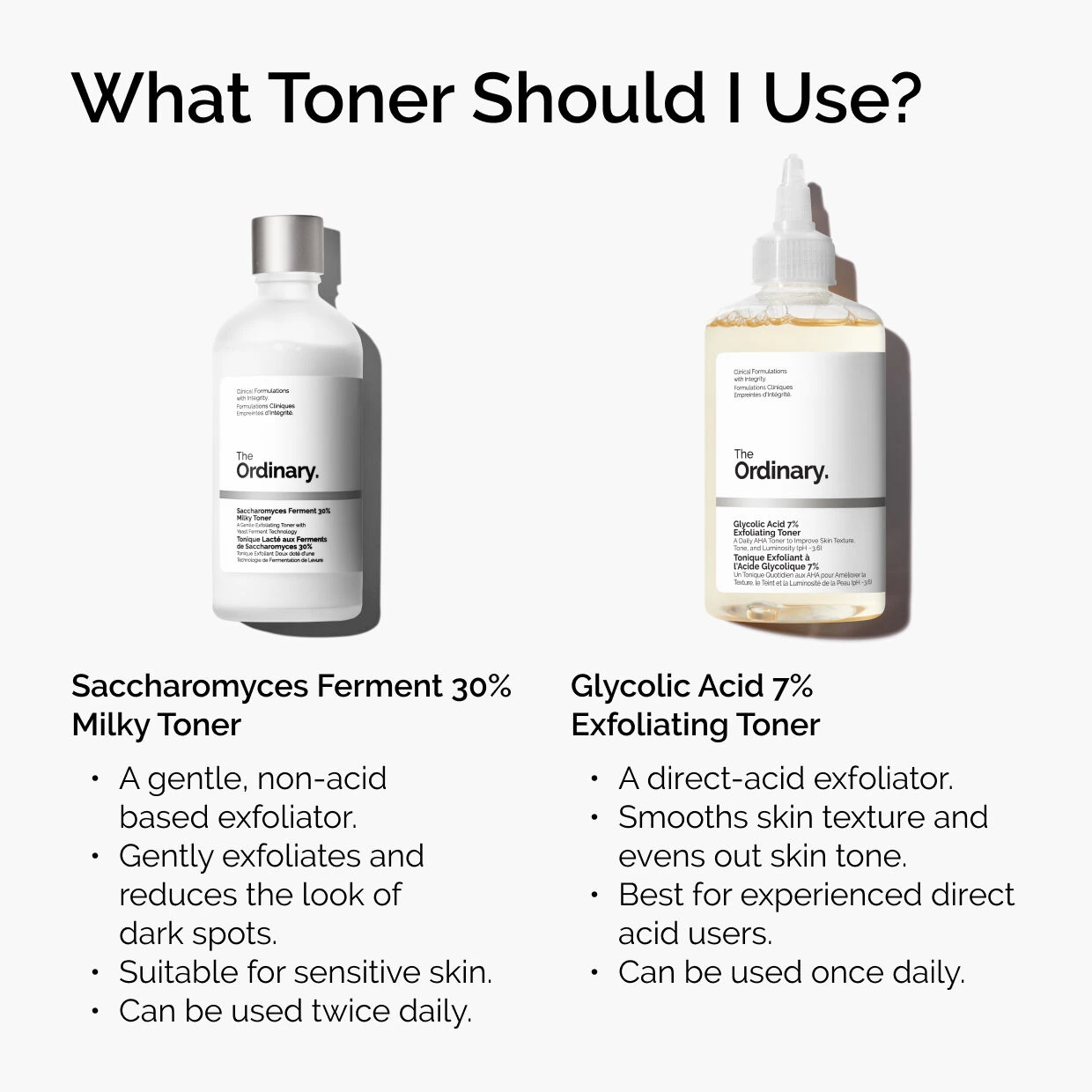
The Ordinary Glycolic Acid 7% is a leave-on chemical exfoliant: 7% glycolic acid in a water base, buffered with amino acids, sugars, urea and PCA, and softened with rose water, cornflower water and aloe. You wipe it on with a cotton pad at night and do not rinse it off.
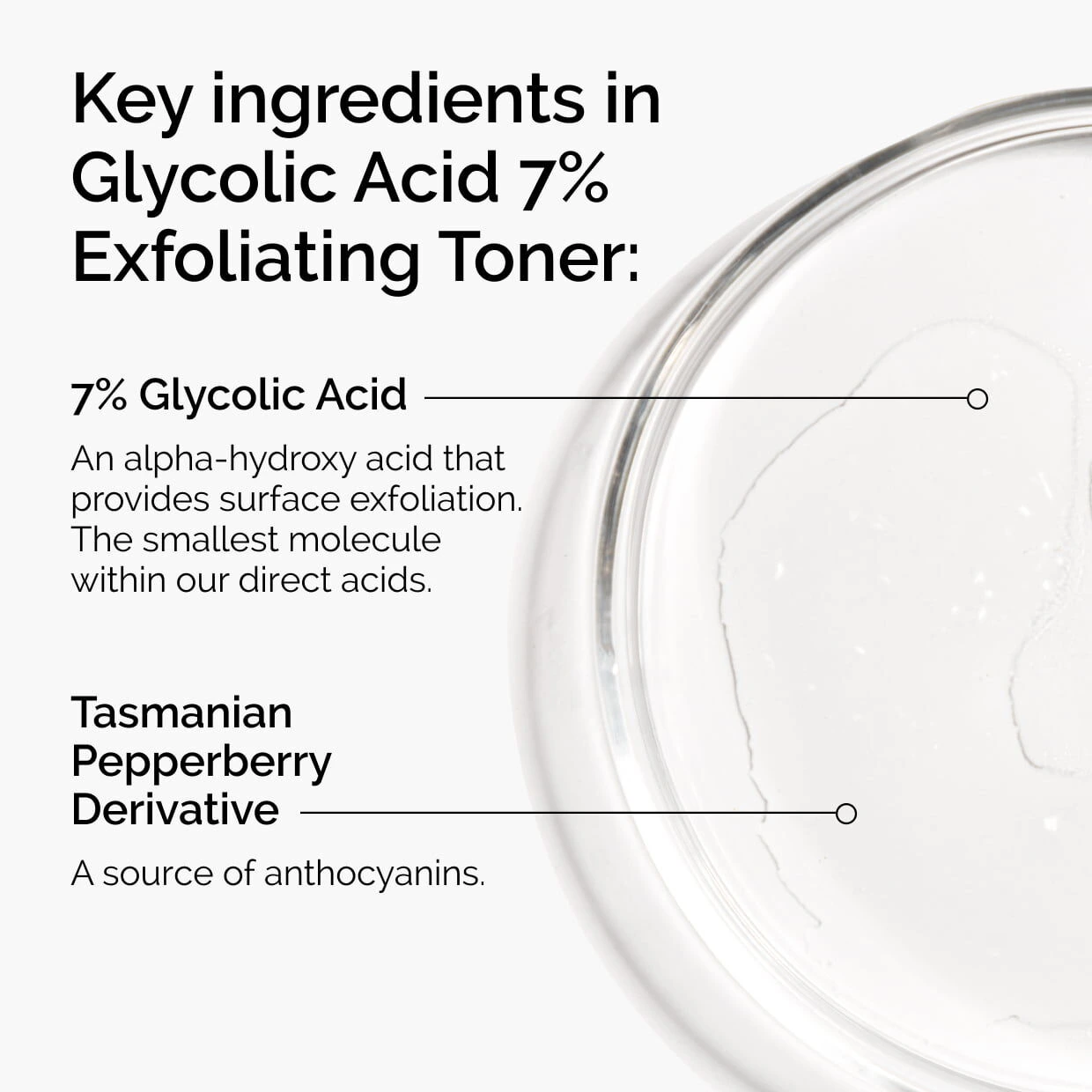
Glycolic acid is the smallest alpha hydroxy acid, which is why it penetrates well and why it is the AHA with the most published research behind it. At 7% in a leave-on toner it is a maintenance-strength exfoliant — noticeably more than a rinse-off cleanser, considerably less than a peel.
The Ordinary publishes the pH: 3.5 to 3.9, approximately 3.6. That matters more than people realise. An AHA needs an acidic pH to work at all, and most brands will not tell you theirs. Publishing it is a genuine mark of confidence.
The contradiction on their own page
We would rather point this out about The Ordinary Glycolic Acid 7% than leave you to find it after you have bought the bottle.
The Ordinary’s product page describes The Ordinary Glycolic Acid 7% as “Suited for All Skin Types.” The cautions section on the same page says “do not use on sensitive, peeling, or compromised skin.”
Both statements cannot be true. Sensitive skin is a skin type, and it is explicitly excluded three lines below the claim that all types are suited.
The practical reading is that the caution is the accurate one and the “all skin types” line is marketing shorthand. If your skin is sensitive, reactive, currently peeling, sunburnt, or recovering from anything, do not use this. Nothing else on this page matters more than that sentence.
The full ingredient list — all forty-two
Water, Glycolic Acid, Rosa Damascena Flower Water, Centaurea Cyanus Flower Water, Aloe Barbadensis Leaf Water, Propanediol, Glycerin, Triethanolamine, Aminomethyl Propanol, Panax Ginseng Root Extract, Tasmannia Lanceolata Fruit/Leaf Extract, Aspartic Acid, Alanine, Glycine, Serine, Valine, Isoleucine, Proline, Threonine, Histidine, Phenylalanine, Glutamic Acid, Arginine, PCA, Sodium PCA, Sodium Lactate, Fructose, Glucose, Sucrose, Urea, Hexyl Nicotinate, Dextrin, Citric Acid, Polysorbate 20, Gellan Gum, Trisodium Ethylenediamine Disuccinate, Sodium Chloride, Hexylene Glycol, Potassium Sorbate, Sodium Benzoate, 1,2-Hexanediol, Caprylyl Glycol.
In The Ordinary Glycolic Acid 7%, glycolic acid sits second, immediately after water — exactly where a 7% active should be. Triethanolamine and aminomethyl propanol are the pH adjusters holding it at 3.6. The long run of amino acids, PCA, sugars and urea from position twelve onwards is a natural moisturising factor complex, there to make 7% glycolic acid tolerable rather than to do anything on its own.
There is no parfum and no drying alcohol in that list. But it does contain rose water and cornflower water, which carry a natural floral scent — so The Ordinary Glycolic Acid 7% is not odourless, and if you are sensitive to botanical extracts, those two are worth knowing about.
The tingle is not the acid
This is the single most useful thing to know about The Ordinary Glycolic Acid 7% and almost nobody explains it.
Hexyl nicotinate sits thirty-first in the list. It is a vasodilator — it widens the small blood vessels near the skin surface, producing warmth, tingling and sometimes a visible flush. It is in there deliberately, as a penetration enhancer.
So when you feel The Ordinary Glycolic Acid 7% tingle, that sensation is largely the hexyl nicotinate, not the glycolic acid burning through your skin. People take the tingle as proof it is working and use more of it. It is not proof of anything except that the vasodilator is doing its job.
If the flushing bothers you, that ingredient is why — and it is a reason some people prefer a plain glycolic toner without it.
The claims and the sample size
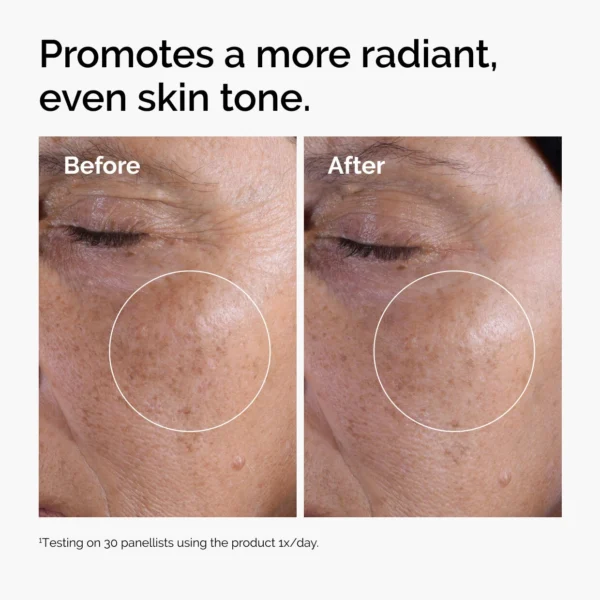
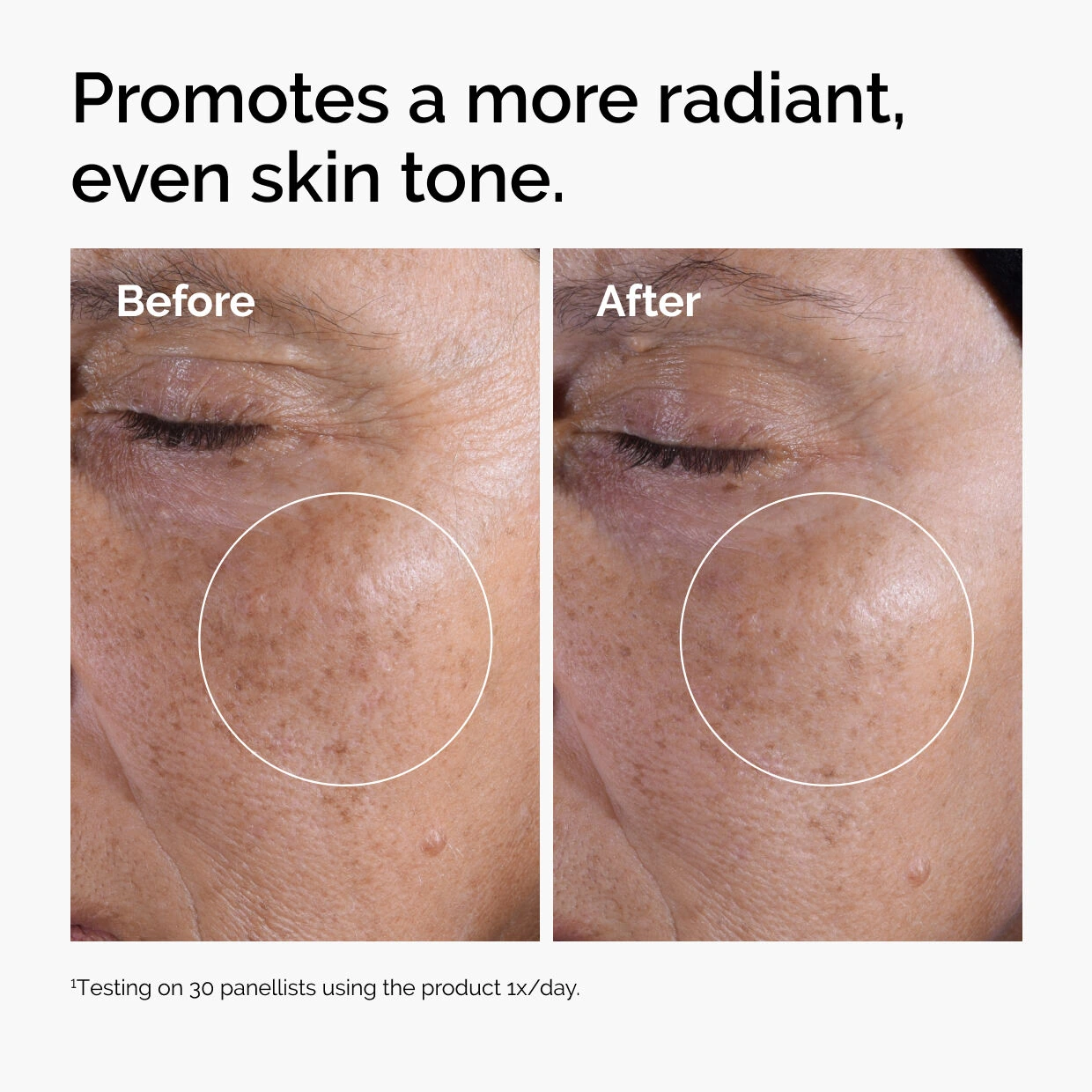
The Ordinary’s before-and-after imagery for The Ordinary Glycolic Acid 7% is captioned “promotes a more radiant, even skin tone”, with a footnote reading: testing on 30 panellists using the product 1x/day.
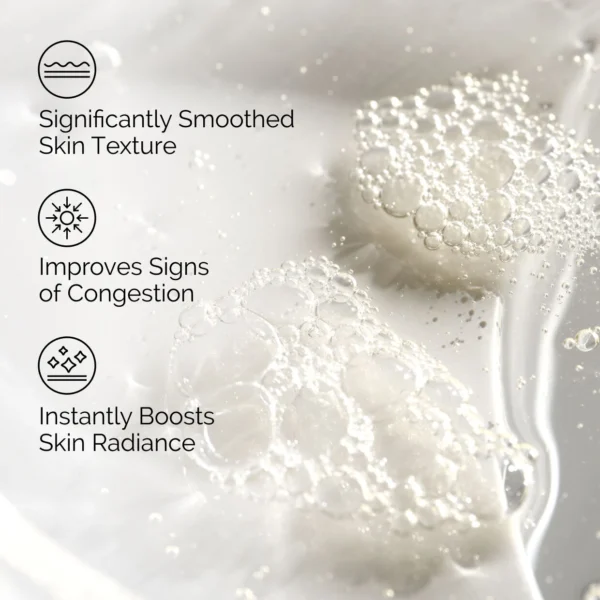
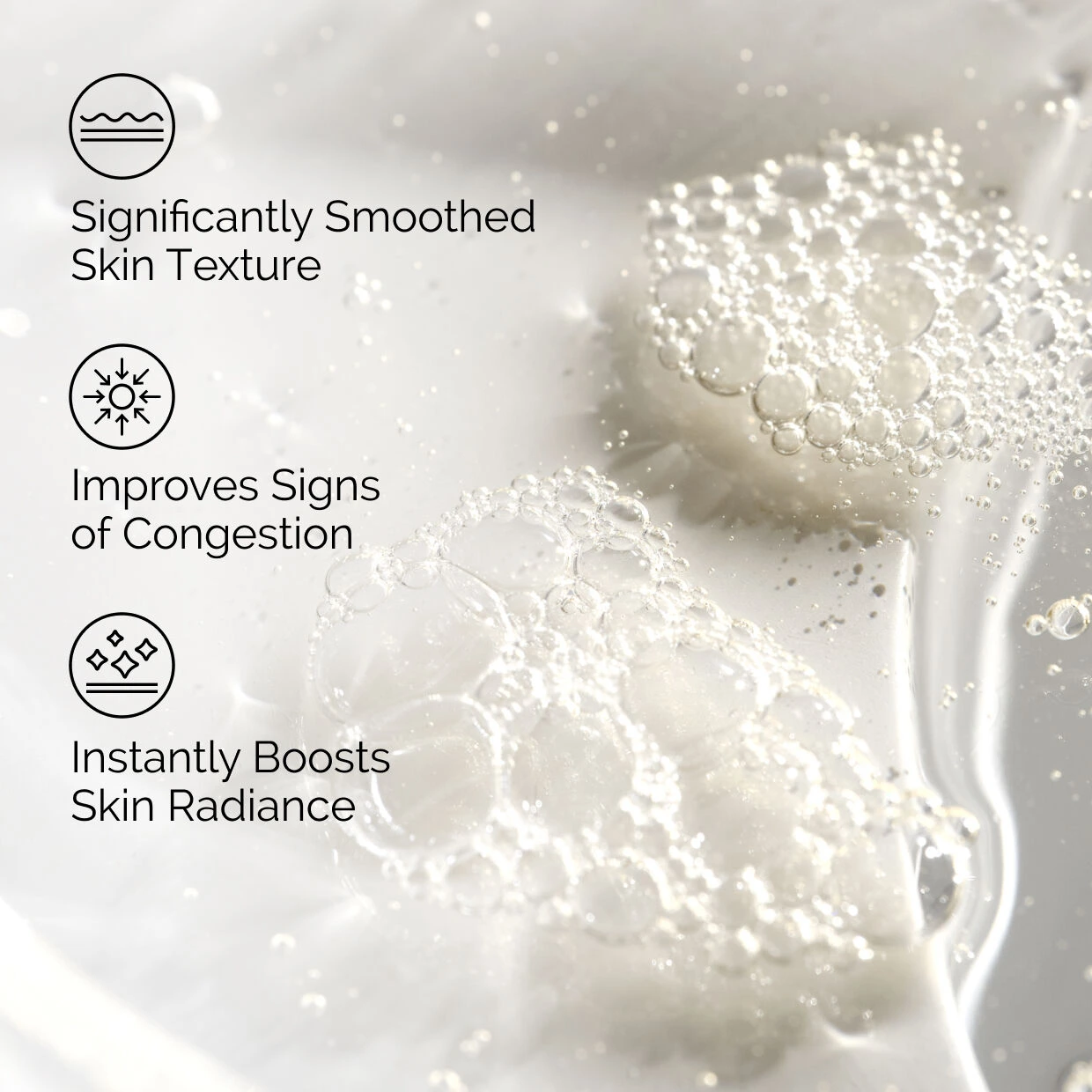
Thirty people, once daily. That is a small panel — normal for cosmetic testing, and more than many brands disclose at all — but it is worth seeing the number rather than just the photographs. The rest of the claims (smoothed texture, improved signs of congestion, instantly boosted radiance) are consistent with what a well-formulated 7% AHA does and are not controversial.
The sunscreen warning, and why it matters more here
The Ordinary Glycolic Acid 7% carries the legally-required AHA alert: this product may increase your skin’s sensitivity to the sun and particularly the possibility of sunburn — use a sunscreen, wear protective clothing, and limit sun exposure while using this product and for a week afterwards.
Read that last part again. A week afterwards. Not just on the nights you use it.
Dhaka’s UV index sits in the “very high” band for much of the year. Using The Ordinary Glycolic Acid 7% without daily sunscreen in this climate is not a minor shortcut — it actively works against you, because sun exposure on freshly exfoliated skin is one of the more reliable ways to make pigmentation worse. If you are not going to wear sunscreen every morning, do not buy this bottle.
Our CeraVe Ultra-Light SPF 30 is the matching morning step, and our full sunscreens range has what is in stock.
How to use The Ordinary Glycolic Acid 7%
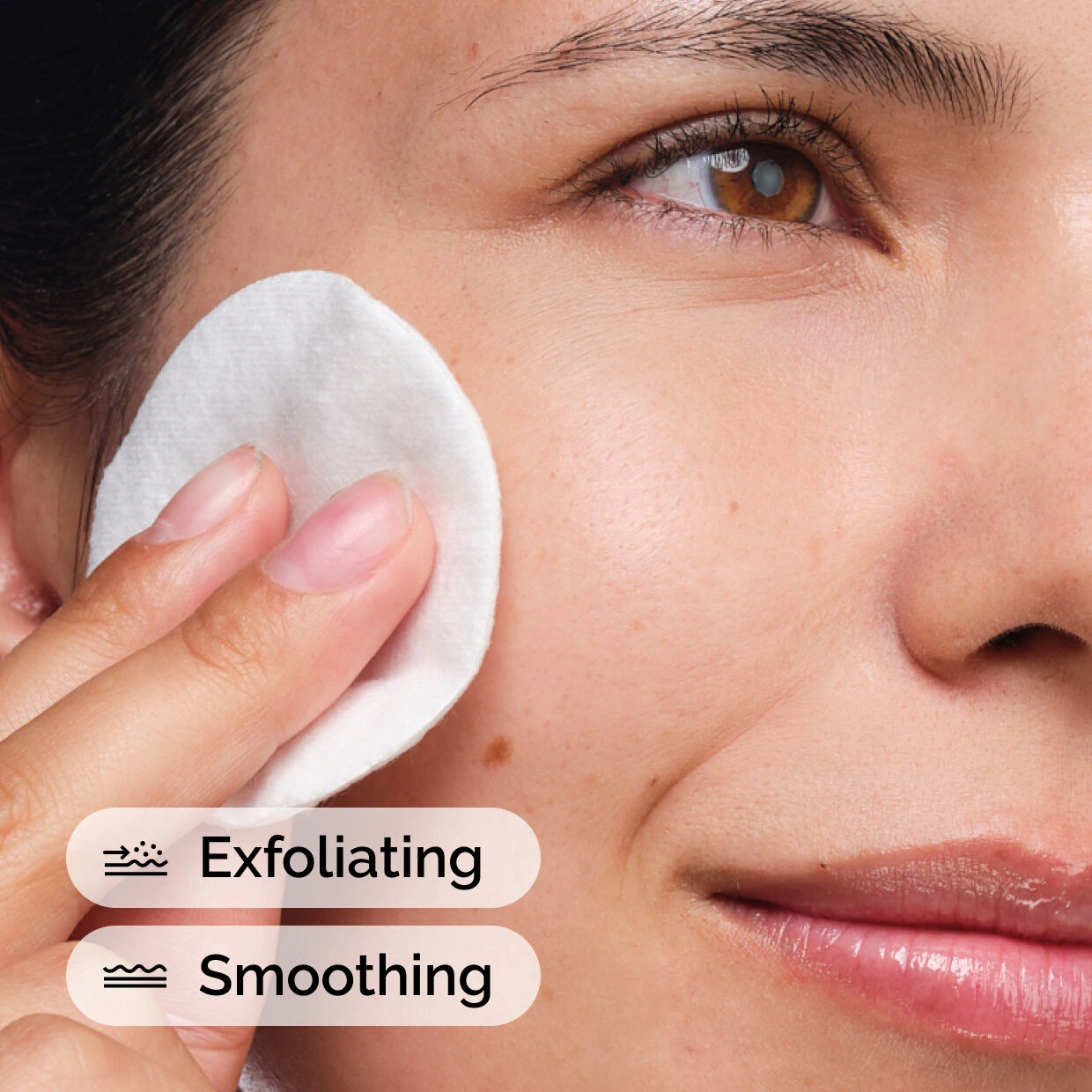
The direction on The Ordinary Glycolic Acid 7%: apply once daily in the evening, to the face and neck, using a cotton pad or fingers. Do not rinse off. Avoid the eye contour.
What we would add, from customers who have got it wrong:
- Start twice a week, not daily. “Once daily” is the ceiling, not the starting point. Build up over a month.
- Patch test first. The Ordinary says so explicitly and it is not boilerplate with a 7% AHA.
- Never on the same night as a retinoid or another acid. Alternate nights.
- Do not use it on broken skin, active eczema, or after shaving or threading.
- Moisturise afterwards. A barrier cream on top is what makes long-term use sustainable.
- Stop if it stings beyond a minute or two. Warmth for thirty seconds is the hexyl nicotinate; sustained burning is damage.
One use of The Ordinary Glycolic Acid 7% that most people do not know about: The Ordinary also directs this product for scalp use — applied to a dry scalp three times weekly, dispensed front to back with a gentle massage. If flaking is your problem, that is a legitimate published use, not a hack.
Who should buy it, and who should not
Buy The Ordinary Glycolic Acid 7% if: you have rough or uneven texture; you have post-acne marks or general dullness; your skin is normal, oily or combination and tolerates actives; you already wear sunscreen every day without being reminded; or you want the most-researched AHA at a price nothing else matches.
Do not buy it if: your skin is sensitive, reactive or rosacea-prone; you are currently peeling, sunburnt or using prescription retinoids; you are pregnant and have not cleared acids with your doctor; you will not commit to daily sunscreen; or you are looking for an acne treatment, because this manages texture and tone, not active breakouts.
What The Ordinary does not publish
- No free-acid value. The pH is published, which is more than most, but the free-acid percentage — the number that actually determines exfoliating strength — is not.
- No hexyl nicotinate concentration.
- No period-after-opening on the product page; the bottle carries a printed date.
- No country of manufacture online. The Ordinary is a Deciem brand; the bottle settles it.
- No statement acknowledging the rename from Toning Solution to Exfoliating Toner, which is exactly why the confusion persists.
You can check the ingredient list, the pH and the cautions on The Ordinary’s own product page. We would rather you verified us than trusted us.
Where it fits in your routine
Cleanse, exfoliate, hydrate, moisturise, protect. The Ordinary Glycolic Acid 7% is the second step, two or three evenings a week — not every step, not every night.
A workable week looks like this. Remove the day with Bioderma Sensibio H2O and cleanse with the CeraVe Foaming Facial Cleanser. On acid nights, sweep The Ordinary Glycolic Acid 7% over dry skin, wait a few minutes, then apply CeraVe Hyaluronic Acid Serum and seal with CeraVe Moisturizing Cream. On the other nights, skip the acid entirely. Keep Cicaplast Baume B5+ for the week you overdo it, because you will at some point. Sunscreen every single morning.
The mistake we see most often is people buying The Ordinary Glycolic Acid 7% and a second exfoliant at the same time and using both. One acid, properly, beats two acids badly. If you already own a BHA toner, this is not the next thing to add — a sunscreen and a moisturiser are.
Glycolic acid versus the alternatives
Against a BHA (salicylic acid). Glycolic works on the surface — texture, dullness, marks. Salicylic is oil-soluble and gets inside the pore, which is what congestion and blackheads need. The Ordinary Glycolic Acid 7% and a BHA solve different problems, and if you had to pick one for acne it would be the BHA.
Against lactic acid. Lactic is a larger molecule, penetrates less, and is generally the gentler starting point. If you have never used an acid before, lactic first and The Ordinary Glycolic Acid 7% later is the sensible order.
Against a PHA. Polyhydroxy acids are gentler still and are the right choice for genuinely sensitive skin — the skin type this product explicitly excludes.
Against a high-percentage peel. Not comparable. A 7% leave-on toner used regularly does more for most people over three months than an occasional 30% peel does, with a fraction of the risk.
What to expect, week by week
Setting expectations honestly saves a lot of disappointed messages.
Night one: a warm tingle for thirty to sixty seconds, sometimes a light flush. That is the hexyl nicotinate, as explained above. Skin may look slightly brighter the next morning — that is surface hydration, not exfoliation.
Weeks one to two: smoother texture, particularly on the cheeks and forehead. This is the change people notice first and it is real.
Weeks four to eight: post-acne marks begin to fade and overall tone evens out. This is the slow work The Ordinary Glycolic Acid 7% is actually for, and it is why quitting after two weeks wastes the bottle.
What will not happen: active spots will not clear, pores will not shrink, and deep pigmentation will not disappear. If a review promises those, the reviewer is describing something else.
Warning signs to stop: stinging that persists past a couple of minutes, tightness that does not resolve by morning, new sensitivity to products you previously tolerated, or any peeling. Those mean over-exfoliation, and the fix is to stop entirely for two weeks and rebuild with a plain moisturiser.
Storage, authenticity and shelf life
Four things to check on any bottle of The Ordinary Glycolic Acid 7%, wherever you buy it:
- The liquid. Clear to very slightly straw-coloured, water-thin. Cloudy or thick is wrong.
- The label print. The Ordinary’s labels are plainly typeset and crisply printed, with the bilingual English and French product name.
- The batch code and expiry printed on the bottle, matching the carton.
- The dropper-free cap. The 240 ml ships with a flip-top, not a pipette.
On storage: keep The Ordinary Glycolic Acid 7% capped, below 30°C and out of direct sun. Acids are more stable than vitamin C but heat still degrades them, and a bottle that has spent a Dhaka summer on a windowsill is not the product you paid for.
Questions we get asked
Is the 240 ml better value than the 100 ml?
Considerably. Per millilitre the large bottle of The Ordinary Glycolic Acid 7% is far cheaper, and used correctly — two or three nights a week on a cotton pad — 240 ml lasts most people the best part of a year.
Can I use it with niacinamide?
Yes — The Ordinary Glycolic Acid 7% layers fine with niacinamide. The old warning cancelling out has been thoroughly debunked. Use them at different times if you prefer, but there is no chemistry problem.
Can I use it in the morning?
The Ordinary Glycolic Acid 7% is for evening use. Follow that — an AHA plus a full day of Dhaka sun is a bad combination even with sunscreen.
Will it help acne?
Indirectly. The Ordinary Glycolic Acid 7% keeps pores clearer and fades post-acne marks over time, but for active breakouts a salicylic acid — our Anua BHA 2% Toner — gets into the pore where the problem is.
Why does it smell?
Rose water and cornflower water sit third and fourth in The Ordinary Glycolic Acid 7%. There is no added fragrance.
Is it safe in pregnancy?
The Ordinary Glycolic Acid 7% uses an AHA generally considered lower risk than salicylic acid in pregnancy, but “generally considered” is not medical advice. Ask your doctor.
How is it different from the AHA 30% + BHA 2% Peeling Solution?
Enormously. The Peeling Solution is a 10-minute rinse-off treatment at more than four times the acid load, for experienced users only. The Ordinary Glycolic Acid 7% is a gentle leave-on maintenance step. They are not interchangeable.
Buying it in Bangladesh
We import the 240 ml bottle and photograph the pack we sell, so you can match the label that arrives against this page — including whichever of the two names is printed on it.
One last piece of advice, and it costs us a sale to give it. If you do not already own a sunscreen you wear every morning without thinking about it, buy that first and come back for this bottle afterwards. An acid without sun protection in a UV index of eleven will leave your skin worse than it started, and no amount of glycolic acid undoes what the sun does to freshly exfoliated skin. We would rather sell you the sunscreen this month and the acid next month than take both today and have you unhappy in six weeks.
Reviews
There are no reviews yet.