Description
What the Medicube Kojic Acid Turmeric Serum is
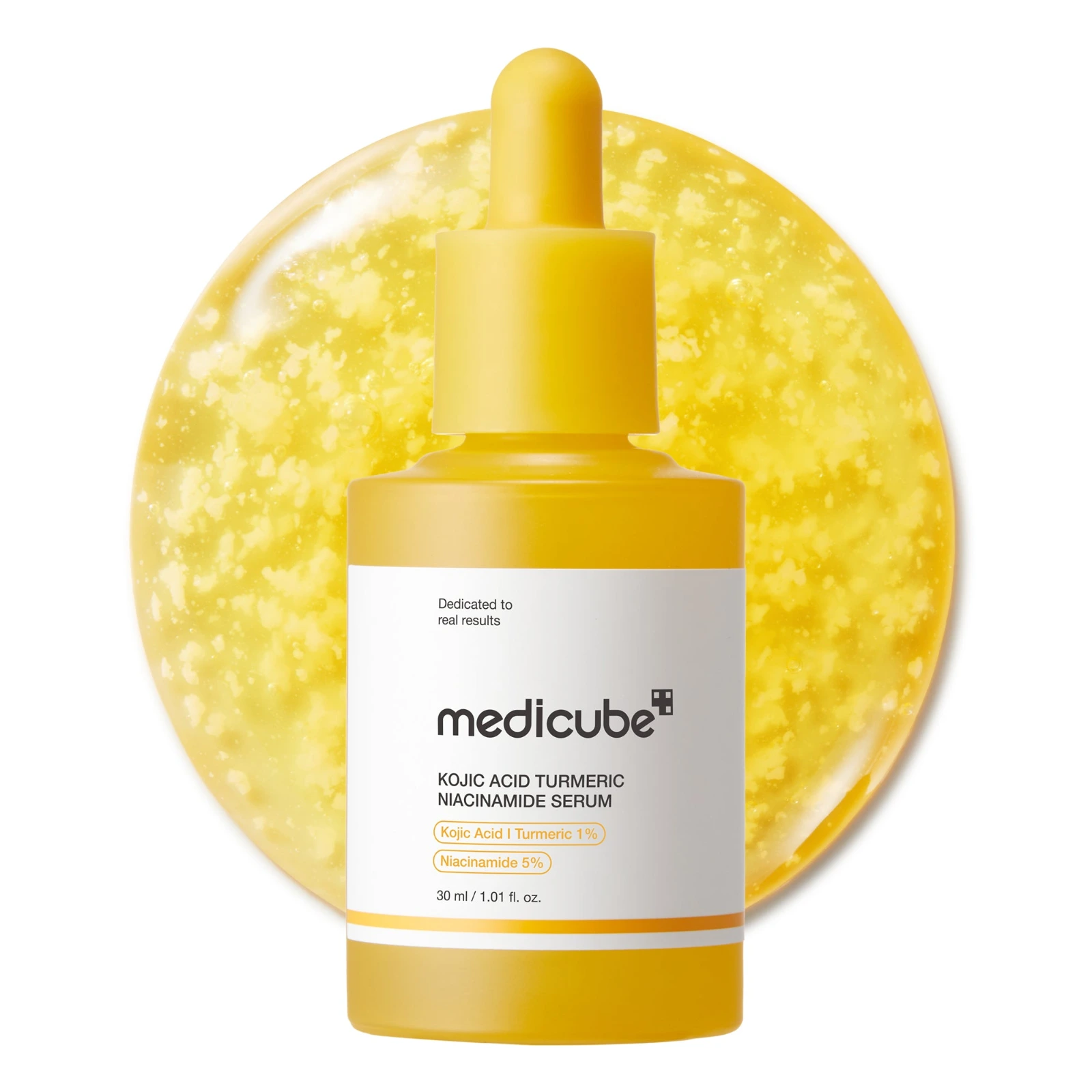
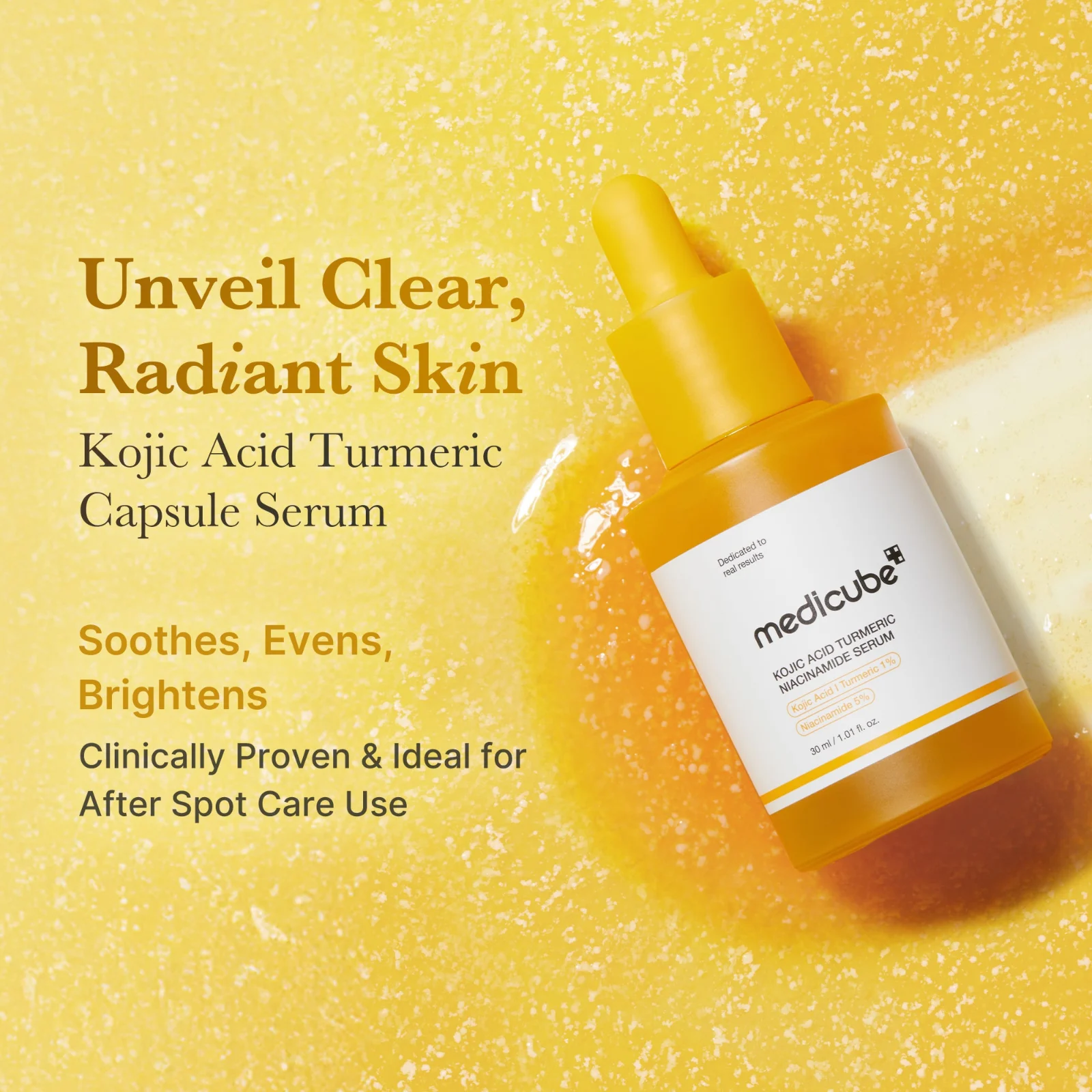
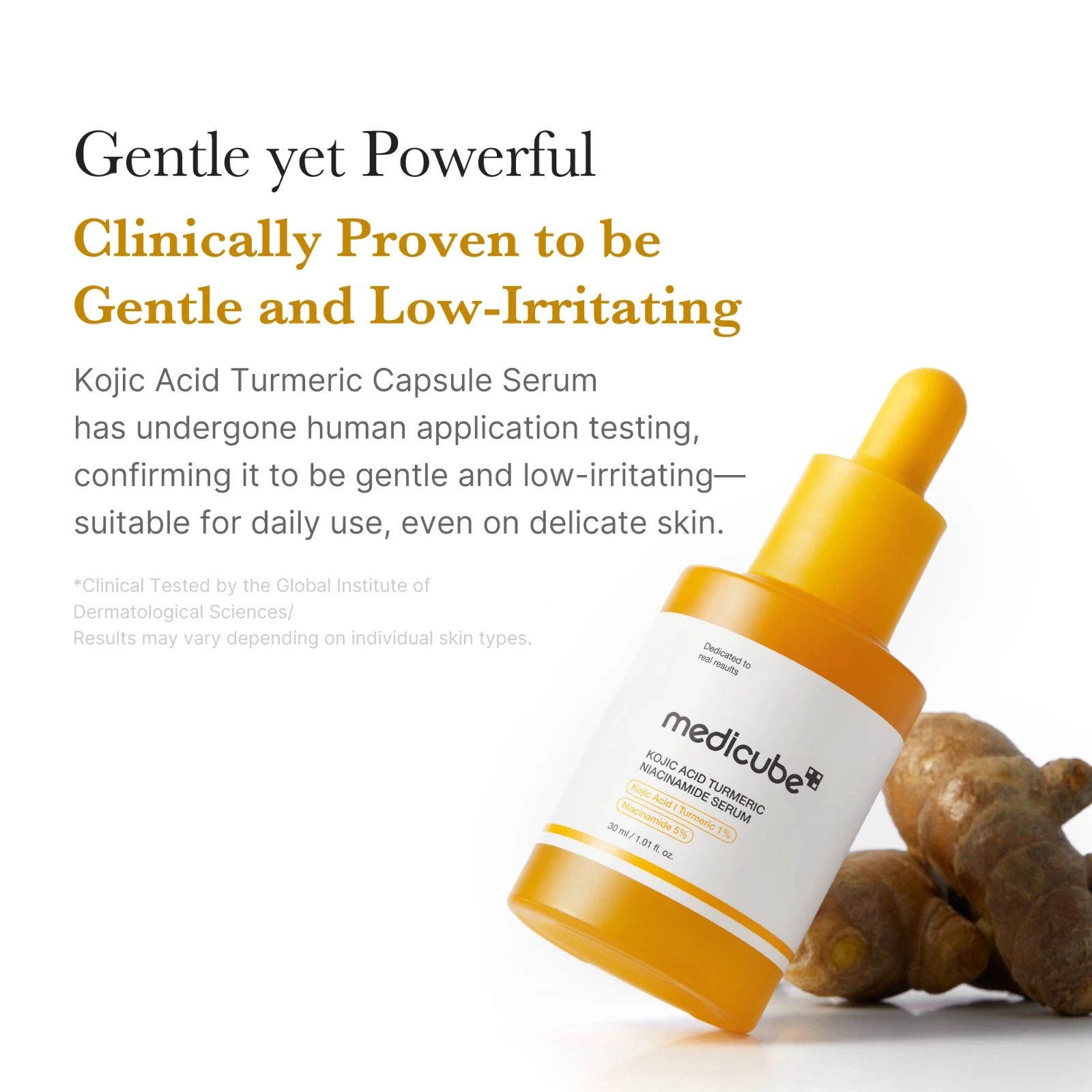
The Medicube Kojic Acid Turmeric Serum is a 30 ml dropper serum, bright yellow, with visible capsules suspended in it. It is aimed at post-acne marks, dark spots and uneven tone, and Medicube positions it specifically for after-spot care — the stage once a breakout has healed and left a mark behind.
We have now read the ingredient lists of twelve products for this shop, and this is the first one where every ingredient on the front of the bottle is genuinely near the top of the formula. That is rare enough to be the headline.
The Medicube Kojic Acid Turmeric Serum has two names — check before you buy elsewhere
The bottle says Kojic Acid Turmeric Niacinamide Serum. Medicube’s own American site sells the identical product as the Kojic Acid Turmeric Capsule Serum.
We compared both ingredient lists item by item. All thirty-two ingredients appear in the same order in both. It is one product with two names, which matters if you are price-comparing across sites and think you are looking at two different serums.
The Medicube Kojic Acid Turmeric Serum actives are actually at the top for once
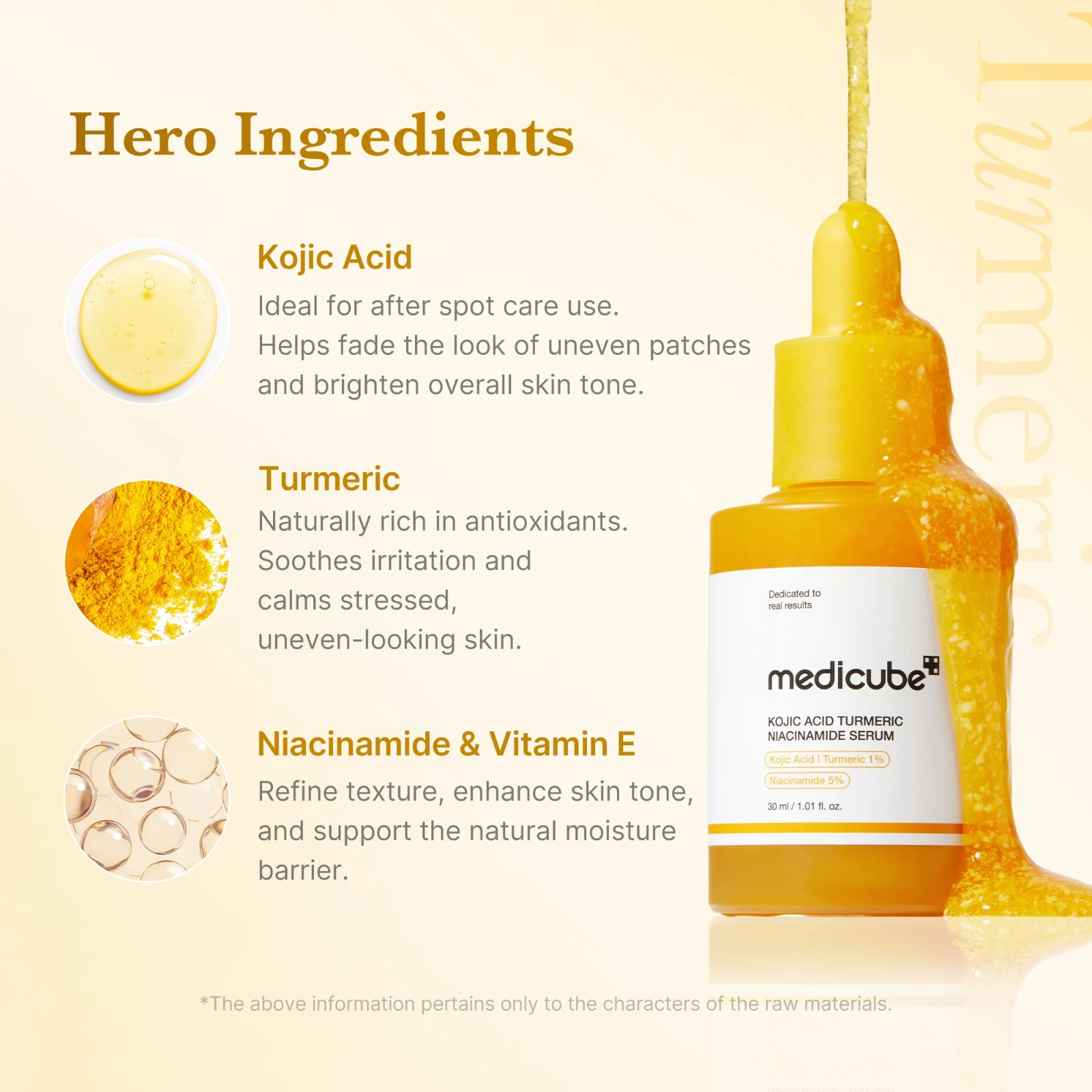
Here is the ingredient order that makes this serum worth stocking.
Niacinamide, second
Directly after water. That is as high as an active realistically sits in any serum, and it means a substantial concentration. Niacinamide is the best-evidenced brightening ingredient in skincare — it interrupts pigment transfer to skin cells and supports the barrier at the same time.
Turmeric root extract, sixth
Curcuma longa root extract at position six is unusually high for a botanical. Compare that with the products we have listed where the named plant sat at 1 ppm at the bottom of the list. This is a real quantity of the thing on the label, and it is also what makes the serum yellow.
Kojic acid, ninth
A tyrosinase inhibitor derived from fermented rice — it blocks an enzyme in the pigment-making pathway. Ninth of thirty-two, above every filler in the formula. Kojic acid and niacinamide work on pigmentation by different mechanisms, so having both at working positions is a genuinely sensible pairing rather than a longer label.
Three brightening actives, all in the top nine. After eleven products where the hero ingredient turned out to be at the bottom of the list, we want to be as clear about this as we have been about the failures: the Medicube Kojic Acid Turmeric Serum is built the way its marketing describes.
What is at the bottom of the Medicube Kojic Acid Turmeric Serum, and why we still mention it
Two ingredients get named in Medicube’s secondary marketing and both are near the end.
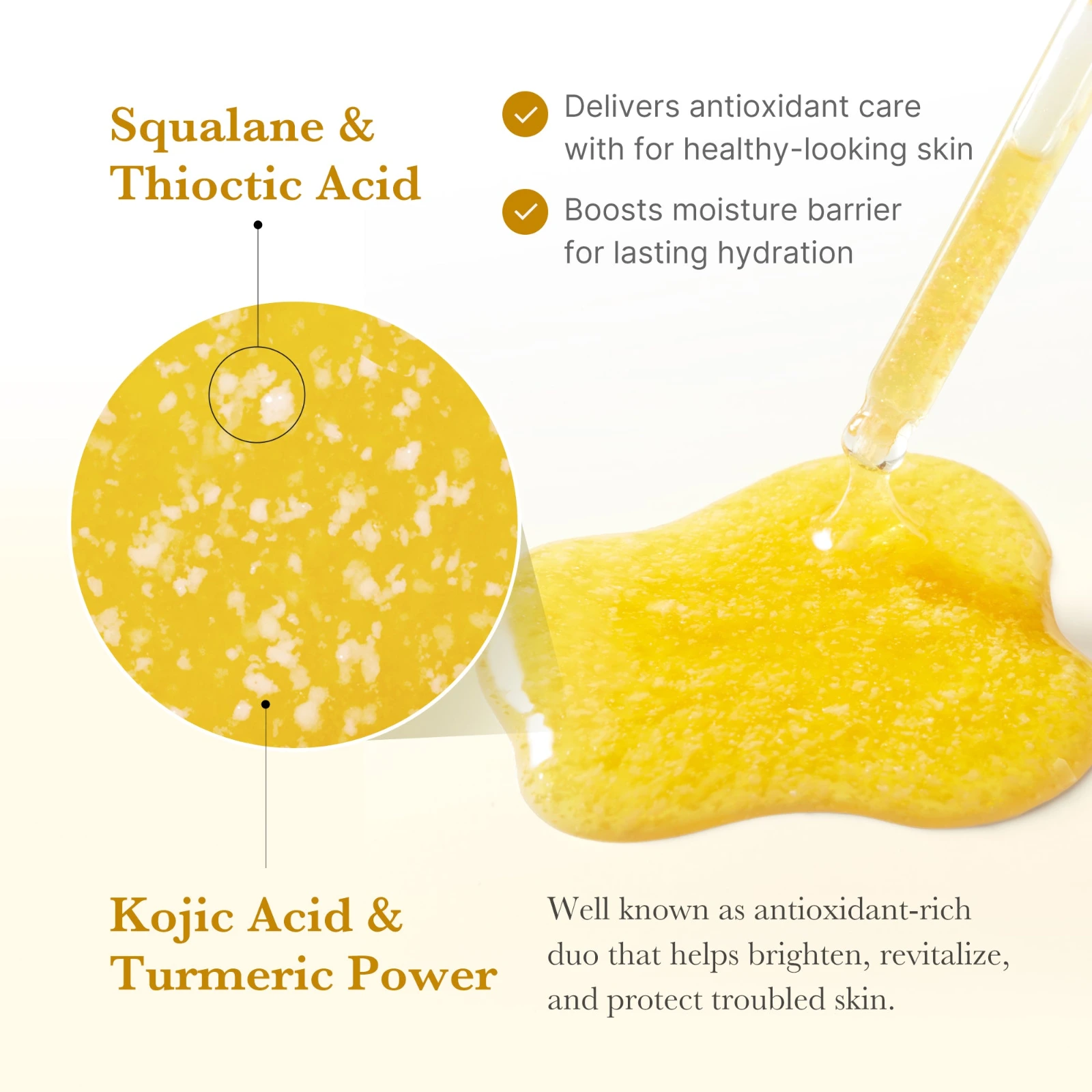
Thioctic acid — alpha lipoic acid — is thirty-first. Glycolic acid is thirty-second of thirty-two, dead last. The AHA in this serum is decorative. If you are buying it expecting chemical exfoliation, you will not get any meaningful amount, and honestly that is fine: an exfoliating acid stacked on top of kojic acid and niacinamide would make the formula harder to tolerate, not better.
Squalane is thirtieth and panthenol twenty-ninth. Both are good ingredients doing very little at that depth.
The Ayurvedic block in the Medicube Kojic Acid Turmeric Serum you will recognise
Positions twelve to sixteen hold something unusual for a Korean brand, and something a Bangladeshi buyer will spot immediately.
- Melia azadirachta flower extract — neem, twelfth
- Ocimum sanctum leaf extract — holy basil, tulsi, thirteenth
- Coccinia indica fruit extract — ivy gourd, telakucha, fourteenth
- Eclipta prostrata extract — bhringraj, kesuti, fifteenth
- Melia azadirachta leaf extract — neem again, sixteenth
Five consecutive South Asian medicinal plants in a K-beauty serum. Neem and tulsi grow in courtyards across this country and have been used on skin here for centuries. It is genuinely strange and rather nice to find them arriving back via Seoul at a Korean price.
Be clear-eyed about the position though. Twelfth to sixteenth of thirty-two puts them below the one percent line, well under the actives above them. They are a supporting cast and a good story, not the reason the Medicube Kojic Acid Turmeric Serum works. If you want neem on your skin at a concentration that does something, neem oil from any local market will out-deliver this and cost almost nothing.
The Medicube Kojic Acid Turmeric Serum test results are modest, and they published them anyway
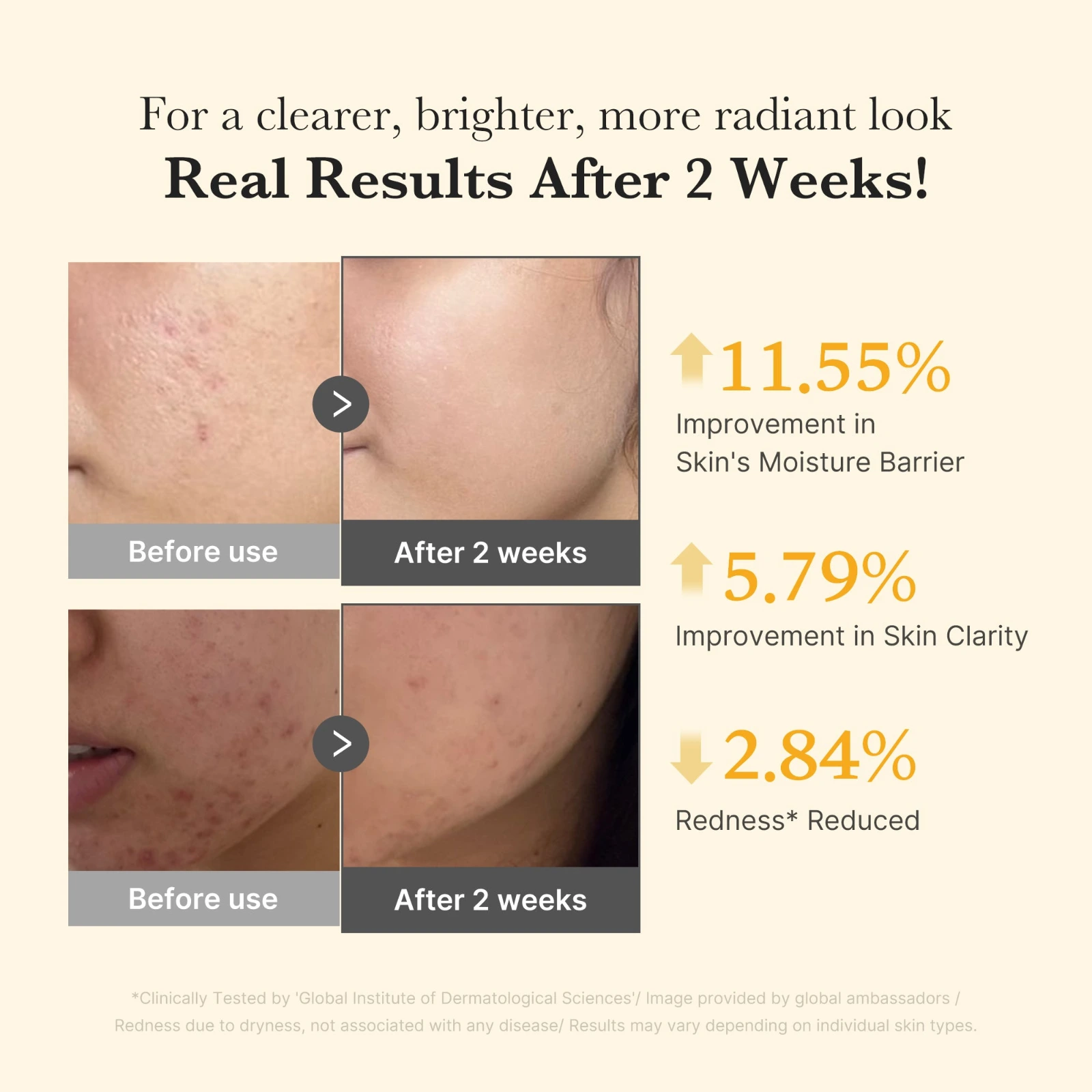
Medicube shows before-and-after photographs with three figures after two weeks of use, tested by the Global Institute of Dermatological Sciences.
- Skin moisture barrier improved 11.55 percent
- Skin clarity improved 5.79 percent
- Redness reduced 2.84 percent
Look at those numbers properly. A brightening serum built on kojic acid, turmeric and niacinamide measured a 5.79 percent improvement in skin clarity over two weeks. Redness moved 2.84 percent, which is close to nothing.
We think this is to Medicube’s credit, and here is why. Every brand runs these tests. Most publish only the flattering figure — we listed a mask last week whose headline number was 98.4 percent because it was measured immediately after rinsing. Medicube ran a two-week study through a named institute and printed a 2.84 percent result on their own marketing image.
What it tells you practically: two weeks is not enough. Pigmentation work is measured in months. If the Medicube Kojic Acid Turmeric Serum moved clarity 5.79 percent in a fortnight, the honest expectation for three months of consistent use with daily sunscreen is considerably better than that — but you will not see it by next weekend.
No participant count is published, which is the gap we would still like closed.
The Medicube Kojic Acid Turmeric Serum is scented, and not fragrance-free
Chamaecyparis obtusa wood oil sits at position twenty-four. That is hinoki cypress, a Japanese cedar oil with a clean woody smell, and it is functioning here as fragrance.
We flag it because four products we stock now genuinely are fragrance-free, and buyers who have moved to those should know this one is not. There is no synthetic parfum in the Medicube Kojic Acid Turmeric Serum and no citrus oil, which puts it well below most scented serums for reactivity risk. But if you react to essential oils, hinoki is an essential oil.
On the alcohols in the Medicube Kojic Acid Turmeric Serum list
You will see cetyl alcohol at eighteen and behenyl alcohol at twenty-five and reasonably wonder whether this serum is drying.
It is not, and this is worth understanding once because it applies to half the products on any shelf. Cetyl and behenyl alcohol are fatty alcohols — waxy, solid at room temperature, used as emollients and thickeners. They soften skin. The alcohol people avoid in skincare is ethanol, listed as alcohol denat or SD alcohol, which evaporates and can be drying in quantity.
There is no ethanol anywhere in this thirty-two-ingredient list. If you have been avoiding products because you saw the word alcohol in the ingredients, this is the distinction that gets you your options back.
The Medicube Kojic Acid Turmeric Serum ingredient list — all thirty-two
Transcribed from Medicube’s own published list and cross-checked against their US listing for the same formula under its other name.
Water, Niacinamide, Butylene Glycol, Jojoba Esters, 1,2-Hexanediol, Curcuma Longa (Turmeric) Root Extract, Caprylic/Capric/Succinic Triglyceride, Coco-Caprylate/Caprate, Kojic Acid, Ammonium Acryloyldimethyltaurate/VP Copolymer, Hydrogenated Castor Oil/Sebacic Acid Copolymer.
Melia Azadirachta Flower Extract, Ocimum Sanctum Leaf Extract, Coccinia Indica Fruit Extract, Eclipta Prostrata Extract, Melia Azadirachta Leaf Extract, Allantoin, Cetyl Alcohol, Silica Silylate, Sodium Citrate, Ethylhexylglycerin.
Corallina Officinalis Extract, Adenosine, Chamaecyparis Obtusa Wood Oil, Behenyl Alcohol, Arginine, Citric Acid, Tocopherol, Panthenol, Squalane, Thioctic Acid, Glycolic Acid.
Adenosine at twenty-three is worth a note: it is Korea’s approved anti-wrinkle functional ingredient. This product does not carry a functional certification, so treat its presence as a bonus rather than a claim.
What three months actually looks like
Because Medicube published a two-week number, it is worth setting out what a realistic timeline is, so you can judge the Medicube Kojic Acid Turmeric Serum fairly instead of abandoning it in week three.
Weeks one to two. Nothing visible. Skin may feel slightly smoother from the emollients. If you are going to react to kojic acid, this is when you find out.
Weeks three to six. The newest marks — the ones from spots that healed in the last month or two — start to lift first. Older, deeper pigment does not move yet. This is the stage most people quit at.
Weeks eight to twelve. Overall tone starts to even out and the older marks fade. This is where a brightening serum earns back its price, and where the photograph you took on day one becomes useful.
Two things will stop this working regardless of the formula: skipping sunscreen, and picking at spots. The Medicube Kojic Acid Turmeric Serum cannot outrun either, and no serum at any price can.
How to use the Medicube Kojic Acid Turmeric Serum
- Cleanse, then apply toner or essence and leave the skin slightly damp.
- Dispense three to four drops. Shake gently first — the capsules are suspended and settle.
- Pat over the whole face, or on the marks alone if you prefer to spot-treat.
- Wait a minute, then follow with moisturiser.
- Sunscreen every morning without exception.
That last step is not filler on this page. Kojic acid and niacinamide work by slowing pigment production. Sun exposure speeds it up. Using the Medicube Kojic Acid Turmeric Serum without daily sunscreen is running the tap and the drain at the same time, and it is the single most common reason people conclude a brightening serum “did nothing”.
Layering the Medicube Kojic Acid Turmeric Serum with other actives
Start every other night for the first two weeks. Kojic acid is a more common contact sensitiser than niacinamide or arbutin, and a small number of people react to it. Two weeks tells you whether you are one of them.
Once settled, nightly is fine. It layers comfortably with hyaluronic acid, ceramides, peptides and moisturisers.
With retinoids, alternate nights while you build tolerance — kojic acid plus a retinoid on the same evening is a common route to flaking. With strong exfoliating acids, keep them off the same night entirely; the glycolic acid already in this formula is at position thirty-two and adds nothing, so you are not doubling up on purpose.
Do not stack the Medicube Kojic Acid Turmeric Serum with another brightening serum. If you also have a niacinamide or arbutin serum, pick one and give it three months.
How the Medicube Kojic Acid Turmeric Serum suits this climate
The case for a brightening serum in Bangladesh is stronger than in most markets, and it is not about lightening skin. It is about marks.
Post-inflammatory hyperpigmentation — the brown mark a spot leaves behind — fades far more slowly under strong year-round UV than it does in a temperate country. That is why marks here can outlast the acne that caused them by months. A kojic acid and niacinamide serum works directly on that, and this climate is exactly where it earns its money.
Two practical notes. Kojic acid oxidises and darkens with light and heat, so keep the bottle out of a sunny window and out of a hot bathroom. And the serum contains emollients — jojoba esters, coco-caprylate, squalane — so it is not the lightest thing you can wear under sunscreen in June. Oily skin may prefer it at night only.
Who the Medicube Kojic Acid Turmeric Serum suits
Good fit: post-acne marks, dark spots, melasma-type patchy tone, general dullness, and normal to dry skin. It is specifically built for the after-spot stage, and that is an under-served problem here.
Poor fit: anyone who has reacted to kojic acid before, very oily skin that dislikes emollient serums in humidity, anyone sensitive to essential oils, and anyone hoping for a result in two weeks. Medicube’s own study says 5.79 percent in a fortnight — believe them.
Not a treatment for active acne. Clear the breakout first, then work on the mark.
Pairing the Medicube Kojic Acid Turmeric Serum with the rest of your routine
This sits naturally alongside two products we already stock.
- Medicube Zero Pore Blackhead Mud Mask — weekly clay reset for congestion. Use it on a night you skip the serum.
- Medicube Zero Pore Pad 2.0 — daily pore maintenance. Fine on the same night, pad first.
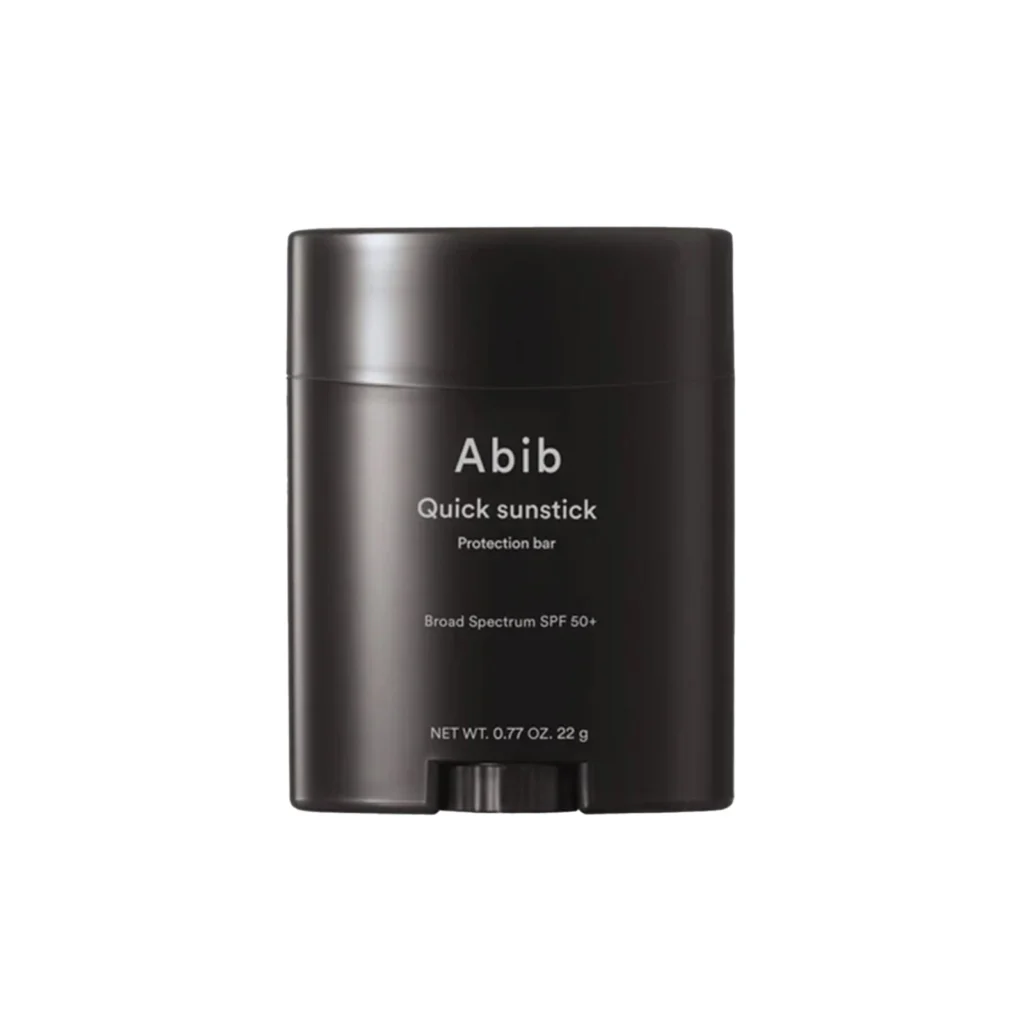
- Abib Quick Sunstick SPF50+ — the reapplication half of the sun protection this serum depends on.
If the budget only stretches to two things, buy a sunscreen and this. In that order.
What 30 ml of the Medicube Kojic Acid Turmeric Serum works out to per use
Three to four drops is roughly 0.4 ml, so a 30 ml bottle gives around seventy to seventy-five applications — about two and a half months used nightly, or four to five months if you spot-treat only.
That puts the Medicube Kojic Acid Turmeric Serum at roughly twenty-six to twenty-eight taka per use. For a serum with three brightening actives in the top nine ingredients, we think that is good value, and better value than several of the serums we sell where the named ingredient turned out to be at the bottom.
Questions we get asked
Will the Medicube Kojic Acid Turmeric Serum lighten my skin?
No, and that is not what it is for. It works on marks, spots and uneven patches — the places where pigment has over-produced. Your natural skin tone is not a flaw and nothing we sell will change it, nor should it.
Will the Medicube Kojic Acid Turmeric Serum stain my skin yellow?
No. The colour is turmeric and it disappears as the serum absorbs. It can mark a light pillowcase if you apply a heavy layer just before bed, so give it a minute to sink in.
Why has my Medicube Kojic Acid Turmeric Serum gone darker?
Kojic acid oxidises. Some deepening over months is normal and does not mean it has spoiled. A sharp change in colour or smell does — stop then.
Is the kojic acid in the Medicube Kojic Acid Turmeric Serum safe?
It is widely used and well tolerated at cosmetic concentrations. It causes contact irritation in a small minority of people, which is why we suggest every other night to start. If you get persistent stinging or redness, it is not for you.
Can I use it with the turmeric I already have at home?
Please do not put kitchen turmeric on your face expecting the same thing. Raw turmeric stains skin properly, and the extract here is standardised and formulated at a concentration that will not.
Is the Medicube Kojic Acid Turmeric Serum safe in pregnancy?
Kojic acid is one of the ingredients people are commonly told to ask about in pregnancy. There is no retinoid and no salicylic acid in it, but ask your doctor rather than taking a shop’s word for it.
Is the Medicube Kojic Acid Turmeric Serum vegan?
Nothing in the thirty-two-ingredient list is obviously animal-derived. Medicube holds no vegan certification we can verify, so we state the ingredient fact and stop there.
How we store and ship the Medicube Kojic Acid Turmeric Serum
Stock sits in air-conditioned storage in Dhaka until it goes out, and it matters here — kojic acid degrades with heat and light faster than most actives, and a bottle that has sat warm has lost potency you paid for.
Your bottle is sealed when it leaves us and it is stock we imported ourselves, not a unit bought from another local seller and passed along. If it arrives unsealed, leaking or already browned, raise it with us the day it lands and we will replace it.
Where the Medicube Kojic Acid Turmeric Serum fits in your routine
Cleanse, toner or essence, this, moisturiser. Night is the simplest place for it. If you use it in the morning, sunscreen goes over the top, always.
Give it three months before you judge it, and take a photo in the same light on day one. Pigmentation changes too slowly to see in a mirror day to day, and the photo is the only honest referee.
Buying the Medicube Kojic Acid Turmeric Serum in Bangladesh
Sealed 30 ml bottle, imported by us, in stock in Dhaka with nationwide delivery. Every ingredient on this page is transcribed from Medicube’s published list and cross-checked against their US listing of the same formula, and you can verify any ingredient name against the EU CosIng database yourself.
Compare it against our other serums, or see everything we stock from Medicube.
Reviews
There are no reviews yet.