
Description
Toleriane Double Repair is the moisturizer American dermatologists hand out more than almost any other, and the 100 ml tube is the size worth owning. It is currently out of stock — use the notify form on this page and we will email you the day it lands. Until then, this page gives you the full ingredient list, the country it is actually made in, and an honest comparison against the ceramide cream you can buy from us today.
What Toleriane Double Repair actually is
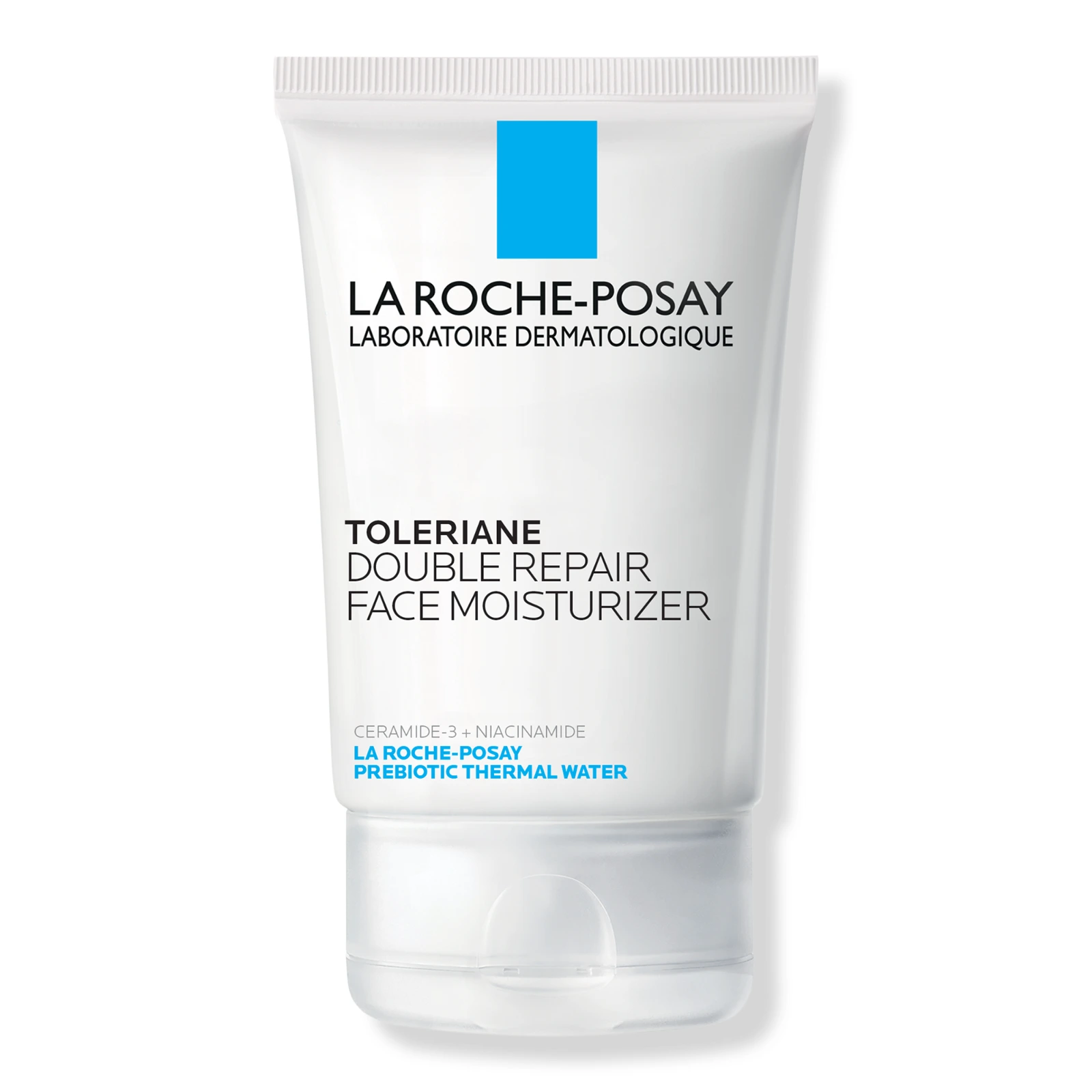
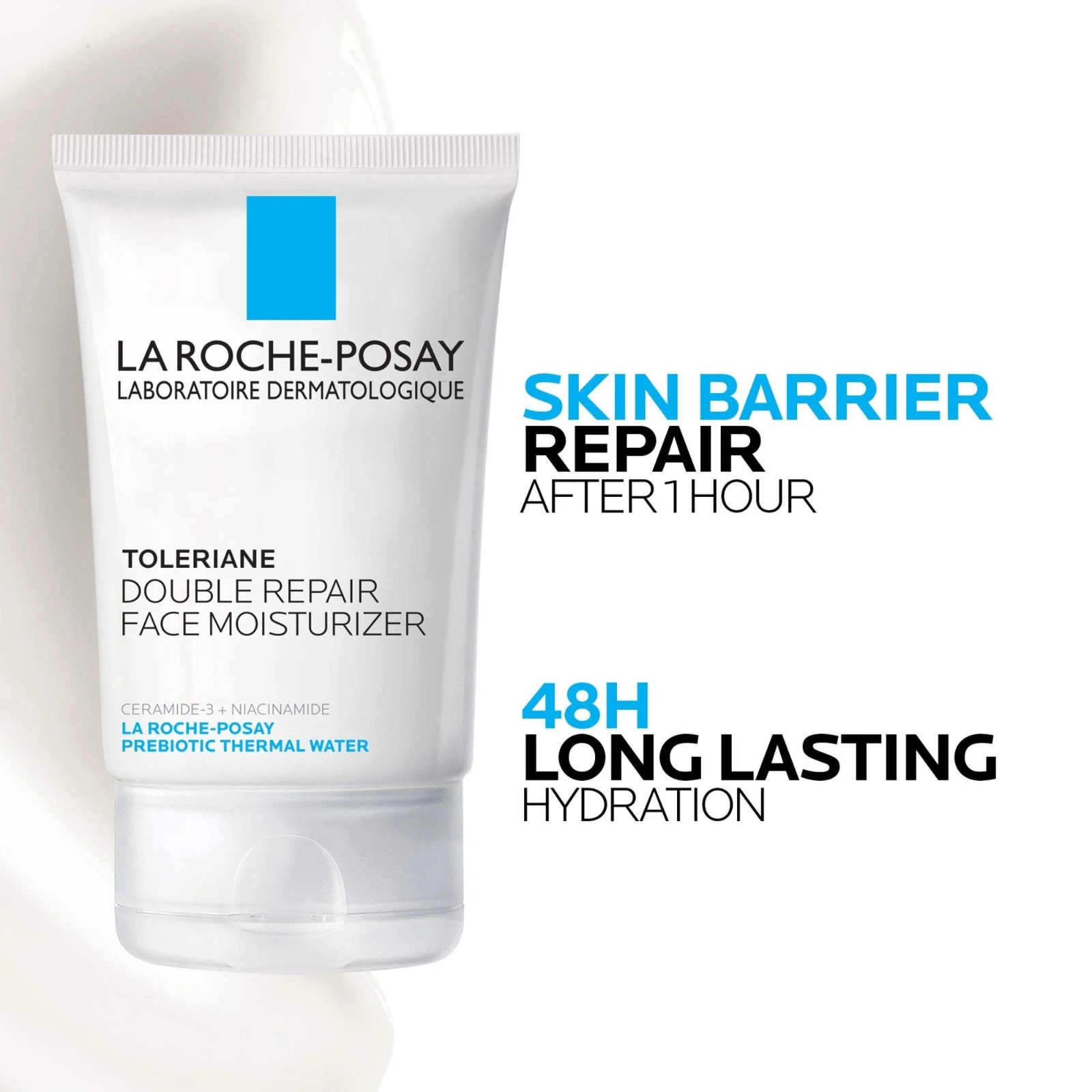
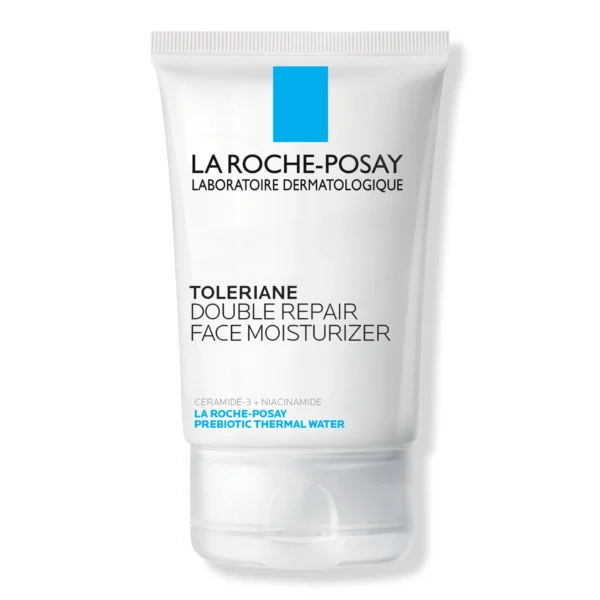
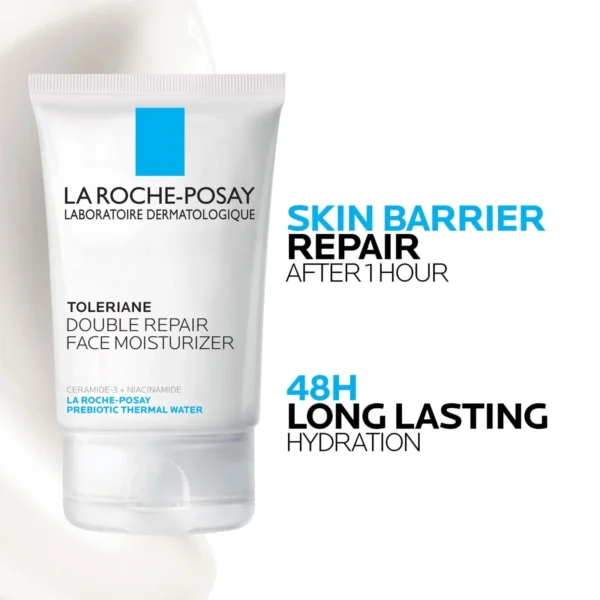
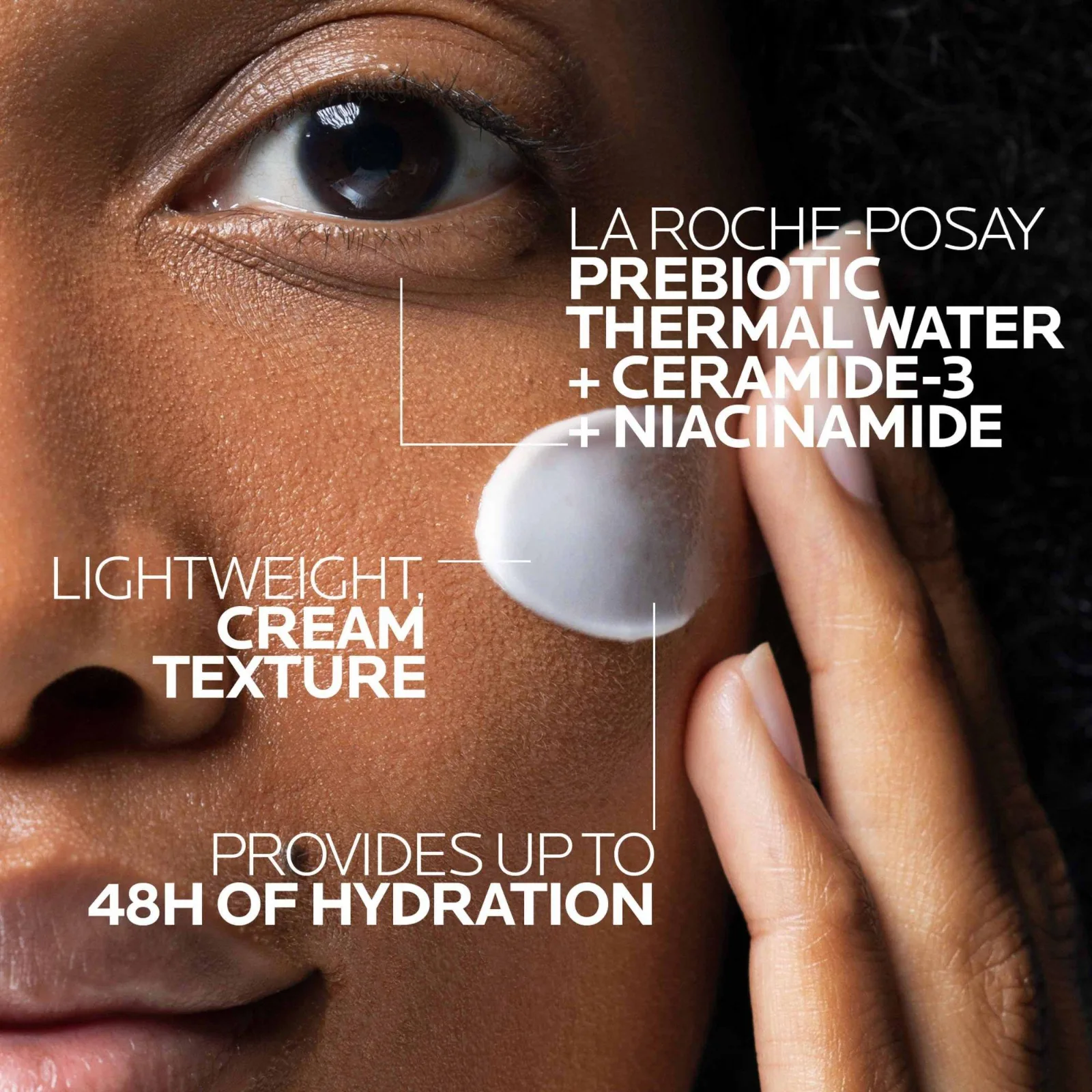
It is a lightweight daily face cream for sensitive skin, built on four things: glycerin, squalane, niacinamide and a single ceramide. La Roche-Posay calls it “double repair” because it claims to work on two fronts — restoring the moisture barrier and replenishing hydration — and the pack claims barrier repair after one hour and up to 48 hours of hydration.
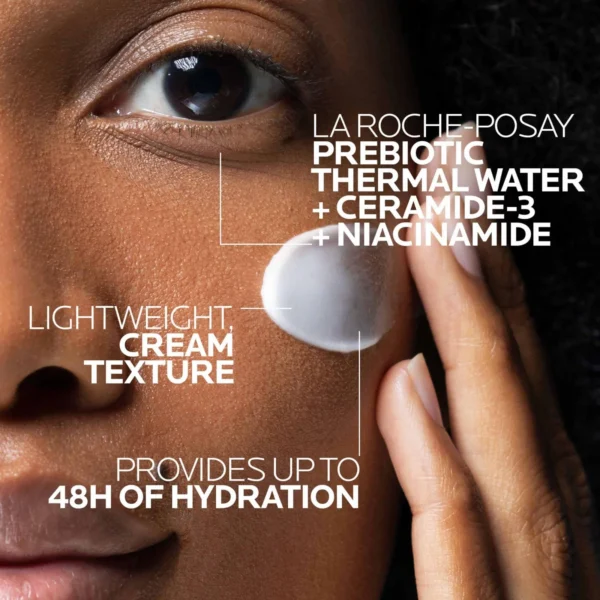
The texture is the part people fall for. Toleriane Double Repair is not a rich cream and not a gel. It is a light lotion-cream that finishes soft and slightly matte, which comes from the corn starch sitting fifth in the list. That finish is why it works under sunscreen and makeup where a heavier cream would pill.
Two sizes are sold: 40 ml and this 100 ml. We stock the 100 ml because the price per millilitre is far better and because Toleriane Double Repair is a product people use twice a day, every day, for years.
The full ingredient list — all eighteen of them
Aqua/Water/Eau, Glycerin, Squalane, Dimethicone, Zea Mays Starch/Corn Starch, Niacinamide, Ammonium Polyacryloyldimethyl Taurate, Myristyl Myristate, Stearic Acid, Ceramide NP, Potassium Cetyl Phosphate, Glyceryl Stearate SE, Sodium Hydroxide, Myristic Acid, Palmitic Acid, Capryloyl Glycine, Caprylyl Glycol, Xanthan Gum.
Eighteen ingredients is genuinely short for a moisturizer, and there is a lot to like in that list. No fragrance. No parabens. No drying alcohol. No essential oils. No plant extracts to react to. For sensitive skin, a short list of boring ingredients is the whole point, and Toleriane Double Repair delivers that better than most.
It has one ceramide, not three
This is the thing to understand before you choose between Toleriane Double Repair and a ceramide cream, and nobody selling either will tell you.
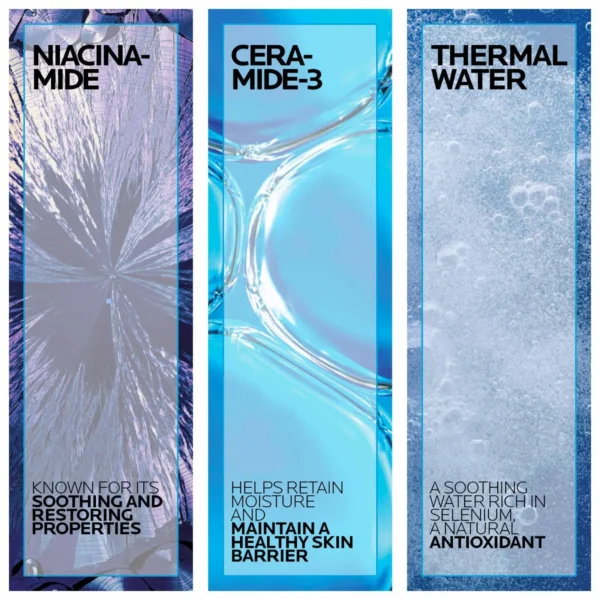
Ceramide NP is the only ceramide in it. “Ceramide-3” on the front of the tube is simply the older name for Ceramide NP — it is one ingredient wearing two names, not evidence of a third-generation complex. By comparison, CeraVe Moisturizing Cream contains Ceramide NP, Ceramide AP and Ceramide EOP, plus cholesterol and phytosphingosine.
Does that make Toleriane Double Repair worse? Not necessarily, and here is the fair version. Barrier science says ceramides work best alongside cholesterol and free fatty acids — and Toleriane Double Repair does contain fatty acids, in stearic, myristic and palmitic acid. It has no cholesterol. CeraVe covers all three lipid classes; La Roche-Posay covers two and leans harder on niacinamide and squalane instead.
They are two different philosophies at a similar price. If you want the lipid-replacement approach, CeraVe. If you want a lighter texture and niacinamide, Toleriane Double Repair. Neither is a con.
The “prebiotic thermal water” is listed as Aqua
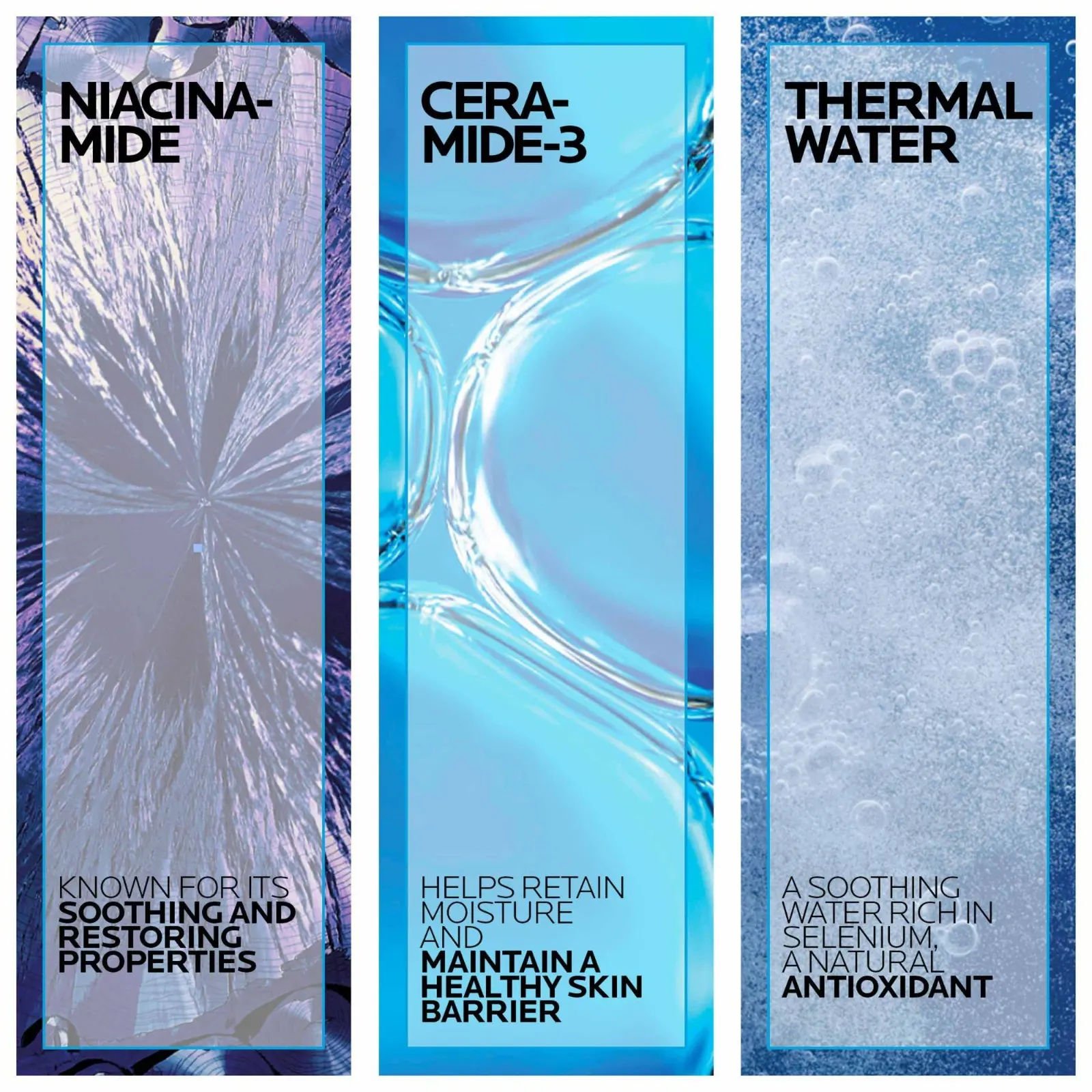
La Roche-Posay puts La Roche-Posay Prebiotic Thermal Water on the front of the tube and treats it as a hero ingredient across the whole Toleriane range. On the ingredient list it appears as Aqua / Water / Eau and nothing else.
That is not a trick — thermal spring water is water, and it is declared as water under INCI rules. But it does mean there is no way to tell from the label how much of the water in Toleriane Double Repair is thermal spring water from Saint-Nectaire and how much is ordinary purified water. La Roche-Posay does not publish that ratio.
The thermal water itself is real and has a genuine mineral profile, selenium in particular. We simply cannot verify its proportion, and we would rather say so than describe it as if we could.
Niacinamide, squalane and what they are doing
Niacinamide sits sixth of eighteen, which is a strong position — high enough to be doing real work, though no percentage is published for Toleriane Double Repair in any market. Anyone quoting you a figure has invented it. Niacinamide is well evidenced for barrier support and reducing redness, which is exactly the brief here.
Squalane at third is the emollient doing most of the softening. It is stable, light, and one of the least reactive emollients available. Glycerin at second is the humectant. Together with dimethicone at fourth, those four ingredients account for nearly all of how Toleriane Double Repair feels on the skin.
Made in France — and we had to read the tube to tell you that
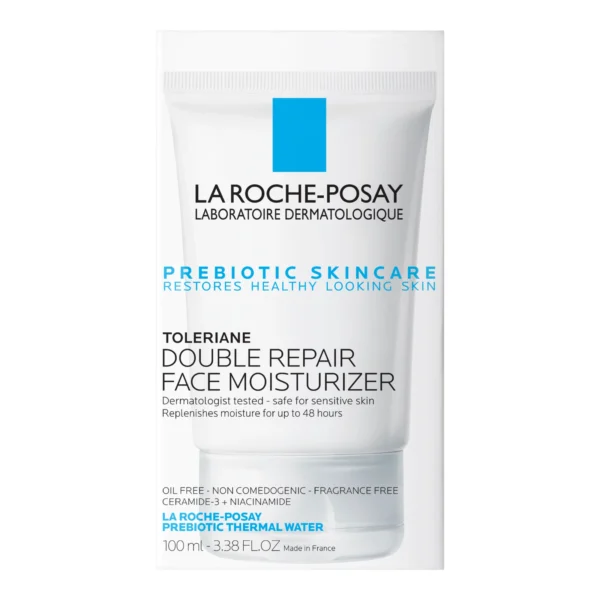
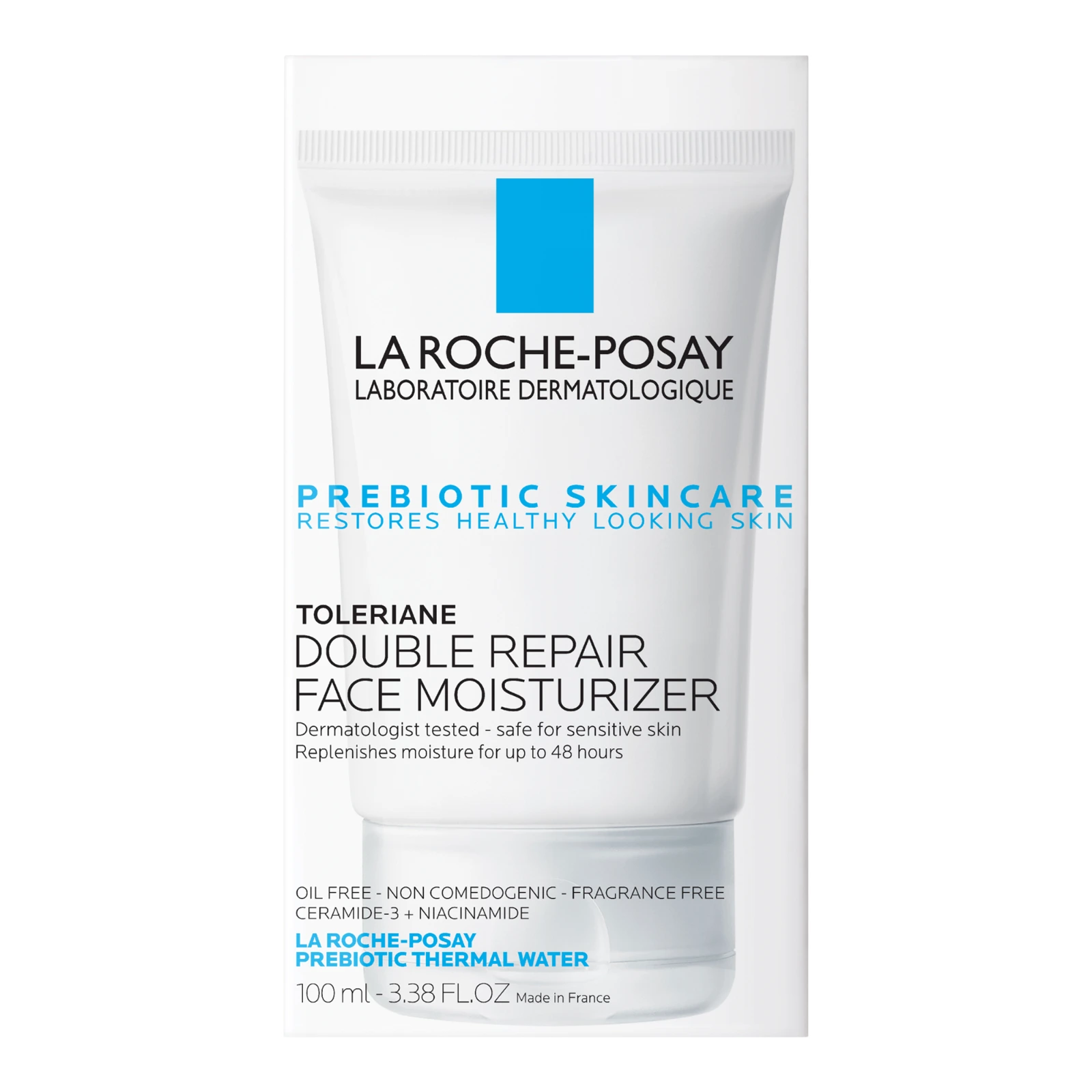
La Roche-Posay does not state the country of manufacture on its product pages. The back of the tube does: 100 ml — 3.38 FL.OZ, Made in France. That matches what our supplier lists, and it is photographed on this page so you can check the tube you receive says the same.
The same panel carries the claim set: oil free, non-comedogenic, fragrance free, ceramide-3 plus niacinamide. Every one of those is verifiable against the eighteen ingredients above, which is more than can be said for a lot of what gets printed on skincare packaging.
The claims, weighed honestly
- “Skin barrier repair after 1 hour.” An instrumental measurement, and a reasonable one — barrier recovery is measured by water loss through the skin and one hour is a normal window for that kind of test. La Roche-Posay does not publish the study alongside the claim, so we cannot show you the numbers.
- “Up to 48-hour hydration.” Note the words “up to”. Hydration claims of this kind are usually measured under controlled conditions on people who then apply nothing else. Useful as a comparison between products, less useful as a promise about your Tuesday.
- “Recommended by 90,000 dermatologists worldwide.” A brand claim about the whole La Roche-Posay house, not about Toleriane Double Repair specifically. We repeat it as what it is.
- “Suitable for sensitive skin”, “allergy-tested”, “dermatologist-tested”. Standard testing claims, and the eighteen-ingredient list supports them better than most products that make them.
Where La Roche-Posay publishes a measurement, we say so. Where it publishes a marketing line, we say that too.
How Toleriane Double Repair behaves in Bangladesh
Better than most Western moisturizers, and that is worth saying because it is not always true.
The corn starch and the light emollient system mean Toleriane Double Repair finishes soft rather than greasy. In Dhaka humidity that matters enormously — a rich European winter cream feels like cling film here, whereas this one sits well even in June. It is oil-free, so it will not add shine on an already-oily T-zone.
Practical notes for this climate:
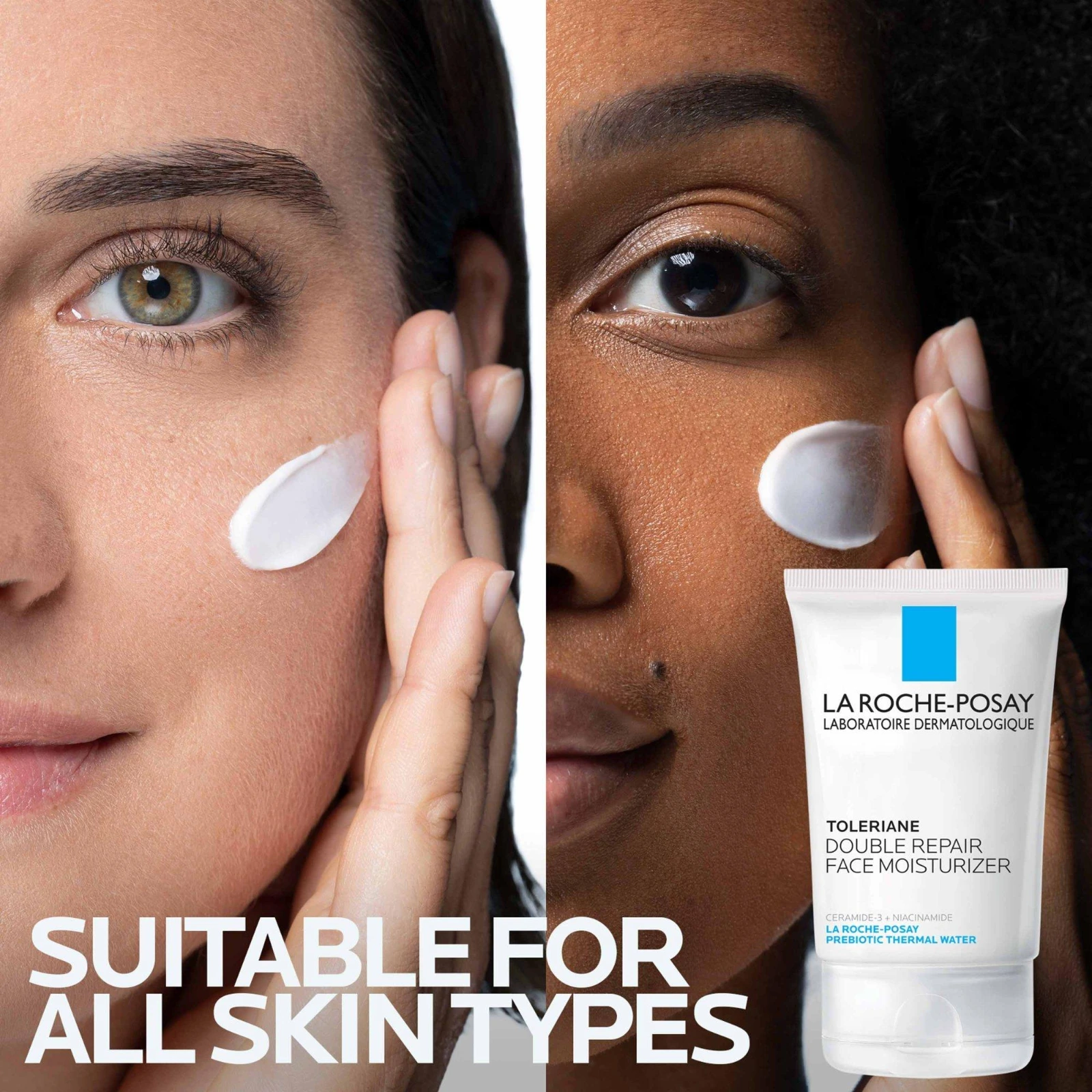
- Normal, combination and sensitive skin: works year-round. This is the sweet spot.
- Oily skin: works, but La Roche-Posay makes a dedicated Toleriane Double Repair Matte for oily skin. Different product, different finish. If shine is your main complaint, that is the one to ask us about.
- Very dry skin, or winter: Toleriane Double Repair may not be enough on its own. Layer it over a hydrating serum, or use a richer cream at night.
- After acids or retinoids: good, and the fragrance-free short list means it will not sting. For genuinely broken skin, Cicaplast Baume B5+ from the same brand does more.
How to use it
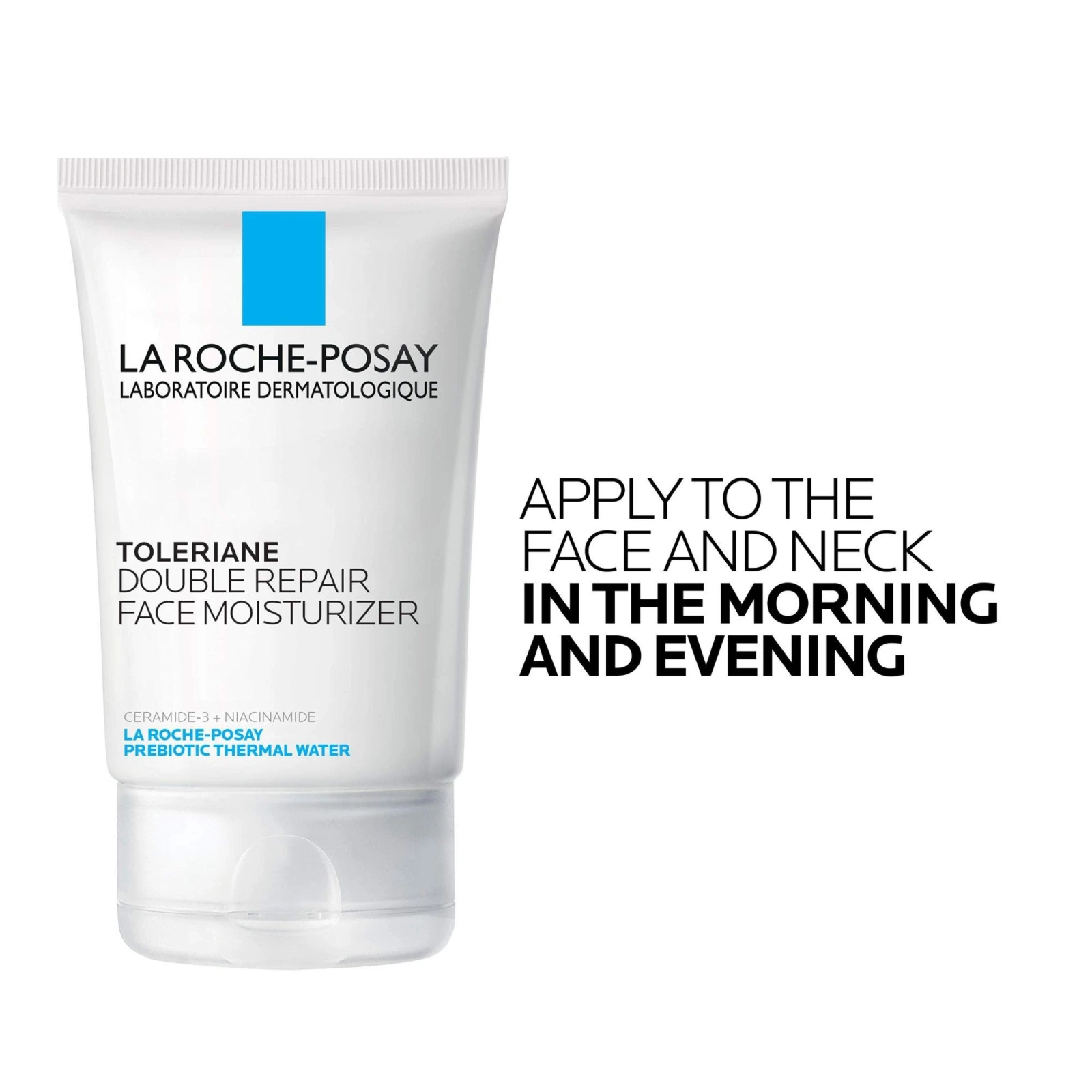
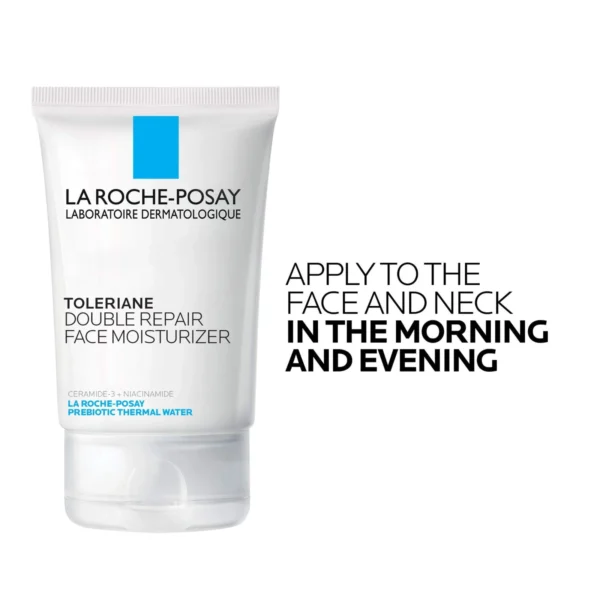
La Roche-Posay’s direction is simple: after cleansing, apply to face and neck in gentle circular motions, morning and evening.
What we would add:
- Apply to slightly damp skin. Glycerin is a humectant and works better with water available to hold.
- A pea to a small almond is enough for a face. Toleriane Double Repair spreads further than it looks like it will.
- Under sunscreen in the morning, and give it two minutes to settle first.
- Do not skip the neck. The direction says face and neck for a reason and the 100 ml tube gives you enough to actually do it.
There is no adjustment period, no purging and no build-up phase. It is a moisturizer, and it either suits you from day one or it does not.
Who it suits, and who should look elsewhere
Toleriane Double Repair is a good buy if: your skin is sensitive, reactive or easily stung by fragrance; you want one moisturizer that works morning and night; you use retinoids or acids and need something calm underneath; you have tried a dozen creams and reacted to most of them; or you want a genuinely short ingredient list you can read in ten seconds.
Look elsewhere if: your skin is very dry and you want serious occlusion; you want three ceramides and cholesterol; your main problem is shine, in which case the Matte version is the right one; you want actives for pigmentation or ageing, because Toleriane Double Repair treats neither; or you avoid silicones, since dimethicone sits fourth.
What La Roche-Posay does not publish
- No niacinamide percentage — in any market, on any pack.
- No ceramide percentage.
- No thermal water proportion, as covered above.
- No pH.
- No period-after-opening figure on the brand page. Treat it as roughly twelve months once opened.
- No published study behind the one-hour barrier repair or the 48-hour hydration claim that we could locate.
You can check the ingredient list and the claims on La Roche-Posay’s own product page. We would rather you verified us than trusted us.
Toleriane Double Repair against the alternatives we stock
You can buy all three of these from us, so we have no reason to steer you.
Against CeraVe Moisturizing Cream. CeraVe is richer, has three ceramides plus cholesterol, comes in a 453 g tub and costs less per gram. It is the better buy for dry skin and for the body. Toleriane Double Repair is lighter, has niacinamide, comes in a hygienic tube and suits sensitive or combination skin in hot weather better. Different jobs.
Against Cicaplast Baume B5+. Cicaplast is a repair balm for skin that has gone wrong — a specialist. Toleriane Double Repair is the everyday cream. Most people who own both use the balm on patches and this on the whole face.
Against the 40 ml tube. Same formula, worse value. If you already know Toleriane Double Repair suits you, buy the 100 ml.
Where Toleriane Double Repair sits in the Toleriane range
La Roche-Posay uses “Toleriane” as an umbrella for its sensitive-skin line, and the names get confusing fast. Knowing which is which stops you buying the wrong tube from a marketplace seller.
- Double Repair Face Moisturizer — this one. Light cream, ceramide-3 and niacinamide, for normal to sensitive skin.
- Toleriane Double Repair Matte — same family, reformulated finish for oily skin. A different product with a different ingredient list, not a variant of the same tube.
- Toleriane Double Repair UV SPF 30 — the same idea with sunscreen filters added. If you want moisturiser and SPF in one step, that is the one, and it is not interchangeable with the plain version.
- Toleriane Hydrating Gentle Cleanser — the cleanser from the same range, designed to be used before it.
- Toleriane Purifying Foaming Cleanser — the oily-skin cleanser.
The naming overlap is genuinely bad, and it is the single most common reason people end up with a tube that does not suit them. If you are ordering anywhere other than here, read the sub-name under “Toleriane” before you pay.
Authenticity and storage
La Roche-Posay is heavily counterfeited across South Asia, and this is one of the most-faked items in the range because the packaging is plain and the demand is high.
Four things to check on any tube, wherever you buy it:
- The back panel. A genuine tube prints the full ingredient list, the volume as “100 ml — 3.38 FL.OZ” and “Made in France”. A fake often prints a blurred or shortened list.
- The batch code. Embossed or printed on the crimp at the base of the tube, and it should match the code on the carton.
- The smell. Almost nothing. It is fragrance-free. Anything perfumed is not this product.
- The texture. A light white cream that absorbs in under a minute leaving a soft, slightly matte finish. If it is greasy, thin or watery, something is wrong.
We photograph the tube we sell, back panel included, so you can hold what arrives against what is on this page. If it does not match, tell us and we will replace it.
On storage: keep it below 30°C and out of direct sun. This is a simple, stable formula with no light-sensitive actives, so it is forgiving — but heat still shortens the life of any emulsion, and a tube left in a hot car will separate.
Questions we get asked
Is it good for acne-prone skin?
It is oil-free and non-comedogenic, so it is a sensible moisturizer alongside acne treatment. It treats nothing itself. Its real value is keeping the barrier intact while a benzoyl peroxide or retinoid does the work.
Can I use it around the eyes?
It is fragrance-free and mild, and many people do. La Roche-Posay does not market Toleriane Double Repair as an eye cream, so keep it off the lash line and stop if it stings.
Is it safe in pregnancy?
Nothing in the eighteen ingredients is a recognised pregnancy concern — no retinoids, no salicylic acid, no essential oils. Confirm with your doctor rather than a shop.
Will it pill under sunscreen?
Less than most, because of the light finish. Give it two minutes before layering and use less than you think.
How long does 100 ml last?
Twice daily on face and neck, roughly three months. That is the honest number, and it is why the 40 ml tube is poor value.
What is the difference from the Matte version?
The Matte is formulated for oily skin with a stronger shine-control finish. Both are real products and they are not interchangeable — check which one you are buying anywhere you shop.
Why is it out of stock?
Because our supply of Toleriane Double Repair ran out and we would rather show you an honest empty shelf with a notify button than take your money and make you wait.
Why we publish out-of-stock products
Most shops hide a product the moment it sells out. We would rather you could read everything above, decide whether Toleriane Double Repair is what you want, and be told the day it arrives.
The notify form on this page emails you once, when stock lands. No marketing, no list. And if you need a moisturizer before then, message us — we will tell you what is genuinely in stock and what suits your skin, including options that make us less money than this one.
Reviews
There are no reviews yet.